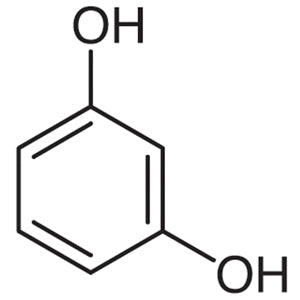
Resorcinol, with CAS number 108-46-3, is a chemical compound widely used in various laboratory experiments. It is an aromatic compound featuring two hydroxyl groups at positions 1 and 2 on the benzene ring. This structural feature makes it a versatile building block in organic chemistry, particularly in the synthesis of complex molecules. As a fundamental reagent, resorcinol plays a crucial role in many chemical reactions, including substitution, oxidation, and polymerization processes. Its presence in the laboratory is essential for both educational and research purposes, supporting the development of new chemical compounds and materials.
Resorcinol is valued for its chemical stability under specific conditions and its reactivity towards strong acids and bases. These properties make it suitable for use in reactions requiring controlled reactivity. Additionally, its good solubility in organic solvents such as ethanol and ether simplifies preparation and application in experimental settings. The compound's ability to dissolve in a variety of solvents enhances its utility across different laboratory procedures. Its chemical behavior also allows it to be used in a wide range of applications, from analytical chemistry to industrial processes.
In Indonesian laboratories, resorcinol is commonly used in both academic and research environments. It is a key component in organic synthesis experiments, supporting the work of students and researchers in chemical education and innovation. Its availability and reliability make it a preferred choice for institutions that require consistent and high-quality chemical reagents for their experiments. Resorcinol's role in Indonesian laboratories is significant, contributing to the advancement of chemical knowledge and practical applications.
- Organic synthesis experiments benefit from resorcinol's structural versatility, allowing for the creation of complex molecules through substitution and oxidation reactions.
- Polymerization processes often utilize resorcinol as a building block due to its reactivity and compatibility with various chemical environments.
- Analytical chemistry applications rely on resorcinol's solubility and reactivity for accurate and reproducible results in chemical analysis.
- Educational settings use resorcinol to teach fundamental chemical reactions and synthesis techniques to students in chemistry courses.
- Industrial research applications incorporate resorcinol for developing new materials and chemical compounds with specific functional properties.
| Brand | TCI |
|---|---|
| CAS number | 108-46-3 |
| Molecular formula | — |
| Purity | — |
| Category | Chemistry > Building Blocks > Non-Heterocyclic Building Blocks |
| Pack sizes | Available in various quantities as per standard laboratory supply options |
| Physical form | Liquid |
| Storage | Store in a cool, dry place away from strong acids and bases |
Resorcinol should be stored in a cool, dry place, away from strong acids and bases to prevent unwanted reactions. It is recommended to use suitable containers such as glass or polyethylene bottles to avoid chemical interactions. Proper labeling of containers is essential for safety and identification. Laboratory personnel should wear appropriate personal protective equipment when handling resorcinol to minimize exposure. The compound should be kept in a well-ventilated area to ensure safe handling. Regular inspection of storage conditions is necessary to maintain the integrity and safety of the material.
—
Produk Terkait
-
2-Iodoresorcinol TCI I0788
Regular price From Rp 1.644.300,00Regular price -
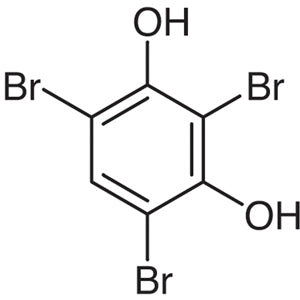
2,4,6-Tribromoresorcinol TCI T2620
Regular price From Rp 1.008.000,00Regular price -
5-Bromoresorcinol TCI B3731
Regular price From Rp 2.730.000,00Regular price -
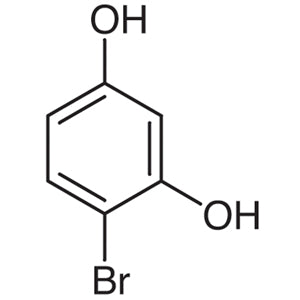
4-Bromoresorcinol TCI B0654
Regular price From Rp 3.207.750,00Regular price -
2-Nitroresorcinol TCI N0254
Regular price From Rp 1.326.150,00Regular price -
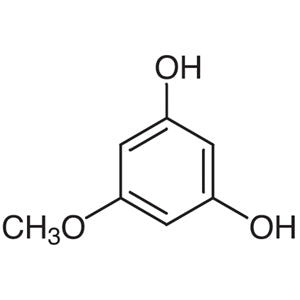
5-Methoxyresorcinol TCI M1413
Regular price Rp 4.399.500,00Regular price -
4,6-Diacetylresorcinol TCI D5102
Regular price Rp 980.700,00Regular price -
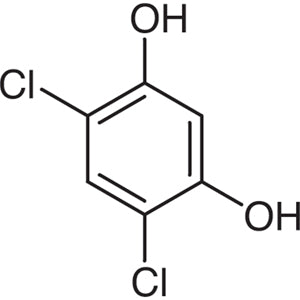
4,6-Dichlororesorcinol TCI D0413
Regular price Rp 1.458.450,00Regular price