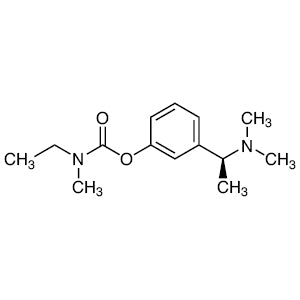
Rivastigmine L-Tartrate TCI R0093 is a chemical compound widely used in pharmacological and biochemical research. As an inhibitor of acetylcholinesterase, it plays a crucial role in studying the mechanisms of neurodegenerative diseases, particularly Alzheimer’s disease. This compound is essential for experimental studies aimed at understanding the impact of cholinesterase inhibition on cognitive function and neuronal activity. Its presence in laboratory settings enables researchers to explore therapeutic approaches and evaluate drug efficacy in controlled environments.
The compound is known for its chemical stability and solubility in organic solvents, making it a preferred choice for various experimental applications. These properties ensure consistent performance and reliability in laboratory procedures, allowing for accurate results in drug development and testing. Its availability in multiple packaging sizes, such as 1g and 5g, provides flexibility for researchers to adjust dosages according to their experimental needs. This adaptability enhances its utility in both basic and applied research.
In Indonesian laboratories, Rivastigmine L-Tartrate is commonly used in clinical and pharmacological research to develop new therapeutic strategies for neurodegenerative conditions. It is a key component in studies focused on improving cognitive function and treating memory-related disorders. Its availability supports scientific innovation and contributes to advancements in healthcare research within the region.
TCI brochures (PDF)
- Neurotransmission Research Reagents 2026-07-17 · p. 1
- Pharmaceutical Ingredients for Research and Experimental Use 2026-03-09 · p. 29
- Alzheimer’s Disease Research – Rivastigmine L-Tartrate is used to study the effects of cholinesterase inhibition on cognitive decline and neuronal function.
- Pharmacological Drug Development – It serves as a model compound for testing new drugs targeting acetylcholinesterase in experimental settings.
- Neurodegenerative Disorder Studies – This compound is essential for investigating the molecular mechanisms underlying neurodegenerative diseases.
- In Vitro Toxicity Testing – Its stability and solubility make it suitable for assessing the safety and efficacy of pharmaceutical compounds.
- Clinical Trial Protocols – It is used in controlled experiments to evaluate therapeutic outcomes and patient responses in neurodegenerative disease models.
| Brand | TCI |
|---|---|
| CAS number | 129101-54-8 |
| Molecular formula | — |
| Purity | — |
| Category | Life Science > Biochemicals and Reagents > Pharmaceutical Research Reagents |
| Pack sizes | 1g, 5g |
| Physical form | Powder |
| Storage | Store in a cool, dry place away from light |
Rivastigmine L-Tartrate should be stored in a cool, dry place, away from direct light and moisture. It is recommended to keep the compound in a sealed container to prevent contamination and maintain its chemical integrity. Due to its organic solubility, it should be handled with care to avoid exposure to incompatible substances. In laboratory settings, it is important to use appropriate personal protective equipment, such as gloves and safety goggles, when handling this compound. Proper ventilation should be maintained to ensure a safe working environment. Regular monitoring of storage conditions is essential to preserve the quality and effectiveness of the material for research purposes.
—
Product Categories
- Biochemicals and ReagentsPharmaceutical Research Reagents (for Experimental Use)Neurotransmitter Agent Ingredients (for Research and Experimental Use)
- Cell BiologyCell Signaling and NeuroscienceNeuroscience
- Pharmaceutical Development and Drug Discovery ResearchPharmaceutical Research Reagents (for Experimental Use)Neurotransmitter Agent Ingredients (for Research and Experimental Use)
Produk Terkait
-
Rivastigmine TCI R0250
Regular price Rp 4.345.950,00Regular priceRp 3.054.450,00Sale price Rp 4.345.950,00 -
AcetylcholineChloride TCI A0084
Regular price From Rp 1.405.950,00Regular priceRp 998.550,00Sale price From Rp 1.405.950,00 -
WAY-100635Maleate TCI W0016
Regular price From Rp 5.300.400,00Regular priceRp 3.722.250,00Sale price From Rp 5.300.400,00 -
VenlafaxineHydrochloride TCI V0110
Regular price From Rp 795.900,00Regular priceRp 572.250,00Sale price From Rp 795.900,00 -
Tacrine TCI T3994
Regular price From Rp 1.510.950,00Regular priceRp 1.072.050,00Sale price From Rp 1.510.950,00 -
TolazolineHydrochloride TCI T3791
Regular price Rp 1.696.800,00Regular priceRp 1.202.250,00Sale price Rp 1.696.800,00