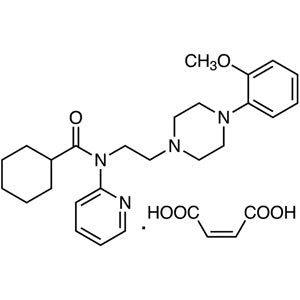
Rivastigmine, with CAS number 123441-03-2, is a chemical compound widely used in pharmaceutical research and biochemical studies. It plays a crucial role in laboratory settings where researchers investigate the effects of neurologically active substances on the central nervous system. This compound is particularly valuable for studying the mechanisms of neurodegenerative diseases such as Alzheimer’s and dementia. Its application in experimental research allows scientists to explore the pharmacological properties of cholinesterase inhibitors and their impact on cognitive function.
One of the key reasons Rivastigmine is preferred in laboratory research is its chemical stability under controlled conditions, which ensures consistent results across experiments. Additionally, it exhibits good solubility in organic solvents, making it easy to prepare solutions for biological assays. These properties make it a reliable and versatile reagent for various experimental protocols. Its ability to clearly demonstrate pharmacological effects on nerve cells further enhances its utility in neuropharmacological studies.
In Indonesian laboratories, Rivastigmine is commonly used in scientific research focused on drug development and the evaluation of compound efficacy in both in vitro and in vivo models. It is an essential tool for researchers working on neurodegenerative disorders and related therapeutic strategies. Its availability and reliability make it a preferred choice for academic and industrial research institutions in the country.
TCI brochures (PDF)
- Neurotransmission Research Reagents 2026-07-17 · p. 1
- Pharmaceutical Ingredients for Research and Experimental Use 2026-03-09 · p. 30
- Neuropharmacological studies benefit from Rivastigmine as it helps investigate the effects of cholinesterase inhibitors on cognitive function and neurodegenerative disease models.
- Alzheimer’s disease research utilizes Rivastigmine to examine its potential therapeutic role in improving memory and synaptic function in experimental models.
- Biochemical assays rely on Rivastigmine due to its solubility in organic solvents, which simplifies the preparation of test solutions for enzyme inhibition studies.
- Toxicological testing incorporates Rivastigmine to assess its impact on nerve cells and evaluate its safety profile in different biological systems.
- Drug development projects use Rivastigmine as a reference compound to compare the efficacy and mechanisms of new cholinesterase inhibitors in preclinical trials.
| Brand | TCI |
|---|---|
| CAS number | 123441-03-2 |
| Molecular formula | — |
| Purity | — |
| Category | Life Science > Biochemicals and Reagents > Pharmaceutical Research Reagents |
| Pack sizes | Available in various quantities as per standard laboratory requirements |
| Physical form | Solid powder |
| Storage | Store in a cool, dry place away from light and moisture |
Rivastigmine should be stored in a cool, dry environment, away from direct sunlight and moisture to maintain its chemical stability. It is recommended to use airtight containers to prevent exposure to air and humidity, which could affect its integrity. In a laboratory setting, it is important to handle this compound with care, using appropriate personal protective equipment such as gloves and safety goggles. Proper labeling of storage containers is essential to ensure safe handling and prevent accidental contamination. Regular monitoring of storage conditions will help maintain the quality and effectiveness of the compound for research purposes.
—
Product Categories
- Biochemicals and ReagentsPharmaceutical Research Reagents (for Experimental Use)Neurotransmitter Agent Ingredients (for Research and Experimental Use)
- Cell BiologyCell Signaling and NeuroscienceNeuroscience
- Pharmaceutical Development and Drug Discovery ResearchPharmaceutical Research Reagents (for Experimental Use)Neurotransmitter Agent Ingredients (for Research and Experimental Use)
Produk Terkait
-
RivastigmineL-Tartrate TCI R0093
Regular price From Rp 4.743.900,00Regular priceRp 3.332.700,00Sale price From Rp 4.743.900,00 -
AcetylcholineChloride TCI A0084
Regular price From Rp 1.405.950,00Regular priceRp 998.550,00Sale price From Rp 1.405.950,00 -
WAY-100635Maleate TCI W0016
Regular price From Rp 5.300.400,00Regular priceRp 3.722.250,00Sale price From Rp 5.300.400,00 -
VenlafaxineHydrochloride TCI V0110
Regular price From Rp 795.900,00Regular priceRp 572.250,00Sale price From Rp 795.900,00 -
Tacrine TCI T3994
Regular price From Rp 1.510.950,00Regular priceRp 1.072.050,00Sale price From Rp 1.510.950,00 -
TolazolineHydrochloride TCI T3791
Regular price Rp 1.696.800,00Regular priceRp 1.202.250,00Sale price Rp 1.696.800,00