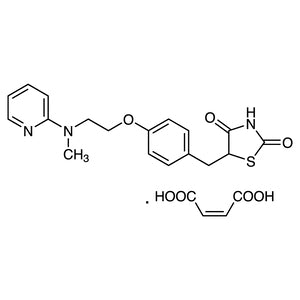
Rosiglitazone is a chemical compound widely used in pharmacological and biochemical research to study the mechanisms of action of hypoglycemic drugs in patients with diabetes mellitus. As a key reagent in experimental settings, it plays a vital role in laboratory investigations focused on the activation of PPAR-γ, a receptor involved in the regulation of glucose and lipid metabolism. This compound is essential for understanding how certain drugs affect cellular responses and metabolic pathways. Its application extends to both clinical and laboratory research, making it a critical component in drug development and therapeutic evaluation.
Rosiglitazone is chemically stable and soluble in organic solvents such as ethyl acetate and acetone, which makes it highly versatile for use in various analytical methods. These properties allow it to be effectively employed in techniques like spectroscopy, chromatography, and chemical reactions. Its clarity and distinct chemical structure further enhance its utility in experiments requiring precision and accuracy. The availability in multiple packaging formats ensures that researchers can easily adapt its use to meet the specific needs of their experiments.
In Indonesian laboratories, Rosiglitazone is commonly used in pharmacological research, particularly in studies related to diabetes treatment and metabolic disorders. Its role in experimental drug testing and the evaluation of therapeutic efficacy makes it a preferred choice for researchers working in both academic and industrial settings. Its consistent performance and reliability contribute to the quality and reproducibility of scientific findings in the region.
TCI brochures (PDF)
- Obesity_Diabete Research Reagents 2026-07-10 · p. 1
- Regenerative Medicine Research Reagents 2016-03-18 · p. 2
- Pharmaceutical Ingredients for Research and Experimental Use 2026-03-09 · p. 24
- Reagents for Biological Research 2025-03-11 · p. 38
- Pharmacological research for studying the mechanism of action of hypoglycemic drugs in diabetes treatment.
- Biochemical experiments focused on PPAR-γ activation and its impact on glucose and lipid metabolism.
- Drug development studies to evaluate the efficacy and cellular response to therapeutic agents.
- Analytical chemistry applications in spectroscopy and chromatography for compound identification and quantification.
- Metabolic disorder research to investigate the role of PPAR-γ in metabolic regulation and disease progression.
| Brand | TCI |
|---|---|
| CAS number | 122320-73-4 |
| Molecular formula | — |
| Purity | — |
| Category | Life Science > Biochemicals and Reagents > Pharmaceutical Research Reagents |
| Pack sizes | Available in various packaging formats for experimental use |
| Physical form | — |
| Storage | Store in a cool, dry place away from light |
Rosiglitazone should be stored in a cool, dry place away from direct light to maintain its chemical stability and prevent degradation. It is recommended to use airtight containers to minimize exposure to moisture and contaminants. In laboratory settings, proper labeling and safe handling procedures are essential to ensure the integrity of the compound during storage and use. Researchers should avoid contact with skin and eyes, and appropriate personal protective equipment should be worn when handling the material. Regular monitoring of storage conditions is advised to ensure the material remains suitable for experimental applications.
—
Product Categories
- Biochemicals and ReagentsPharmaceutical Research Reagents (for Experimental Use)Antidiabetic Ingredients (for Research and Experimental Use)
- Biochemicals and Reagents
- Cell BiologyObesity and Diabetes ResearchPPARγ Agonists
- Pharmaceutical Development and Drug Discovery ResearchPharmaceutical Research Reagents (for Experimental Use)Antidiabetic Ingredients (for Research and Experimental Use)
Produk Terkait
-
RosiglitazoneMaleate TCI R0271
Regular price From Rp 1.696.800,00Regular priceRp 1.202.250,00Sale price From Rp 1.696.800,00 -
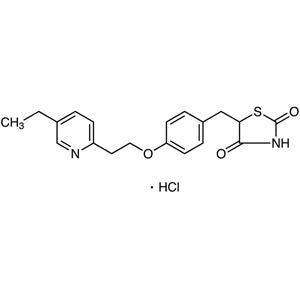
PioglitazoneHydrochloride TCI P1901
Regular price From Rp 3.658.200,00Regular priceRp 2.573.550,00Sale price From Rp 3.658.200,00 -
Troglitazone TCI T3920
Regular price From Rp 3.975.300,00Regular priceRp 2.795.100,00Sale price From Rp 3.975.300,00 -
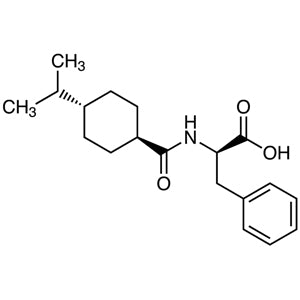
Nateglinide TCI N0912
Regular price From Rp 1.538.250,00Regular priceRp 1.090.950,00Sale price From Rp 1.538.250,00 -
MetforminHydrochloride TCI M2009
Regular price From Rp 1.988.700,00Regular priceRp 1.405.950,00Sale price From Rp 1.988.700,00 -
Glimepiride TCI G0395
Regular price From Rp 2.013.900,00Regular priceRp 1.423.800,00Sale price From Rp 2.013.900,00 -
Glibenclamide TCI G0382
Regular price From Rp 795.900,00Regular priceRp 572.250,00Sale price From Rp 795.900,00 -
Glipizide TCI G0369
Regular price From Rp 1.829.100,00Regular priceRp 1.294.650,00Sale price From Rp 1.829.100,00