

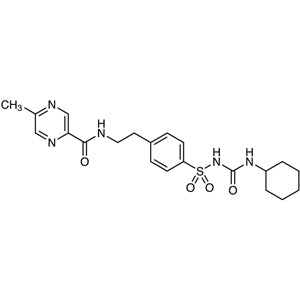
Glipizide is a chemical compound widely used in pharmacological research to study the mechanisms of hypoglycemic drugs. As a pharmaceutical research reagent, it plays a crucial role in experimental settings where the effects of glucose-lowering agents are investigated. This compound is particularly relevant in diabetes-related experiments, aiding researchers in evaluating the efficacy of drugs that regulate blood sugar levels. Its presence in laboratory workflows ensures reliable and reproducible results, making it an essential tool for scientific inquiry.
Glipizide is valued for its high purity and chemical stability, which are critical for maintaining the integrity of experimental outcomes. It dissolves well in organic solvents such as ethyl acetate and acetone, facilitating its use in various analytical techniques. Additionally, its anticholinesterase properties make it a preferred choice for studies involving neuropharmacological effects and metabolic processes. These characteristics ensure that it remains a reliable reagent for both basic and applied research.
In Indonesian laboratories, Glipizide is extensively used in pharmacological and medicinal chemistry research. It is commonly found in research institutions and universities that focus on drug development and metabolic disease treatment. Its consistent availability and maintained quality make it a trusted material for experimental work in the region.
- Pharmacological research for studying hypoglycemic drug mechanisms due to its chemical properties and biological activity.
- Diabetes-related experiments to evaluate the effectiveness of glucose-lowering agents in controlled environments.
- Neuropharmacological studies to investigate anticholinesterase effects and their impact on neural function.
- Medicinal chemistry applications for developing new therapeutic agents targeting metabolic disorders.
- Metabolic pathway analysis to understand drug interactions and physiological responses in experimental models.
| Brand | TCI |
|---|---|
| CAS number | 29094-61-9 |
| Molecular formula | — |
| Purity | — |
| Category | Life Science > Biochemicals and Reagents > Pharmaceutical Research Reagents |
| Pack sizes | Available in standard laboratory quantities as per supplier specifications |
| Physical form | Solid, crystalline appearance |
| Storage | Store in a cool, dry place away from direct sunlight and moisture |
Glipizide should be stored in a cool, dry environment to maintain its chemical stability and prevent degradation. It is recommended to keep the compound in airtight containers to protect it from moisture and contaminants. Due to its organic solubility, it is important to handle it with care to avoid exposure to incompatible substances. Laboratory personnel should ensure proper ventilation when working with this reagent. Storage conditions should be consistent to preserve its purity and effectiveness for experimental use. Always follow standard safety protocols when handling chemical reagents to ensure a safe working environment.
—
Produk Terkait
-
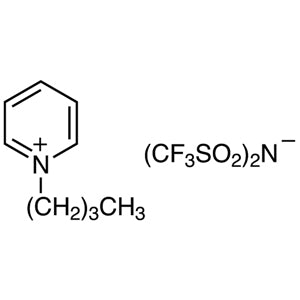
1-ButylpyridiniumBis(trifluoromethanesulfonyl)imide TCI B5571
Regular price From Rp 2.094.750,00Regular price -
2-(tert-Butyldimethylsilyl)-N,N-dimethyl-1H-imidazole-1-sulfonamide TCI B5658
Regular price From Rp 2.650.200,00Regular price -
3-Bromobenzenesulfonamide TCI B5734
Regular price From Rp 1.405.950,00Regular price -
1-Butyl-4-methylpyridiniumBis(trifluoromethanesulfonyl)imide TCI B5763
Regular price From Rp 903.000,00Regular price -
[3-(Bromomethyl)-1-tosylazetidin-3-yl]methanol TCI B5852
Regular price From Rp 1.378.650,00Regular price -
Belinostat TCI B5888
Regular price From Rp 2.306.850,00Regular price -
(-)-4-tert-Butyl-2,6-bis[(4S,5S)-4,5-tetramethylene-1-(2,4,6-trimethylbenzenesulfonyl)imidazolin-2-yl]phenol(contains5%Dichloromethaneatmaximum) TCI B6146
Regular price Rp 8.322.300,00Regular price


![[3-(Bromomethyl)-1-tosylazetidin-3-yl]methanol (CAS 1041026-55-4) - TCI B5852 - AMI Scientific](http://amiscientific.com/cdn/shop/files/TCI2510B5852_08c96097-28a8-4e07-aa20-fbef24394b16.jpg?v=1767863600&width=533)

![(-)-4-tert-Butyl-2,6-bis[(4S,5S)-4,5-tetramethylene-1-(2,4,6-trimethylbenzenesulfonyl)imidazolin-2-yl]phenol (contains 5% Dichloromethane at maximum) (CAS 2102316-91-4) - TCI B6146 - AMI Scientific](http://amiscientific.com/cdn/shop/files/TCI2510B6146.jpg?v=1767093225&width=533)