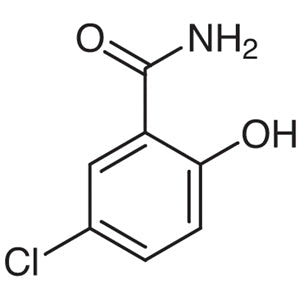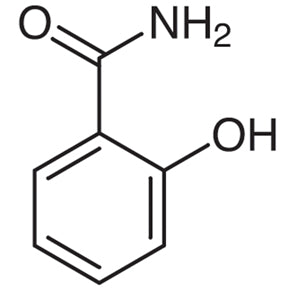
Salicylamide is a chemical compound widely used in various chemical reactions and organic synthesis. As one of the key building blocks in chemistry, it serves as a fundamental component in the creation of more complex compounds, including pharmaceuticals, medicinal agents, and industrial chemicals. Its simple yet essential chemical structure enables it to participate in a wide range of substitution and chemical reactions, making it a versatile reagent in laboratory settings. Due to its stability and moderate reactivity, salicylamide is a reliable choice for researchers and chemists seeking to explore new synthetic pathways and molecular transformations.
Salicylamide is valued for its chemical stability and good reactivity, which allow it to be effectively used in a variety of experimental procedures. It exhibits excellent solubility in organic solvents such as ethyl acetate and ethanol, facilitating its use in purification, synthesis, and analytical processes. These properties make it an ideal candidate for both academic and industrial applications. Its compatibility with various reaction conditions and its ability to be easily handled in laboratory environments further enhance its appeal as a standard chemical reagent.
In Indonesian laboratories, salicylamide plays a crucial role in chemical research, pharmaceutical development, and educational purposes. It is commonly used in organic synthesis experiments, chemical analysis, and teaching demonstrations. Institutions and research centers in Indonesia rely on salicylamide for its reliability and effectiveness in supporting scientific investigations and training. Its widespread use underscores its importance in the chemical and pharmaceutical sectors within the country.
- Organic synthesis experiments benefit from salicylamide's ability to participate in substitution reactions and form complex molecules.
- Pharmaceutical research utilizes salicylamide as a building block for the development of new drugs and medicinal compounds.
- Chemical analysis applications take advantage of its solubility in organic solvents for purification and identification processes.
- Educational laboratories use salicylamide to demonstrate fundamental chemical reactions and synthetic techniques to students.
- Industrial chemical production incorporates salicylamide in the manufacturing of various chemical products and intermediates.
| Brand | TCI |
|---|---|
| CAS number | 65-45-2 |
| Molecular formula | — |
| Purity | — |
| Category | Chemistry > Building Blocks > Non-Heterocyclic Building Blocks |
| Pack sizes | Available in various standard quantities for laboratory use |
| Physical form | Solid |
| Storage | Store in a cool, dry place away from direct sunlight |
Salicylamide should be stored in a cool, dry environment to maintain its chemical stability and prevent degradation. It is recommended to use airtight containers to minimize exposure to moisture and air, which can affect its purity and reactivity. When handling salicylamide, it is important to wear appropriate personal protective equipment such as gloves and safety goggles to ensure safety. It should be kept away from incompatible substances to avoid any potential chemical reactions. Proper labeling of storage containers is essential for safe handling and easy identification. Regular inspection of storage conditions ensures the material remains in optimal condition for laboratory use.
—
Produk Terkait
-
5-Acetylsalicylamide TCI A1156
Regular price Rp 1.193.850,00Regular price -
5-Chlorosalicylamide TCI C0787
Regular price From Rp 1.193.850,00Regular price