

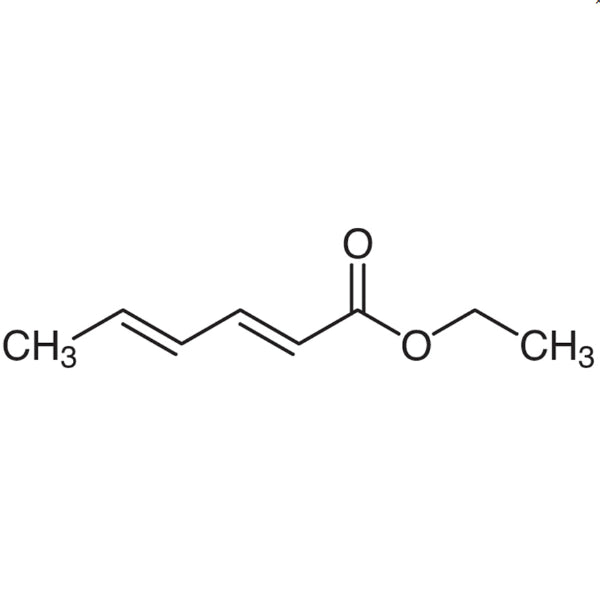
Ethyl Sorbate is a chemical compound widely used in laboratory settings, particularly in the synthesis of organic compounds. It serves as a versatile building block in chemical reactions due to its ester and hydroxyl functional groups. This compound is commonly employed as a starting material in the production of complex molecules, such as synthetic fragrances, preservatives, and cosmetic ingredients. In the laboratory, Ethyl Sorbate plays a crucial role as a solvent or reactant in esterification and hydrolysis reactions. Its chemical stability under certain conditions makes it a reliable choice for various synthetic processes.
Ethyl Sorbate is preferred for its mild aroma, non-toxic nature, and good solubility in organic solvents like ethanol and ethers. These properties make it safe and practical for use in laboratory environments. Its ability to dissolve in a wide range of solvents enhances its applicability in different chemical reactions. Additionally, Ethyl Sorbate exhibits consistent performance, making it a reliable option for researchers seeking a stable and predictable compound. The compound’s chemical inertness and ease of handling further contribute to its popularity among laboratory professionals.
In Indonesian laboratories, Ethyl Sorbate is extensively used across various scientific fields, including chemistry, cosmetics, and food science. It is commonly found in research related to fragrance development, preservation techniques, and formulation of cosmetic products. Its availability and compatibility with different experimental setups make it a go-to compound for both academic and industrial research in Indonesia.
- Organic synthesis applications benefit from Ethyl Sorbate’s ester and hydroxyl groups, enabling diverse chemical reactions.
- Cosmetic formulation processes utilize Ethyl Sorbate as a fragrance component and emollient due to its mild aroma and solubility.
- Food science research employs Ethyl Sorbate as a natural preservative and flavor enhancer in food product development.
- Analytical chemistry experiments use Ethyl Sorbate as a reference standard for chromatographic and spectroscopic analyses.
- Pharmaceutical research incorporates Ethyl Sorbate in the development of semi-synthetic compounds and drug delivery systems.
| Brand | TCI |
|---|---|
| CAS number | 2396-84-1 |
| Molecular formula | — |
| Purity | — |
| Category | Chemistry > Building Blocks > Non-Heterocyclic Building Blocks |
| Pack sizes | Available in various quantities as per supplier specifications |
| Physical form | Liquid |
| Storage | Store in a cool, dry place away from moisture and direct sunlight |
Ethyl Sorbate should be stored in a cool, dry environment to maintain its chemical stability. It is recommended to keep the compound in a tightly sealed container to prevent exposure to moisture and air, which can affect its properties. Due to its solubility in organic solvents, it is best stored in glass or polyethylene containers to avoid contamination. Laboratory personnel should handle Ethyl Sorbate with care, ensuring proper ventilation in the workspace. Although non-toxic, it is advisable to use gloves and safety goggles to minimize direct contact. Regular monitoring of storage conditions ensures the compound remains in optimal condition for use in experiments.
—
Produk Terkait
-
PotassiumSorbate TCI S0057
Regular price Rp 452.550,00Regular price -
CalciumSorbate TCI S0054
Regular price Rp 1.670.550,00Regular price -
SodiumSorbate TCI S0058
Regular price From Rp 795.900,00Regular price -
MethylSorbate TCI S0056
Regular price Rp 2.279.550,00Regular price -
PotassiumSorbate[forBiochemicalResearch] TCI P1954
Regular price From Rp 505.050,00Regular price


![24634-61-5 Potassium Sorbate [for Biochemical Research] - AMI Scientific](http://amiscientific.com/cdn/shop/files/TCI2510P1954.jpg?v=1767135491&width=533)