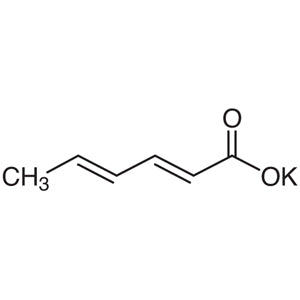
Sodium Sorbate (TCI S0058), with CAS number 7757-81-5, is a chemical compound widely used in laboratory experiments, particularly in the fields of biochemistry and biology. As a sodium salt of sorbic acid, it functions as a powerful antimicrobial agent, making it a valuable tool for preserving samples or inhibiting microbial growth in solutions. Its chemical stability and solubility in water further enhance its utility in various chemical reactions and research applications. Sodium Sorbate is commonly used in laboratories to maintain the integrity of biological samples and to prevent contamination by bacteria and fungi.
The properties that make Sodium Sorbate a preferred choice include its non-toxic nature and its ability to inhibit microbial growth without interfering with biological processes. It is considered a safe and reliable alternative to synthetic preservatives, which often carry potential risks. Sodium Sorbate is chemically stable, water-soluble, and does not introduce harmful substances into experimental environments. These characteristics make it ideal for use in laboratories that prioritize safety and accuracy in their research protocols.
In Indonesian laboratories, Sodium Sorbate is extensively used in research settings, especially in biochemistry and microbiology. It plays a crucial role in experiments that require the preservation of samples or the inhibition of microbial growth. Its safety profile and effectiveness make it a go-to choice for researchers aiming to maintain the quality and reliability of their experimental results.
TCI brochures (PDF)
- Lipids 2025-12-17 · p. 5
- Biochemical Preservation: Sodium Sorbate is used to preserve biological samples by inhibiting microbial growth, ensuring sample integrity during storage and experimentation.
- Microbial Inhibition in Culture Media: It is commonly added to culture media to prevent contamination by bacteria and fungi, supporting the growth of target organisms.
- Stability Testing of Biological Substances: Sodium Sorbate helps maintain the stability of biological compounds by preventing degradation caused by microbial activity.
- Research in Food Safety: It is utilized in food science research to study the effects of preservatives on microbial growth and food spoilage.
- Laboratory Reagent for Controlled Experiments: Sodium Sorbate is used in controlled experiments where microbial growth needs to be minimized or regulated for accurate results.
| Brand | TCI |
|---|---|
| CAS number | 7757-81-5 |
| Molecular formula | — |
| Purity | — |
| Category | Life Science > Biochemicals and Reagents > Lipids |
| Pack sizes | Available in various quantities to suit different laboratory needs |
| Physical form | White crystalline powder |
| Storage | Store in a cool, dry place away from direct sunlight |
Sodium Sorbate should be stored in a cool, dry place, away from direct sunlight and moisture to maintain its chemical stability. It is recommended to use airtight containers to prevent exposure to humidity and contaminants. Since it is non-toxic and does not pose significant health risks, general laboratory safety protocols should suffice. However, it is advisable to handle it with care to avoid any potential irritation to the skin or eyes. Proper labeling of containers is essential to ensure safe handling and prevent accidental use. Laboratories should ensure that Sodium Sorbate is stored in a designated area that is accessible only to authorized personnel to maintain safety standards.
—
Product Categories
Produk Terkait
-
MethylSorbate TCI S0056
Regular price Rp 2.332.050,00Regular priceRp 1.646.400,00Sale price Rp 2.332.050,00 -
PotassiumSorbate TCI S0057
Regular price Rp 505.050,00Regular priceRp 368.550,00Sale price Rp 505.050,00 -
EthylSorbate TCI S0055
Regular price From Rp 557.550,00Regular priceRp 405.300,00Sale price From Rp 557.550,00 -
CalciumSorbate TCI S0054
Regular price Rp 1.723.050,00Regular priceRp 1.220.100,00Sale price Rp 1.723.050,00 -
PotassiumSorbate[forBiochemicalResearch] TCI P1954
Regular price From Rp 557.550,00Regular priceRp 405.300,00Sale price From Rp 557.550,00