Sodium sulfamate is a versatile chemical compound widely used in laboratory settings, particularly in catalysis and inorganic chemistry. It plays a crucial role in various chemical reactions, serving as a pH adjuster, precipitating agent, or catalyst. Its stability and chemical neutrality make it an essential tool for maintaining controlled environments during experiments. Sodium sulfamate is commonly employed in reduction and oxidation reactions, as well as in metal purification processes. Its ability to remain stable under normal conditions ensures reliable performance in diverse experimental setups.
The chemical properties of sodium sulfamate, including its high solubility in water and neutral pH, contribute to its popularity in laboratory applications. These characteristics allow it to be easily dissolved and integrated into various chemical processes without interfering with the desired reactions. Its stability and resistance to decomposition under standard conditions enhance its safety and longevity in storage and use. This makes sodium sulfamate a preferred choice for researchers and technicians seeking a dependable and efficient reagent.
In Indonesian laboratories, sodium sulfamate is frequently used in both educational and industrial research contexts. It supports a wide range of chemical investigations, from basic experiments in academic institutions to more complex processes in industrial settings. Its availability and reliability make it a staple in the chemical supply chain, ensuring that laboratories can conduct experiments with the necessary materials for accurate and reproducible results.
TCI brochures (PDF)
- Metallic Salts 2025-11-06 · p. 11
- Metal purification processes benefit from sodium sulfamate due to its ability to act as a precipitating agent and its compatibility with various chemical environments.
- pH adjustment in chemical reactions is effectively managed by sodium sulfamate, which maintains a neutral and stable environment for experimental accuracy.
- Catalytic reactions in inorganic chemistry often utilize sodium sulfamate for its stability and role in facilitating chemical transformations without interference.
- Redox reactions in laboratory settings rely on sodium sulfamate for its reducing properties, which help in controlling reaction pathways and outcomes.
- Industrial research applications in Indonesia frequently incorporate sodium sulfamate for its consistent performance and adaptability across different chemical processes.
| Brand | TCI |
|---|---|
| CAS number | 13845-18-6 |
| Molecular formula | — |
| Purity | — |
| Category | Chemistry > Catalysis and Inorganic Chemistry > Metallic Salts |
| Pack sizes | Available in various quantities as per standard laboratory supply requirements |
| Physical form | Solid powder |
| Storage | Store in a cool, dry place away from direct sunlight and moisture |
Sodium sulfamate should be stored in a cool, dry location, away from direct sunlight and moisture to maintain its chemical stability. It is recommended to use airtight containers to prevent exposure to humidity, which could affect its solubility and performance. As a solid powder, it should be handled with care to avoid inhalation or contact with skin. In laboratory settings, it is important to ensure proper ventilation when working with this material. While it is generally considered safe, standard laboratory safety protocols should be followed, including the use of personal protective equipment such as gloves and safety goggles. Proper storage and handling help ensure the longevity and effectiveness of sodium sulfamate in experimental applications.
—
Produk Terkait
-
PotassiumSulfamate TCI S0164
Regular price Rp 2.782.500,00Regular priceRp 1.945.650,00Sale price Rp 2.782.500,00 -
Nickel(II)SulfamateTetrahydrate TCI N1270
Regular price Rp 1.035.300,00Regular priceRp 723.450,00Sale price Rp 1.035.300,00 -
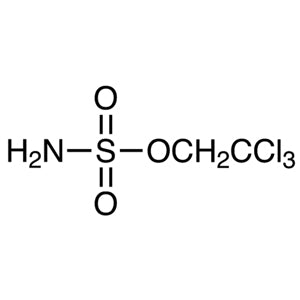
2,2,2-TrichloroethylSulfamate TCI T2646
Regular price From Rp 980.700,00Regular priceRp 701.400,00Sale price From Rp 980.700,00 -
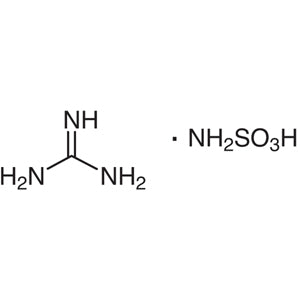
GuanidineSulfamate TCI G0022
Regular price From Rp 557.550,00Regular priceRp 405.300,00Sale price From Rp 557.550,00