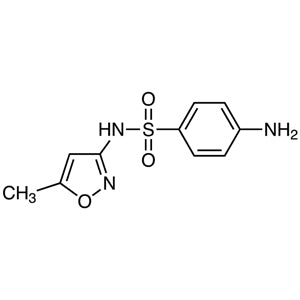
Sulfamethoxazole is a synthetic antibiotic widely used in life sciences and pharmacology research. As a key component in antimicrobial studies, it plays a vital role in inhibiting the growth of bacteria that produce dihydrofolate reductase enzymes. Its chemical structure enables it to act as a competitive inhibitor, making it essential for understanding bacterial metabolism and resistance mechanisms. In laboratory settings, sulfamethoxazole is a fundamental reagent for various biochemical and pharmacological experiments.
The chemical properties of sulfamethoxazole make it a preferred choice for researchers. It exhibits stability under normal laboratory conditions and is soluble in organic solvents such as ethyl acetate and acetone. The presence of a sulfonamide group in its molecular structure contributes to its high affinity for specific target enzymes, enhancing its effectiveness in targeted applications. These characteristics ensure its reliability in both qualitative and quantitative analyses.
In Indonesian laboratories, sulfamethoxazole is commonly used in public health, pharmacology, and microbiology research. It is an essential component in the development of antibiotics and is used to study the efficacy of drugs against respiratory and urinary tract infections. Its role in research and development continues to be critical for advancing medical and scientific knowledge in the region.
TCI brochures (PDF)
- Immunology Research Reagents 2026-06-03 · p. 10
- Antimicrobials and Antitumor Agents for Research and Experimental Use 2025-04-24 · p. 6
- Pharmaceutical Ingredients for Research and Experimental Use 2026-03-09 · p. 6
- Antimicrobial Activity Testing: Sulfamethoxazole is used to evaluate the effectiveness of antibiotics against specific bacterial strains, aiding in the development of new therapeutic agents.
- Drug Concentration Analysis: It serves as a standard for measuring drug levels in biological samples, supporting pharmacokinetic and pharmacodynamic studies.
- Enzyme Inhibition Studies: Its ability to inhibit dihydrofolate reductase makes it ideal for investigating enzyme function and bacterial resistance mechanisms.
- Chemical Synthesis Reactions: It is a key reagent in the synthesis of other compounds, particularly in organic chemistry and pharmaceutical research.
- Microbial Culture Media Preparation: It is incorporated into growth media to study bacterial behavior and response to antimicrobial agents.
| Brand | TCI |
|---|---|
| CAS number | 723-46-6 |
| Molecular formula | — |
| Purity | — |
| Category | Life Science > Biochemicals and Reagents > Antibiotics |
| Pack sizes | Available in various quantities as per standard laboratory requirements |
| Physical form | White crystalline powder |
| Storage | Store in a cool, dry place away from direct sunlight |
Sulfamethoxazole should be stored in a cool, dry environment, away from direct sunlight and moisture. It is recommended to use airtight containers to prevent contamination and maintain its chemical integrity. Due to its chemical nature, it should be handled with care, using appropriate personal protective equipment such as gloves and safety goggles. It is not flammable but may cause irritation if inhaled or contacted with skin. Proper labeling and storage conditions ensure its effectiveness and safety in laboratory settings. Always follow standard laboratory safety protocols when working with this compound.
—
Product Categories
- Biochemicals and ReagentsAntibioticsAntibiotics (Chemical Structure Class)
- Biochemicals and ReagentsPharmaceutical Research Reagents (for Experimental Use)Antimicrobial Ingredients (for Research and Experimental Use)
- Biochemicals and Reagents
- MicrobiologyAntibioticsAntibiotics (Chemical Structure Class)
- Pharmaceutical Development and Drug Discovery ResearchPharmaceutical Research Reagents (for Experimental Use)Antimicrobial Ingredients (for Research and Experimental Use)
- Pharmaceutical Development and Drug Discovery ResearchAntibioticsAntibiotics (Chemical Structure Class)
Produk Terkait
-
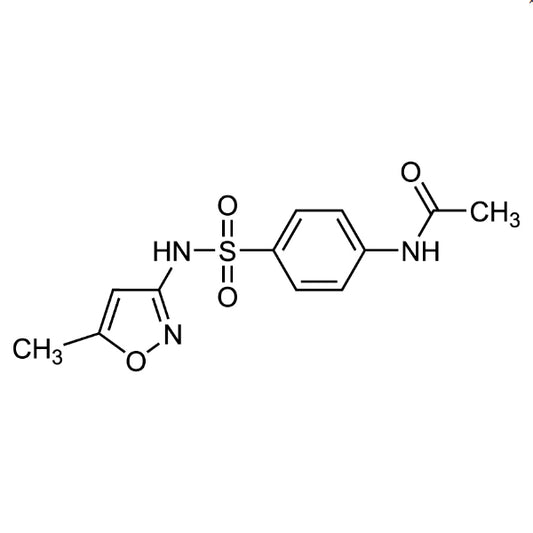
N4-Acetylsulfamethoxazole TCI A3739
Regular price From Rp 2.386.650,00Regular price -
Tigecycline TCI T3589
Regular price From Rp 2.411.850,00Regular price -
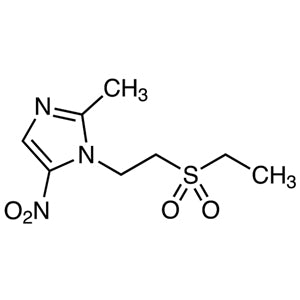
Tinidazole TCI T3058
Regular price From Rp 743.400,00Regular price -
TetracyclineHydrochloride TCI T2525
Regular price From Rp 1.167.600,00Regular price -
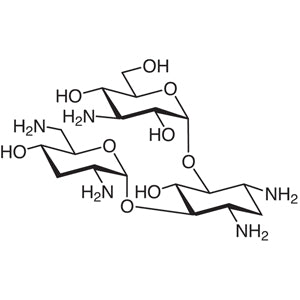
Tobramycin TCI T2503
Regular price From Rp 2.889.600,00Regular price -
Trimethoprim TCI T2286
Regular price From Rp 1.988.700,00Regular price -
Aztreonam TCI A2466
Regular price From Rp 2.969.400,00Regular price -
SilverSulfadiazine TCI S0595
Regular price From Rp 1.618.050,00Regular price