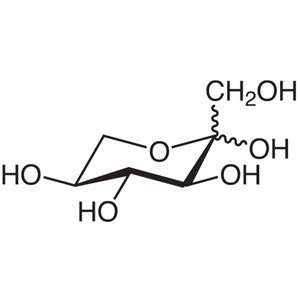
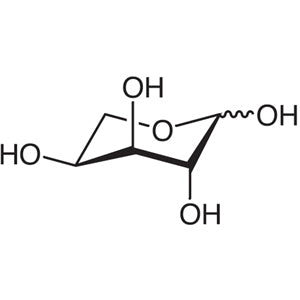
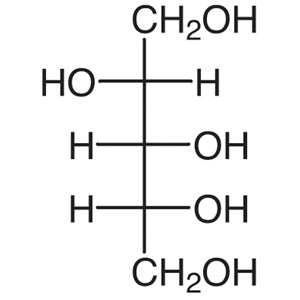
D-Sorbose is a naturally occurring sugar that plays a significant role in chemical and biochemical experiments conducted in laboratories. As a derivative of glucose, it possesses a unique molecular structure that makes it valuable in various chemical reactions, particularly within the field of glycoscience. This compound is widely used in research related to carbohydrate metabolism, organic compound synthesis, and the testing of biological activities of specific substances. In laboratory settings, D-Sorbose functions as a substrate or reagent in enzymatic and chemical reactions, contributing to the advancement of biochemical studies.
One of the key properties that make D-Sorbose a preferred choice is its chemical stability and solubility in organic solvents such as ethyl acetate and ethanol. These characteristics allow it to be easily incorporated into a wide range of experimental protocols. Additionally, its specific molecular structure enables it to interact with various enzymes and proteins, making it an essential tool in biochemical research. This interaction capability supports studies on enzyme activity, molecular binding, and the development of pharmacological compounds.
In Indonesian laboratories, D-Sorbose is commonly used in research across disciplines such as chemistry, molecular biology, and pharmacy. It is a fundamental component of experiments aimed at understanding metabolic processes, developing new drugs, and exploring the biochemical mechanisms of biological systems. Its versatility and reliability make it a sought-after material for both academic and industrial research settings.
TCI brochures (PDF)
- Carbohydrate Metabolism Studies - D-Sorbose is used to investigate metabolic pathways and enzyme activity related to sugar metabolism in biological systems.
- Organic Compound Synthesis - Its unique molecular structure allows it to participate in various synthetic reactions, making it a valuable reagent in organic chemistry.
- Enzymatic Reaction Testing - D-Sorbose serves as a substrate for enzymatic reactions, enabling researchers to study enzyme specificity and catalytic efficiency.
- Pharmacological Compound Development - Its ability to interact with proteins and enzymes makes it useful in the study of drug-target interactions and molecular binding.
- Biochemical Research - D-Sorbose is widely used in biochemical experiments to explore molecular interactions and biological activity of various compounds.
| Brand | TCI |
|---|---|
| CAS number | 3615-56-3 |
| Molecular formula | — |
| Purity | — |
| Category | Chemistry > Chemical Biology > Glycoscience |
| Pack sizes | Available in various quantities as per supplier specifications |
| Physical form | White crystalline powder |
| Storage | Store in a cool, dry place away from light and moisture |
D-Sorbose should be stored in a cool, dry environment, away from direct sunlight and moisture to maintain its chemical stability. It is recommended to use airtight containers to prevent exposure to humidity and contaminants. As a crystalline powder, it should be handled with care to avoid inhalation or contact with skin. In laboratory settings, it is important to ensure proper ventilation when working with this compound. Always follow standard safety protocols, such as wearing gloves and safety goggles, to minimize risk. Proper storage and handling ensure the integrity and effectiveness of D-Sorbose in experimental applications.
—
Product Categories
Produk Terkait
-
L-(-)-Sorbose TCI S0066
Regular price Rp 1.749.300,00Regular priceRp 1.239.000,00Sale price Rp 1.749.300,00 -
D-(-)-Arabinose TCI A0513
Regular price From Rp 1.192.800,00Regular priceRp 849.450,00Sale price From Rp 1.192.800,00 -
L-(+)-Arabinose TCI A0515
Regular price From Rp 1.167.600,00Regular priceRp 831.600,00Sale price From Rp 1.167.600,00 -
D-(+)-Arabitol TCI A0516
Regular price Rp 769.650,00Regular priceRp 553.350,00Sale price Rp 769.650,00 -
L-(-)-Arabitol TCI A0518
Regular price From Rp 610.050,00Regular priceRp 442.050,00Sale price From Rp 610.050,00 -
N-Acetyl-D-glucosamine TCI A0092
Regular price From Rp 980.700,00Regular priceRp 701.400,00Sale price From Rp 980.700,00 -
L-(-)-Xylose TCI X0021
Regular price From Rp 1.510.950,00Regular priceRp 1.072.050,00Sale price From Rp 1.510.950,00 -
D-(+)-Xylose TCI X0019
Regular price From Rp 505.050,00Regular priceRp 368.550,00Sale price From Rp 505.050,00