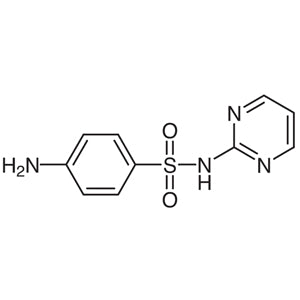
Sulfadiazine is a widely used chemical compound in life sciences and pharmacology research. As a sulfonamide antibiotic, it plays a crucial role in laboratory settings by inhibiting bacterial growth through the disruption of folic acid synthesis, a key component in DNA and protein formation. This compound is essential for various scientific investigations, including microbiological studies, pharmacological testing, and toxicological research. Its versatility makes it a valuable tool for researchers aiming to evaluate antibiotic efficacy and bacterial responses to different treatments.
Sulfadiazine is favored for its stable chemical properties under specific conditions, along with good solubility in both water and organic solvents. These characteristics make it easy to handle and incorporate into a wide range of experimental protocols. Its effectiveness against several pathogenic bacterial strains, such as *Staphylococcus aureus* and *Escherichia coli*, further enhances its utility in laboratory applications. The compound’s consistent performance and reliability contribute to its popularity among scientists working in various research fields.
In Indonesian laboratories, sulfadiazine is commonly used in public health research, pharmaceutical development, and clinical studies. Its role in drug formulation and testing supports the advancement of medical treatments and scientific understanding. The compound’s availability and well-documented properties make it a preferred choice for researchers and institutions focused on improving healthcare outcomes through scientific innovation.
TCI brochures (PDF)
- Immunology Research Reagents 2026-06-03 · p. 10
- Antimicrobials and Antitumor Agents for Research and Experimental Use 2025-04-24 · p. 6
- Pharmaceutical Ingredients for Research and Experimental Use 2026-03-09 · p. 6
- Microbiological research utilizes sulfadiazine to study bacterial inhibition and antibiotic resistance patterns.
- Pharmacological studies employ sulfadiazine to evaluate its efficacy and mechanism of action against various pathogens.
- Toxicological investigations use sulfadiazine to assess its impact on biological systems and potential side effects.
- Pharmaceutical development incorporates sulfadiazine in the formulation of new drugs and therapeutic agents.
- Clinical research applies sulfadiazine to test its effectiveness in treating bacterial infections and monitoring treatment responses.
| Brand | TCI |
|---|---|
| CAS number | 68-35-9 |
| Molecular formula | — |
| Purity | — |
| Category | Life Science > Biochemicals and Reagents > Antibiotics |
| Pack sizes | Available in various quantities as per standard laboratory requirements |
| Physical form | Solid powder |
| Storage | Store in a cool, dry place away from direct sunlight |
Sulfadiazine should be stored in a cool, dry environment to maintain its chemical stability and prevent degradation. It is recommended to use airtight containers to protect it from moisture and contaminants. Due to its chemical nature, it should be handled with appropriate personal protective equipment, such as gloves and safety goggles, to ensure laboratory safety. Avoid exposure to extreme temperatures and direct sunlight to preserve its integrity. Proper labeling and storage conditions are essential to maintain its effectiveness and usability in research applications. Always follow standard laboratory safety protocols when working with this compound to minimize risks and ensure safe handling.
—
Product Categories
- Biochemicals and ReagentsAntibioticsAntibiotics (Chemical Structure Class)
- Biochemicals and ReagentsPharmaceutical Research Reagents (for Experimental Use)Antimicrobial Ingredients (for Research and Experimental Use)
- Biochemicals and Reagents
- MicrobiologyAntibioticsAntibiotics (Chemical Structure Class)
- Pharmaceutical Development and Drug Discovery ResearchPharmaceutical Research Reagents (for Experimental Use)Antimicrobial Ingredients (for Research and Experimental Use)
- Pharmaceutical Development and Drug Discovery ResearchAntibioticsAntibiotics (Chemical Structure Class)
Produk Terkait
-
SilverSulfadiazine TCI S0595
Regular price From Rp 1.670.550,00Regular priceRp 1.183.350,00Sale price From Rp 1.670.550,00 -
SulfadiazineSodium TCI U0171
Regular price Rp 1.220.100,00Regular priceRp 868.350,00Sale price Rp 1.220.100,00 -
Tigecycline TCI T3589
Regular price From Rp 2.464.350,00Regular priceRp 1.738.800,00Sale price From Rp 2.464.350,00 -
Tinidazole TCI T3058
Regular price From Rp 795.900,00Regular priceRp 572.250,00Sale price From Rp 795.900,00 -
TetracyclineHydrochloride TCI T2525
Regular price From Rp 1.220.100,00Regular priceRp 868.350,00Sale price From Rp 1.220.100,00 -
Tobramycin TCI T2503
Regular price From Rp 2.942.100,00Regular priceRp 2.072.700,00Sale price From Rp 2.942.100,00 -
Trimethoprim TCI T2286
Regular price From Rp 2.041.200,00Regular priceRp 1.442.700,00Sale price From Rp 2.041.200,00 -
Aztreonam TCI A2466
Regular price From Rp 3.021.900,00Regular priceRp 2.128.350,00Sale price From Rp 3.021.900,00