


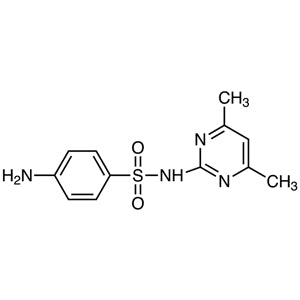
Sulfamethazine is a chemical compound classified under the sulfonamide antibiotic category. It plays a crucial role in laboratory settings by inhibiting the growth of specific bacteria. This compound is widely used in scientific research for its ability to interfere with bacterial metabolism. Its mechanism of action involves blocking the enzyme responsible for synthesizing folic acid, a vital component for bacterial growth. This makes it an essential tool for researchers working on antimicrobial studies.
Sulfamethazine is favored for its chemical stability under certain conditions and its solubility in organic solvents such as ethyl acetate and acetone. These properties make it suitable for various chemical reactions and quantitative analyses. Additionally, it exhibits good resistance to moisture and light, which simplifies its storage and long-term use. Its consistent performance in different experimental conditions enhances its reliability in laboratory applications.
In Indonesian laboratories, sulfamethazine is commonly utilized in public health research, pharmaceutical development, and microbiological studies. Its availability and reliable chemical properties make it a preferred choice for scientists and researchers. The compound's versatility supports its application in diverse scientific fields, contributing to the advancement of laboratory-based research in Indonesia.
TCI brochures (PDF)
- Antimicrobials and Antitumor Agents for Research and Experimental Use 2025-04-24 · p. 6
- Pharmaceutical Ingredients for Research and Experimental Use 2026-03-09 · p. 6
- Antimicrobial Activity Testing: Sulfamethazine is used to evaluate the effectiveness of antibiotics against specific bacterial strains, supporting the development of new therapeutic agents.
- Chemical Analysis: Its solubility in organic solvents makes it ideal for use in chromatographic and spectroscopic analyses to determine the presence and concentration of compounds.
- Pharmacological Research: It is employed in studies to understand the mechanisms of action of sulfonamide antibiotics and their impact on bacterial resistance.
- Microbiological Cultivation: Sulfamethazine is used in selective media to inhibit the growth of unwanted bacteria, allowing for the isolation of target microorganisms.
- Environmental Monitoring: It is used in water and soil analysis to detect the presence of antibiotic residues and assess environmental contamination levels.
| Brand | TCI |
|---|---|
| CAS number | 57-68-1 |
| Molecular formula | — |
| Purity | — |
| Category | Life Science > Biochemicals and Reagents > Antibiotics |
| Pack sizes | Available in standard laboratory quantities |
| Physical form | Solid powder |
| Storage | Store in a cool, dry place away from direct light |
Sulfamethazine should be stored in a cool, dry place, away from direct light and moisture to maintain its chemical stability. It is recommended to use airtight containers to prevent exposure to humidity and contaminants. Due to its organic solubility, it should be handled in a well-ventilated area to minimize inhalation risks. Laboratory personnel should wear appropriate personal protective equipment, such as gloves and safety goggles, when handling the compound. Proper labeling of storage containers is essential to ensure safe handling and prevent accidental exposure. Regular inspection of storage conditions is advised to maintain the integrity of the material over time.
—
Product Categories
- Biochemicals and ReagentsAntibioticsAntibiotics (Chemical Structure Class)
- Biochemicals and ReagentsPharmaceutical Research Reagents (for Experimental Use)Antimicrobial Ingredients (for Research and Experimental Use)
- MicrobiologyAntibioticsAntibiotics (Chemical Structure Class)
- Pharmaceutical Development and Drug Discovery ResearchPharmaceutical Research Reagents (for Experimental Use)Antimicrobial Ingredients (for Research and Experimental Use)
- Pharmaceutical Development and Drug Discovery ResearchAntibioticsAntibiotics (Chemical Structure Class)
Produk Terkait
-
SulfamethazineSodiumSalt TCI S0583
Regular price From Rp 769.650,00Regular priceRp 553.350,00Sale price From Rp 769.650,00 -
Sulfameter TCI S0590
Regular price From Rp 2.411.850,00Regular priceRp 1.702.050,00Sale price From Rp 2.411.850,00 -
4-AminosalicylicAcid TCI A0420
Regular price From Rp 822.150,00Regular priceRp 590.100,00Sale price From Rp 822.150,00 -
Sodium4-AminosalicylateDihydrate TCI A0423
Regular price From Rp 928.200,00Regular priceRp 664.650,00Sale price From Rp 928.200,00 -
Wortmannin TCI W0007
Regular price Rp 11.632.950,00Regular priceRp 8.150.100,00Sale price Rp 11.632.950,00 -
ValganciclovirHydrochloride TCI V0158
Regular price From Rp 1.618.050,00Regular priceRp 1.146.600,00Sale price From Rp 1.618.050,00 -
ValnemulinHydrochloride TCI V0144
Regular price From Rp 4.982.250,00Regular priceRp 3.499.650,00Sale price From Rp 4.982.250,00 -
Sulfamerazine TCI U0176
Regular price From Rp 2.411.850,00Regular priceRp 1.702.050,00Sale price From Rp 2.411.850,00


