


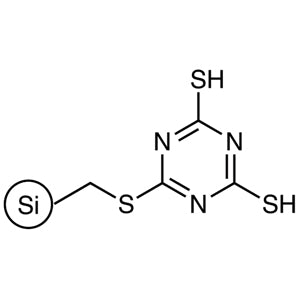
2,4,6-Trimercaptotriazine Silica Gel (Si-TMT) is a specialized chemical compound used in organic synthesis, particularly in reactions requiring sulfide group attachment. This material is a silica gel activated with trimercaptotriazine groups, providing both reactivity and selectivity in chemical processes. Its unique structure allows it to act as a solid support in various synthetic applications, making it a versatile tool in modern laboratories. Si-TMT is especially valuable for its ability to facilitate complex molecular modifications and the development of new compounds.
Si-TMT is preferred due to its high reactivity, stemming from the presence of sulfide groups that readily interact with a wide range of substrates. The silica gel base offers a large surface area, enhancing reaction efficiency and yield. Additionally, the material is stable under specific conditions, making it suitable for use in both small-scale and larger laboratory settings. Its ease of processing and consistent performance contribute to its popularity among chemists working in synthetic and catalytic applications.
In Indonesian laboratories, Si-TMT is commonly used in organic chemistry research, particularly in the synthesis of pharmaceutical compounds and inorganic materials. Its role in catalytic studies and functional group activation has made it an essential component in many research projects. The material’s reliability and effectiveness in controlled environments make it a preferred choice for both academic and industrial research settings.
TCI brochures (PDF)
- Suzuki-Miyaura Cross Coupling Reaction 2025-12-01 · p. 27
- Organic synthesis where sulfide group attachment is required, due to its reactivity and selectivity in functional group modification.
- Catalytic reactions where solid support is needed for efficient and controlled reaction environments, thanks to its high surface area and stability.
- Development of pharmaceutical compounds, as it facilitates the synthesis of complex molecules with high efficiency and reproducibility.
- Inorganic material synthesis, where Si-TMT supports the formation of structured compounds through its reactive surface properties.
- Functional group activation studies, due to its ability to interact with various substrates and promote targeted chemical transformations.
| Brand | TCI |
|---|---|
| CAS number | 1226494-16-1 |
| Molecular formula | — |
| Purity | — |
| Category | Chemistry > Specialty Synthesis > Solid Supported Synthesis |
| Pack sizes | 0.2-0.5mmol/g |
| Physical form | Silica gel |
| Storage | Store in a cool, dry place away from moisture and direct sunlight |
Si-TMT should be stored in a cool, dry environment to maintain its chemical integrity and reactivity. It is recommended to keep the material in airtight containers to prevent exposure to moisture, which can affect its performance. Due to its reactive nature, it should be handled with care in a well-ventilated laboratory setting. Avoid contact with incompatible substances and ensure proper personal protective equipment is used during handling. The material is stable under normal laboratory conditions but should be protected from prolonged exposure to extreme temperatures or humidity. Regular inspection of storage conditions is advised to ensure optimal performance and safety.
—
Produk Terkait
-
SilicaGel(Spherical,100microm)[forColumnChromatography] TCI S0822
Regular price Rp 2.809.800,00Regular priceRp 1.964.550,00Sale price Rp 2.809.800,00 -
SilicaGel(Spherical,60microm)[forFlashChromatography] TCI S0821
Regular price Rp 3.658.200,00Regular priceRp 2.557.800,00Sale price Rp 3.658.200,00 -
CharcoalActivated[CatalystforOxidationusingMolecularOxygen] TCI C2194
Regular price Rp 769.650,00Regular priceRp 537.600,00Sale price Rp 769.650,00


