Tetrahydropyran (THP) from TCI is a saturated six-membered cyclic ether that contains a single oxygen atom within its ring. It is the six-membered analogue of tetrahydrofuran and forms the core skeleton of many natural compounds, most notably sugars in their pyranose form. In the laboratory, Tetrahydropyran serves as an alternative ether solvent, a model compound for structural and conformational studies, and a heterocyclic building block for research in organic synthesis and medicinal chemistry.
Researchers choose Tetrahydropyran because it is a fairly stable aprotic ether solvent with moderate polarity that dissolves a wide range of organic compounds. Its solubility in water is more limited than that of THF, which can make phase separation easier during work-up. The six-membered ring adopts a chair conformation similar to cyclohexane, which makes it an important model for studying the anomeric effect and ring conformation. The tetrahydropyran motif also appears in many drug molecules, so it is relevant to molecular design work.
In Indonesian laboratories, Tetrahydropyran is useful to researchers in organic chemistry, natural product chemistry, and computational chemistry who need a well-defined cyclic ether for their work. University research groups can use it as a reference structure when studying carbohydrate-related ring systems and conformational behaviour. Synthetic and medicinal chemistry teams can use it as a heterocyclic starting point or as an alternative ether solvent in reactions and extractions, where its limited water solubility helps make work-up simpler.
Related TCI products
- Alternative ether solvent: its fairly stable aprotic character and moderate polarity let it dissolve many organic compounds, and its lower water solubility than THF can make work-up easier.
- Conformational and structural studies: the ring adopts a chair conformation similar to cyclohexane, which makes it a useful model for examining ring conformation in a simple, well-defined system.
- Anomeric effect research: as the parent ring of pyranose sugars, it gives a basic reference framework for studying the anomeric effect relevant to carbohydrate chemistry.
- Heterocyclic building block in organic synthesis: the oxygen-containing six-membered ring makes it a suitable starting scaffold for building more complex heterocyclic structures in synthetic research.
- Medicinal chemistry and molecular design: the tetrahydropyran motif appears in many drugs, so this compound is relevant for exploring and designing drug-like molecules containing the ring.
| Brand | TCI (product code T0110) |
|---|---|
| CAS number | 142-68-7 |
| Molecular formula | — |
| Purity | — |
| Category | Chemistry > Building Blocks > Heterocyclic Building Blocks |
| Pack sizes | available in the pack sizes offered in the TCI catalogue |
| Physical form | liquid (saturated cyclic ether) |
| Storage | keep tightly closed in a cool, well-ventilated place away from ignition sources |
Store Tetrahydropyran in its original, tightly sealed container in a cool, dry, well-ventilated area away from heat, sparks, open flames, and strong oxidising agents. Like other ethers, it should be treated as a flammable solvent that may form peroxides over time. Record the date each container is opened and check it periodically during long-term storage. Handle it in a fume hood and wear suitable gloves, safety glasses, and a lab coat. Do not inhale the vapours or let the liquid touch your skin or eyes. Always read the TCI Safety Data Sheet before use and dispose of waste according to local regulations.
—
Produk Terkait
-
2-Vinyloxytetrahydropyran TCI V0076
Regular price Rp 7.446.600,00Regular priceRp 5.222.700,00Sale price Rp 7.446.600,00 -
Tetrahydropyran-4-methanol TCI T2965
Regular price From Rp 1.908.900,00Regular priceRp 1.350.300,00Sale price From Rp 1.908.900,00 -
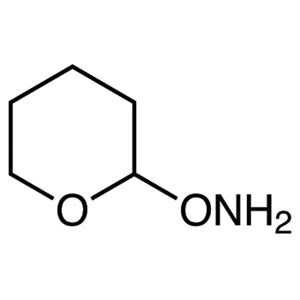
O-(Tetrahydropyran-2-yl)hydroxylamine TCI T2598
Regular price From Rp 1.431.150,00Regular priceRp 1.016.400,00Sale price From Rp 1.431.150,00 -
Tetrahydropyran-4-carboxylicAcid TCI T2493
Regular price From Rp 2.013.900,00Regular priceRp 1.423.800,00Sale price From Rp 2.013.900,00 -
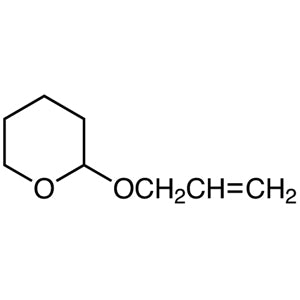
2-Allyloxytetrahydropyran TCI A2391
Regular price From Rp 1.801.800,00Regular priceRp 1.275.750,00Sale price From Rp 1.801.800,00 -
Tetrahydropyran-2-methanol TCI T0952
Regular price From Rp 1.881.600,00Regular priceRp 1.331.400,00Sale price From Rp 1.881.600,00 -
2-(2-Propynyloxy)tetrahydropyran TCI P1624
Regular price Rp 2.994.600,00Regular priceRp 2.109.450,00Sale price Rp 2.994.600,00 -
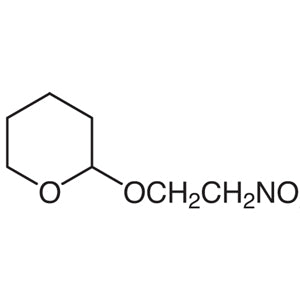
2-(2-Nitroethoxy)tetrahydropyran TCI N0602
Regular price From Rp 2.147.250,00Regular priceRp 1.517.250,00Sale price From Rp 2.147.250,00