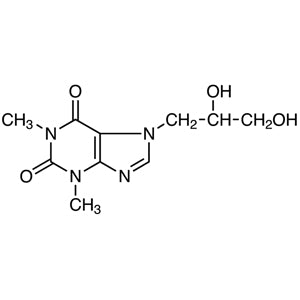
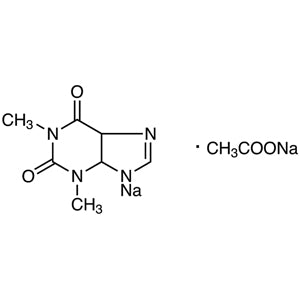
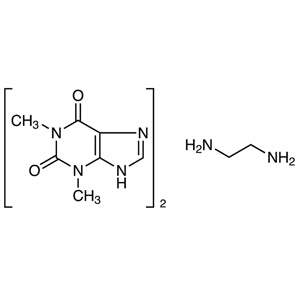
Theophylline is a chemical compound classified under alkaloids, widely utilized in life science research applications. It plays a crucial role in laboratories, particularly in pharmacological studies, where it is used to investigate the stimulant effects on the respiratory and cardiovascular systems. As a key component in drug development and clinical trials, Theophylline supports the exploration of therapeutic mechanisms and potential treatments. Its presence in biochemical and reagent categories makes it an essential material for scientific inquiry and experimentation.
Theophylline is valued for its strong pharmacological activity and chemical stability under specific conditions. It dissolves well in organic solvents such as ethyl acetate and ethanol, which facilitates its use in various laboratory processes. Its solubility and chemical properties make it a preferred choice for synthesis and analytical applications. Additionally, Theophylline is sensitive to moisture and air exposure, requiring careful handling to maintain its integrity and effectiveness in research settings.
In Indonesian laboratories, Theophylline is commonly used in pharmaceutical, biochemical, and health science research. It is an essential reagent for experiments involving drug development, biochemistry, and clinical analysis. Its versatility and reliability make it a go-to material for researchers seeking accurate and reproducible results in their studies.
TCI brochures (PDF)
- Traditional Medicine/Crude Medicine Research Reagents 2024-09-11 · p. 1
- Alkaloids 2025-10-10 · p. 7
- Nucleosides, Nucleotides, Nucleic Acids and Related Reagents 2026-03-23 · p. 12
- Plant Research Reagents 2026-02-24 · p. 8
- Phytochemicals 2025-12-17 · p. 4
- Pharmaceutical Ingredients for Research and Experimental Use 2026-03-09 · p. 48
- Pharmacological research for studying respiratory and cardiovascular stimulant effects.
- Drug development and clinical trial testing for therapeutic applications.
- Biochemical experiments requiring a stable alkaloid with known pharmacological properties.
- Analytical chemistry applications as a reference standard for chemical analysis.
- Synthesis of other compounds in organic chemistry and medicinal chemistry research.
| Brand | TCI |
|---|---|
| CAS number | 58-55-9 |
| Molecular formula | — |
| Purity | — |
| Category | Life Science > Biochemicals and Reagents > Alkaloids |
| Pack sizes | Available in various quantities as per supplier specifications |
| Physical form | Crystalline solid |
| Storage | Must be stored in a dry, airtight container away from moisture and light |
Theophylline should be stored in a cool, dry place, away from sources of moisture and direct sunlight. It is recommended to use airtight containers to prevent exposure to air and humidity, which can degrade its quality. Due to its sensitivity, it is important to handle Theophylline with care during preparation and use. Laboratory personnel should ensure proper ventilation when working with this compound and avoid contact with skin or inhalation of vapors. Maintaining appropriate storage conditions is essential to preserve its chemical integrity and ensure reliable results in experimental procedures.
—
Product Categories
- Biochemicals and ReagentsAlkaloidsPurine Alkaloids
- Biochemicals and ReagentsCrude Medicine Ingredients for Research and Experimental Use
- Biochemicals and ReagentsEnzymes, Enzyme Inhibitors, Enzyme SubstratesEnzyme Inhibitors [Biochemicals and Reagents]
- Biochemicals and ReagentsNucleosides, Nucleotides, OligonucleotidesNucleobases and their Analogs
- Biochemicals and ReagentsPharmaceutical Research Reagents (for Experimental Use)Pharmaceutical Research Reagents (Others)
- Biochemicals and Reagents
- Cell BiologyNutrition ResearchPhytochemicals
- MicrobiologyEfflux Pump ResearchEfflux Pump Inhibitors
- Pharmaceutical Development and Drug Discovery ResearchPharmaceutical Research Reagents (for Experimental Use)Pharmaceutical Research Reagents (Others)
- Pharmaceutical Development and Drug Discovery ResearchCrude Medicine Ingredients for Research and Experimental Use
Produk Terkait
-
7-(2,3-Dihydroxypropyl)theophylline TCI D3600
Regular price Rp 1.060.500,00Regular priceRp 757.050,00Sale price Rp 1.060.500,00 -
Theobromine TCI T0178
Regular price From Rp 1.272.600,00Regular priceRp 905.100,00Sale price From Rp 1.272.600,00 -
Theophyllol TCI T0180
Regular price Rp 2.147.250,00Regular priceRp 1.517.250,00Sale price Rp 2.147.250,00 -
Theophylline-7-aceticAcid TCI T2941
Regular price Rp 1.087.800,00Regular priceRp 775.950,00Sale price Rp 1.087.800,00 -
Aminophylline TCI A2805
Regular price Rp 928.200,00Regular priceRp 664.650,00Sale price Rp 928.200,00 -
Dimenhydrinate TCI D6336
Regular price From Rp 1.881.600,00Regular priceRp 1.331.400,00Sale price From Rp 1.881.600,00 -
8-Bromotheophylline TCI B3456
Regular price From Rp 3.419.850,00Regular priceRp 2.406.600,00Sale price From Rp 3.419.850,00 -
8-Chlorotheophylline TCI C0293
Regular price From Rp 1.510.950,00Regular priceRp 1.072.050,00Sale price From Rp 1.510.950,00