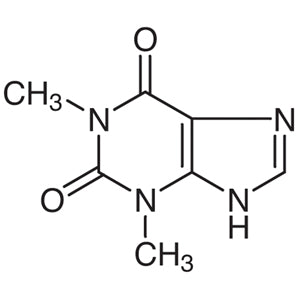
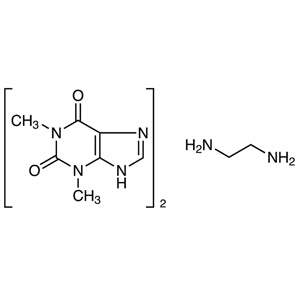
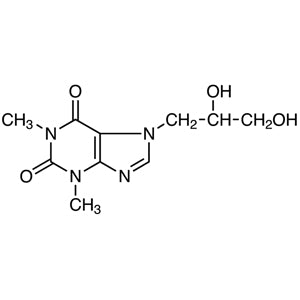
Theophylline is a chemical compound classified under alkaloids, widely used in scientific experiments and research across various life science fields. It plays a crucial role in laboratories by serving as a key reagent in biochemical and pharmacological studies. Its ability to influence biological responses makes it an essential tool for researchers aiming to understand cellular and tissue behavior. Theophylline is particularly valuable in studies related to drug development, pharmacological effects, and toxicological research. Its presence in Indonesian laboratories underscores its importance in advancing scientific knowledge and innovation in the life sciences.
Theophylline is preferred due to its chemical stability and solubility in organic solvents such as ethanol and chloroform. These properties make it easy to handle and incorporate into various experimental protocols. Its ability to affect metabolic pathways and the nervous system further enhances its utility in pharmacological and biochemical investigations. The compound’s resistance to certain environmental conditions also contributes to its reliability in long-term storage and use. These characteristics ensure that Theophylline remains a trusted and versatile reagent in both academic and industrial research settings.
In Indonesian laboratories, Theophylline is commonly used in pharmaceutical and bio-pharmaceutical research. It is a key component in the development of new drugs, the testing of side effects, and the study of molecular mechanisms. Its application extends to experiments focused on drug interactions and therapeutic effects, making it an indispensable tool for researchers in the life sciences. Its widespread use reflects its importance in advancing scientific research and innovation in Indonesia.
TCI brochures (PDF)
- Alkaloids 2025-10-10 · p. 7
- Phytochemicals 2025-12-17 · p. 4
- Pharmaceutical Ingredients for Research and Experimental Use 2026-03-09 · p. 48
- Pharmacological research utilizes Theophylline to study its effects on respiratory and nervous systems, aiding in the development of therapeutic agents.
- Biochemical experiments often incorporate Theophylline to investigate its influence on metabolic pathways and cellular responses.
- Toxicological studies benefit from Theophylline’s ability to affect biological systems, helping assess drug safety and long-term effects.
- Drug development projects use Theophylline as a model compound to test new formulations and evaluate pharmacological profiles.
- Cellular and tissue studies rely on Theophylline to analyze its impact on biological processes, supporting advancements in biotechnology and medicine.
| Brand | TCI |
|---|---|
| CAS number | 8002-89-9 |
| Molecular formula | — |
| Purity | — |
| Category | Life Science > Biochemicals and Reagents > Alkaloids |
| Pack sizes | Available in various quantities as per standard laboratory requirements |
| Physical form | Crystalline powder |
| Storage | Store in a cool, dry place away from light and moisture |
Theophylline should be stored in a cool, dry environment, away from direct light and moisture to maintain its chemical stability. It is recommended to use airtight containers to prevent contamination and degradation. Due to its solubility in organic solvents, it should be handled in a well-ventilated area to minimize exposure. Laboratory personnel should wear appropriate personal protective equipment, such as gloves and safety goggles, when handling the compound. Proper labeling of storage containers is essential to ensure safe handling and prevent accidental misuse. These precautions help ensure the integrity and safety of Theophylline during storage and use in laboratory settings.
—
Product Categories
- Biochemicals and ReagentsAlkaloidsPurine Alkaloids
- Biochemicals and ReagentsNucleosides, Nucleotides, OligonucleotidesNucleobases and their Analogs
- Biochemicals and ReagentsPharmaceutical Research Reagents (for Experimental Use)Pharmaceutical Research Reagents (Others)
- Cell BiologyNutrition ResearchPhytochemicals
- Pharmaceutical Development and Drug Discovery ResearchPharmaceutical Research Reagents (for Experimental Use)Pharmaceutical Research Reagents (Others)
Produk Terkait
-
Theophylline TCI T0179
Regular price From Rp 557.550,00Regular priceRp 405.300,00Sale price From Rp 557.550,00 -
Dimenhydrinate TCI D6336
Regular price From Rp 1.881.600,00Regular priceRp 1.331.400,00Sale price From Rp 1.881.600,00 -
Aminophylline TCI A2805
Regular price Rp 928.200,00Regular priceRp 664.650,00Sale price Rp 928.200,00 -
Theobromine TCI T0178
Regular price From Rp 1.272.600,00Regular priceRp 905.100,00Sale price From Rp 1.272.600,00 -
Theophylline-7-aceticAcid TCI T2941
Regular price Rp 1.087.800,00Regular priceRp 775.950,00Sale price Rp 1.087.800,00 -
8-Bromotheophylline TCI B3456
Regular price From Rp 3.419.850,00Regular priceRp 2.406.600,00Sale price From Rp 3.419.850,00 -
7-(2,3-Dihydroxypropyl)theophylline TCI D3600
Regular price Rp 1.060.500,00Regular priceRp 757.050,00Sale price Rp 1.060.500,00 -
8-Chlorotheophylline TCI C0293
Regular price From Rp 1.510.950,00Regular priceRp 1.072.050,00Sale price From Rp 1.510.950,00