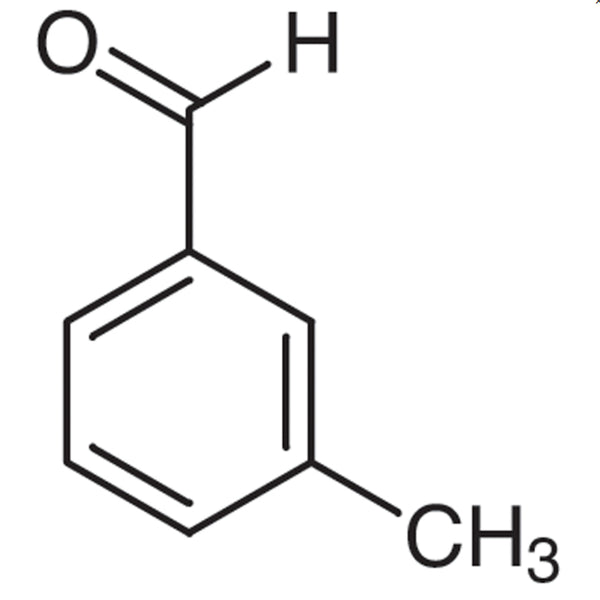
m-Tolualdehyde (2-methyl-3-phenyl-1-propen-1-ol), with CAS number 620-23-5, is an organic compound widely used in various chemical reactions within laboratory settings. It belongs to the category of non-heterocyclic building blocks, making it a fundamental component in the synthesis of more complex organic molecules. Its aromatic structure combined with an aldehyde functional group provides versatility in chemical transformations, enabling it to participate in a range of reactions such as oxidation, reduction, and condensation. This compound is particularly valuable in the development of aromatic derivatives and functionalized compounds.
The stability of m-Tolualdehyde, enhanced by stabilization with hydroquinone (HQ), makes it a preferred choice for laboratory use. This stabilization not only improves its shelf life but also reduces the risk of degradation during storage and handling. Its volatility and potential to cause skin or eye irritation necessitate careful handling, but its chemical stability ensures reliable performance in synthetic processes. The combination of reactivity and stability allows it to be a reliable reagent in diverse chemical applications.
In Indonesian laboratories, m-Tolualdehyde is commonly used in chemical research, especially in the synthesis of aromatic compounds and substitution reactions. It is also frequently found in pharmacological and organic chemistry studies that require compounds with aromatic structures and aldehyde groups. Its availability in the local market ensures that researchers have consistent access to this essential building block for their experiments.
Related TCI products
- Aromatic Compound Synthesis: m-Tolualdehyde serves as a key building block for creating aromatic derivatives due to its stable aromatic structure and reactive aldehyde group.
- Organic Chemistry Reactions: Its versatility in participating in oxidation, reduction, and condensation reactions makes it ideal for a wide range of synthetic pathways.
- Pharmacological Research: The compound is used in drug development studies where aromatic and aldehyde functionalities are essential for target molecule design.
- Functional Group Modification: Its aldehyde group allows for easy modification through various chemical reactions, making it suitable for creating more complex molecules.
- Substitution Reactions: m-Tolualdehyde is often employed in substitution reactions to introduce new functional groups onto aromatic rings in synthetic processes.
| Brand | TCI |
|---|---|
| CAS number | 620-23-5 |
| Molecular formula | — |
| Purity | — |
| Category | Chemistry > Building Blocks > Non-Heterocyclic Building Blocks |
| Pack sizes | Available in standard laboratory quantities |
| Physical form | Liquid |
| Storage | Store in a cool, dark place away from heat and direct sunlight |
m-Tolualdehyde should be stored in a cool, dark location, away from heat and direct sunlight to maintain its stability. It is recommended to use airtight containers to prevent exposure to air and moisture, which can affect its integrity. Due to its volatility and potential to cause irritation, it should be handled in a well-ventilated area, preferably with appropriate personal protective equipment such as gloves and safety goggles. Regular monitoring of storage conditions is essential to ensure the compound remains effective and safe for use in laboratory applications. Proper labeling of containers is also important to prevent accidental exposure and ensure safe handling practices are followed.
—
Produk Terkait
-
p-Tolualdehyde TCI T1073
Regular price From Rp 477.750,00Regular price -
o-Tolualdehyde TCI T0566
Regular price From Rp 1.670.550,00Regular price -
p-Tolualdehyde TCI T0259
Regular price From Rp 664.650,00Regular price -
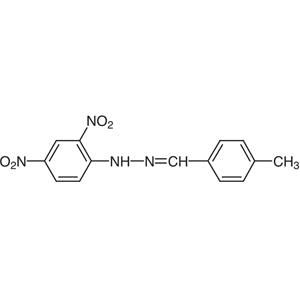
p-Tolualdehyde2,4-Dinitrophenylhydrazone TCI T1449
Regular price From Rp 1.035.300,00Regular price -
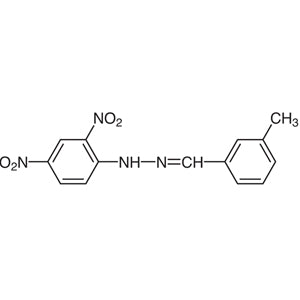
m-Tolualdehyde2,4-Dinitrophenylhydrazone TCI T1448
Regular price From Rp 980.700,00Regular price -
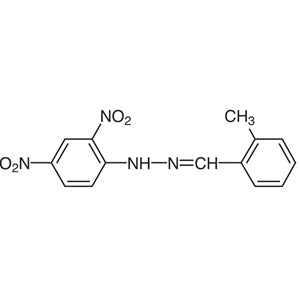
o-Tolualdehyde2,4-Dinitrophenylhydrazone TCI T1447
Regular price From Rp 637.350,00Regular price