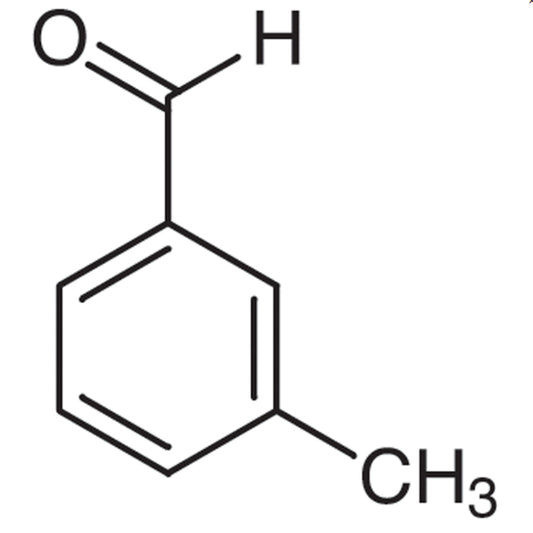
p-Tolualdehyde (p-Toluic aldehyde), with CAS number 104-87-0, is an organic compound widely utilized in chemical laboratories for various synthetic reactions. As a key building block in the field of chemistry, it serves as a fundamental component in the synthesis of complex compounds, particularly in the development of aromatic and heterocyclic structures. Its aromatic nature and reactive functional group make it a versatile reagent in organic synthesis. This compound is essential for researchers aiming to modify molecular structures through chemical transformations.
The chemical properties of p-Tolualdehyde make it a preferred choice in synthetic processes. It exhibits reactivity in reduction, oxidation, and substitution reactions, which are critical in the creation of diverse organic molecules. Its moderate volatility and relatively high boiling point allow for controlled handling during laboratory procedures. These characteristics contribute to its reliability in both research and industrial applications. The stability and reactivity of p-Tolualdehyde make it a valuable resource for chemists working in various fields.
In Indonesian laboratories, p-Tolualdehyde is commonly used in organic chemistry research, particularly in pharmaceutical, material science, and analytical chemistry. Its availability in the local market ensures that researchers can easily access this essential compound for their experiments. The compound's role in modifying aromatic structures makes it highly relevant for studies requiring chemical flexibility and reactivity. Its consistent performance in laboratory settings supports its widespread use in both academic and industrial research.
- Organic synthesis applications benefit from p-Tolualdehyde's reactivity in reduction and oxidation reactions, enabling the creation of complex aromatic compounds.
- Pharmaceutical research utilizes this compound for the development of new drug molecules, leveraging its ability to participate in various synthetic pathways.
- Material science applications rely on its structural versatility, allowing for the synthesis of functional materials with tailored properties.
- Analytical chemistry uses p-Tolualdehyde as a reference standard for chromatographic and spectroscopic analyses due to its well-defined chemical properties.
- Industrial chemical processes incorporate this compound for the production of intermediates used in the manufacturing of dyes, fragrances, and specialty chemicals.
| Brand | TCI |
|---|---|
| CAS number | 104-87-0 |
| Molecular formula | — |
| Purity | — |
| Category | Chemistry > Building Blocks > Non-Heterocyclic Building Blocks |
| Pack sizes | Available in various quantities suitable for laboratory use |
| Physical form | Liquid |
| Storage | Store in a cool, dry place away from direct sunlight |
p-Tolualdehyde should be stored in a cool, dry environment, away from direct sunlight and sources of heat. It is recommended to use airtight containers made of glass or polyethylene to prevent contamination and evaporation. Due to its moderate volatility, proper sealing is essential to maintain stability. In laboratory settings, it should be handled in a well-ventilated area to minimize exposure. Avoid contact with incompatible substances such as strong oxidizing agents. Always follow standard safety protocols when working with this compound to ensure safe and effective use.
—
Produk Terkait
-
p-Tolualdehyde TCI T1073
Regular price From Rp 477.750,00Regular price -
o-Tolualdehyde TCI T0566
Regular price From Rp 1.670.550,00Regular price -
m-Tolualdehyde(stabilizedwithHQ) TCI T0258
Regular price From Rp 664.650,00Regular price -
p-Anisaldehyde TCI A0480
Regular price From Rp 530.250,00Regular price -
4-Benzyloxybenzaldehyde TCI B1325
Regular price Rp 1.353.450,00Regular price -
4-Butylbenzaldehyde TCI B1014
Regular price From Rp 3.551.100,00Regular price -
4-Bromobenzaldehyde TCI B0549
Regular price From Rp 2.199.750,00Regular price -
4-Butoxybenzaldehyde TCI B0126
Regular price Rp 3.021.900,00Regular price