


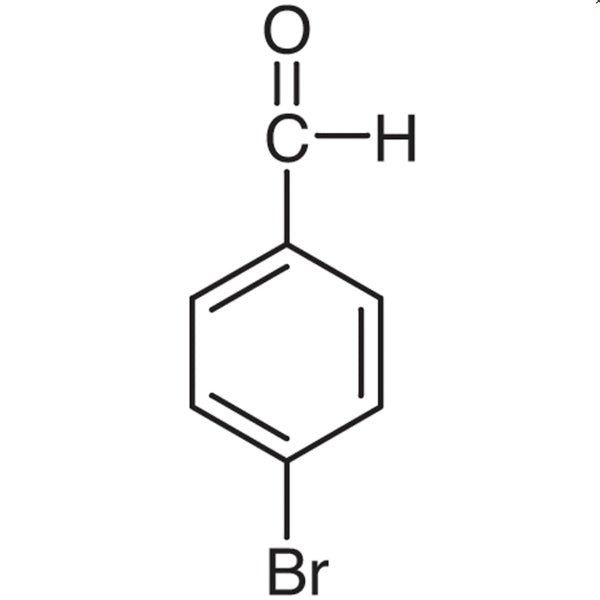
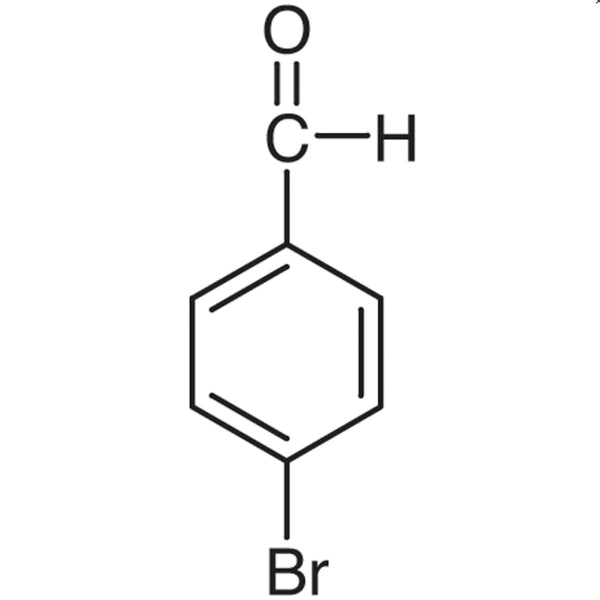
4-Bromobenzaldehyde is a versatile organic compound widely used in laboratory settings for its reactivity and structural versatility. It serves as a key building block in the synthesis of various organic compounds, particularly in the field of aromatic and heterocyclic chemistry. This compound features a benzene ring with a bromo group at the para position and an aldehyde group at the opposite end, making it a valuable intermediate in chemical reactions. Its unique molecular structure allows it to participate in multiple reaction mechanisms, such as nucleophilic and electrophilic substitutions, which are essential in synthetic pathways.
The chemical properties of 4-Bromobenzaldehyde make it a preferred choice for researchers and chemists. The bromo group imparts electron-withdrawing characteristics, enhancing its reactivity in substitution reactions. The aldehyde group is highly reactive, enabling it to engage in oxidation and reduction processes. These properties make it suitable for a wide range of chemical transformations. Additionally, its stable boiling and melting points ensure ease of handling and storage, contributing to its reliability in laboratory applications.
In Indonesian laboratories, 4-Bromobenzaldehyde is commonly used in organic chemistry research, particularly in academic and research institutions. It plays a crucial role in the development of new compounds and the study of reaction mechanisms. Its availability through suppliers like AMI Scientific ensures that researchers have access to this essential reagent for their experiments and investigations.
- Organic synthesis is a primary application where 4-Bromobenzaldehyde is used to create complex molecules through substitution and oxidation reactions.
- Heterocyclic compound development benefits from its reactive aldehyde group, allowing for the formation of ring structures in synthetic pathways.
- Reaction mechanism studies utilize its reactivity to explore nucleophilic and electrophilic interactions in controlled environments.
- Aromatic compound modification leverages the bromo group for targeted substitution reactions in synthetic chemistry.
- Educational research in Indonesian universities employs this compound to teach advanced organic chemistry concepts and experimental techniques.
| Brand | TCI |
|---|---|
| CAS number | 1122-91-4 |
| Molecular formula | — |
| Purity | — |
| Category | Chemistry > Building Blocks > Non-Heterocyclic Building Blocks |
| Pack sizes | Available in various quantities as per supplier specifications |
| Physical form | Solid or liquid, depending on the specific product variant |
| Storage | Store in a cool, dry place away from light and moisture |
4-Bromobenzaldehyde should be stored in a cool, dry environment, away from direct sunlight and moisture. It is recommended to use airtight containers made of glass or polyethylene to prevent contamination and degradation. Due to its reactivity, it should be handled with care, using appropriate personal protective equipment such as gloves and goggles. The compound is not flammable but may react with strong oxidizing agents, so it should be kept separate from such substances. Proper ventilation is essential when working with this material to ensure safe laboratory practices. Always follow standard chemical safety protocols to minimize risks during handling and use.
—
Product Categories
Produk Terkait
-
2-Bromobenzaldehyde TCI B0836
Regular price From Rp 1.246.350,00Regular priceRp 871.500,00Sale price From Rp 1.246.350,00 -
3-Bromobenzaldehyde TCI B0548
Regular price From Rp 795.900,00Regular priceRp 556.500,00Sale price From Rp 795.900,00 -
2-Amino-5-bromobenzaldehyde TCI A3063
Regular price From Rp 1.060.500,00Regular priceRp 757.050,00Sale price From Rp 1.060.500,00 -
2,6-Dibromobenzaldehyde TCI D4552
Regular price From Rp 2.491.650,00Regular priceRp 1.741.950,00Sale price From Rp 2.491.650,00 -
3,5-Dibromobenzaldehyde TCI D2832
Regular price From Rp 1.749.300,00Regular priceRp 1.223.250,00Sale price From Rp 1.749.300,00 -
2-Amino-3,5-dibromobenzaldehyde TCI D2625
Regular price From Rp 610.050,00Regular priceRp 442.050,00Sale price From Rp 610.050,00 -
p-Anisaldehyde TCI A0480
Regular price From Rp 530.250,00Regular priceRp 370.650,00Sale price From Rp 530.250,00 -
4-Benzyloxybenzaldehyde TCI B1325
Regular price Rp 1.353.450,00Regular priceRp 946.050,00Sale price Rp 1.353.450,00


