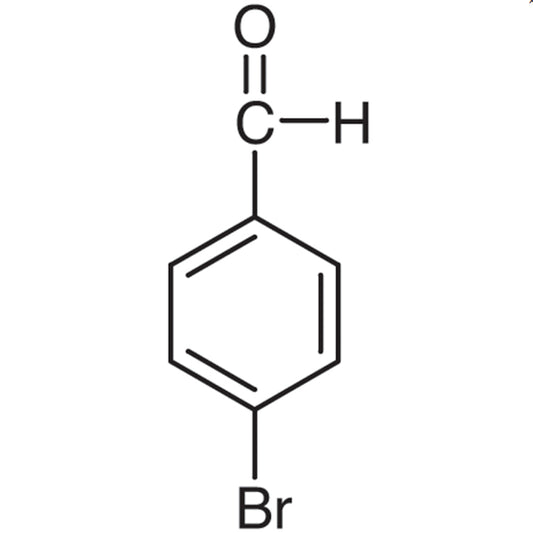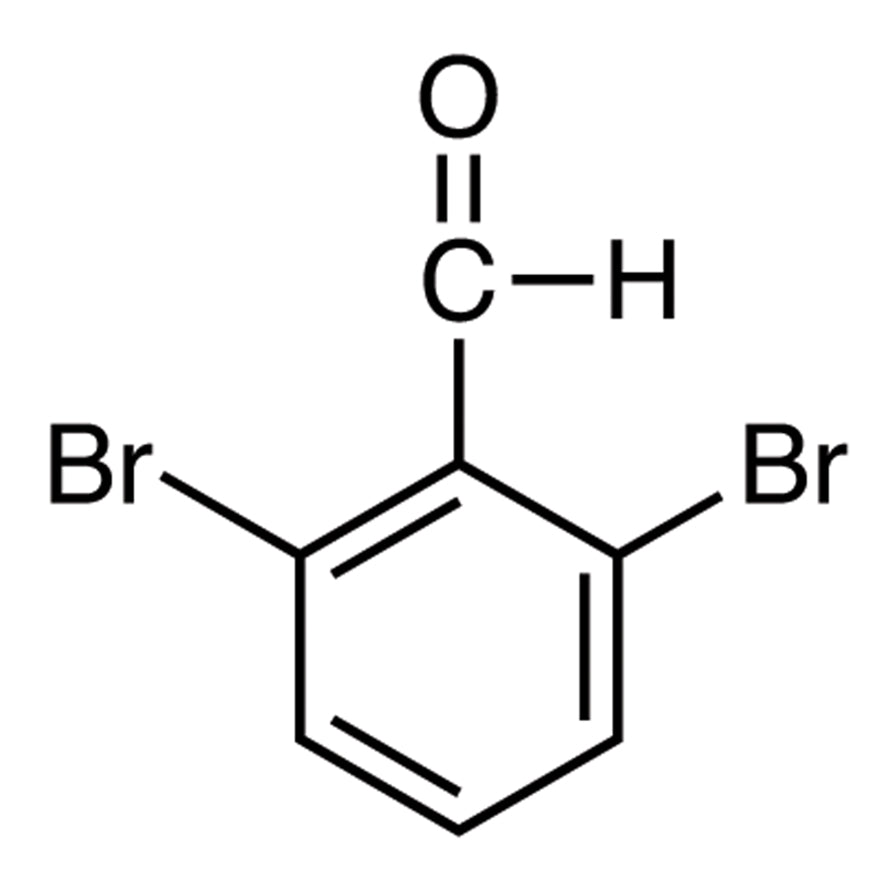
2,6-Dibromobenzaldehyde is a chemical compound widely used in organic reactions, particularly in the synthesis of aromatic and heterocyclic compounds. As a building block in chemical research, it serves as a versatile intermediate for creating more complex molecules. Its structural similarity to benzaldehyde, with two bromine atoms attached at the 2 and 6 positions, enhances its reactivity and makes it a valuable tool in synthetic chemistry. This compound is essential for researchers aiming to develop new materials, pharmaceuticals, and organic compounds.
The compound’s stable chemical structure and controlled reactivity make it a preferred choice in laboratory settings. It exhibits high melting points and good solubility in organic solvents, which allows for consistent performance across various experimental conditions. These properties ensure reliable results and ease of use in both small-scale and repeated experiments. Its predictable behavior under different reaction conditions also contributes to its popularity among chemists working in both academic and industrial environments.
In Indonesian laboratories, 2,6-Dibromobenzaldehyde is commonly used in pure and applied chemical research. It is a staple in educational institutions and research centers where new synthetic methods are being developed. Its role in expanding the understanding of aromatic reactivity makes it an essential component in the toolkit of chemists in Indonesia. The compound’s consistent performance and reliability further support its widespread use in diverse chemical applications.
- Organic synthesis of aromatic and heterocyclic compounds due to its reactive bromo groups and stable structure.
- Development of pharmaceuticals and advanced materials through controlled substitution reactions.
- Teaching and research in chemical education for demonstrating aromatic reactivity and functional group manipulation.
- Preparation of intermediates for complex molecule synthesis in industrial and academic settings.
- Investigation of electrophilic and substitution reactions in both small-scale and large-scale experiments.
| Brand | TCI |
|---|---|
| CAS number | 67713-23-9 |
| Molecular formula | — |
| Purity | — |
| Category | Chemistry > Building Blocks > Non-Heterocyclic Building Blocks |
| Pack sizes | Available in various quantities as per standard laboratory supply |
| Physical form | Solid |
| Storage | Store in a cool, dry place away from light and incompatible materials |
This compound should be stored in a cool, dry environment, away from direct sunlight and sources of heat. It is recommended to use sealed containers to prevent exposure to moisture and air, which may affect its stability. Due to its brominated structure, it is important to handle it with care, using appropriate personal protective equipment such as gloves and safety goggles. Avoid contact with incompatible substances like strong oxidizing agents. Ensure proper ventilation in the workspace to minimize inhalation risks. Regular monitoring of storage conditions is advised to maintain the compound’s integrity and ensure safe laboratory practices.
—
Produk Terkait
-
3,5-Dibromobenzaldehyde TCI D2832
Regular price From Rp 1.749.300,00Regular price -
2-Amino-3,5-dibromobenzaldehyde TCI D2625
Regular price From Rp 557.550,00Regular price -
2-Bromobenzaldehyde TCI B0836
Regular price From Rp 1.246.350,00Regular price -
4-Bromobenzaldehyde TCI B0549
Regular price From Rp 2.199.750,00Regular price -
3-Bromobenzaldehyde TCI B0548
Regular price From Rp 795.900,00Regular price -
2-Amino-5-bromobenzaldehyde TCI A3063
Regular price From Rp 1.008.000,00Regular price -
3-BromobenzaldehydeDiethylAcetal TCI B3822
Regular price Rp 2.625.000,00Regular price -
2-BromobenzaldehydeDiethylAcetal TCI B3800
Regular price Rp 2.121.000,00Regular price