N-(p-Toluoyl)glycine is a chemical compound widely used in laboratory settings for the synthesis of complex molecules. As a building block in organic chemistry, it plays a crucial role in various chemical reactions, particularly in substitution and functional group transformations. Its versatility allows chemists to modify molecular structures efficiently, making it a fundamental tool in synthetic chemistry. This compound is commonly employed in both academic and industrial research environments to develop new compounds with diverse applications.
The chemical properties of N-(p-Toluoyl)glycine, including its stability and reactivity, make it a preferred choice for laboratory use. It can readily react with a variety of reagents, enabling the formation of new functional groups and molecular frameworks. Its ability to form stable intermediates during chemical reactions enhances its utility in multi-step syntheses. These characteristics ensure that it remains a reliable and effective component in a wide range of chemical experiments.
In Indonesian laboratories, N-(p-Toluoyl)glycine is extensively used in pure and applied chemical research. It is a key reagent in the synthesis of new compounds, drug development, and molecular structure studies. Its availability supports efficient and accurate experimentation, contributing to the advancement of chemical science in the region. Researchers in universities and research institutions rely on this compound for its consistent performance and adaptability in different experimental contexts.
TCI brochures (PDF)
- Amino Acids and Peptide Synthesis Reagents 2025-08-14 · p. 24
Related TCI products
- Organic synthesis: N-(p-Toluoyl)glycine is ideal for organic synthesis due to its ability to participate in substitution reactions and functional group modifications, enabling the creation of complex molecular structures.
- Drug development: This compound is frequently used in the development of pharmaceuticals as a building block for synthesizing active pharmaceutical ingredients and bioactive molecules.
- Molecular structure studies: Its reactivity and stability make it suitable for studying molecular interactions and structural changes in various chemical systems.
- Research in material science: It is applied in the synthesis of materials with specific chemical properties, aiding in the development of advanced polymers and functional materials.
- Analytical chemistry: N-(p-Toluoyl)glycine is used as a reagent in analytical procedures to facilitate the detection and quantification of specific compounds in complex mixtures.
| Brand | TCI |
|---|---|
| CAS number | 27115-50-0 |
| Molecular formula | — |
| Purity | — |
| Category | Chemistry > Building Blocks > Non-Heterocyclic Building Blocks |
| Pack sizes | Available in various quantities as per standard laboratory supply |
| Physical form | Solid |
| Storage | Store in a cool, dry place away from moisture and direct sunlight |
N-(p-Toluoyl)glycine should be stored in a cool, dry environment to maintain its chemical stability. It is recommended to keep it in a sealed container to prevent exposure to moisture and air. Due to its reactivity, it should be handled with care, using appropriate personal protective equipment such as gloves and safety goggles. Avoid contact with incompatible substances to ensure safe laboratory practices. Proper labeling of storage containers is essential for safe handling and easy identification. Regular inspection of storage conditions ensures the compound remains in optimal condition for use in chemical experiments.
—
Product Categories
Produk Terkait
-
N-(o-Toluoyl)glycine TCI T0719
Regular price From Rp 2.730.000,00Regular priceRp 1.924.650,00Sale price From Rp 2.730.000,00 -
N-(m-Toluoyl)glycine TCI T0312
Regular price From Rp 1.326.150,00Regular priceRp 942.900,00Sale price From Rp 1.326.150,00 -
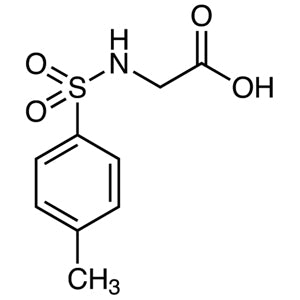
N-(p-Toluenesulfonyl)glycine TCI T2803
Regular price From Rp 1.590.750,00Regular priceRp 1.127.700,00Sale price From Rp 1.590.750,00 -
Phenylthiohydantoin-glycine TCI P0376
Regular price Rp 1.167.600,00Regular priceRp 831.600,00Sale price Rp 1.167.600,00 -
N-[(9H-Fluoren-9-ylmethoxy)carbonyl]glycine TCI F0293
Regular price From Rp 637.350,00Regular priceRp 460.950,00Sale price From Rp 637.350,00 -
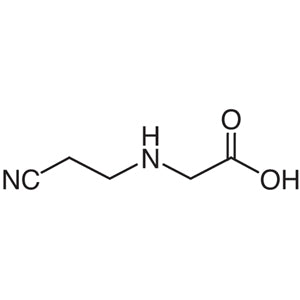
N-(2-Cyanoethyl)glycine TCI C1525
Regular price From Rp 1.033.200,00Regular priceRp 738.150,00Sale price From Rp 1.033.200,00 -
1-[(tert-Butoxycarbonyl)amino]cyclopropanecarboxylicAcid TCI B3138
Regular price From Rp 3.207.750,00Regular priceRp 2.258.550,00Sale price From Rp 3.207.750,00 -
Fmoc-6-Ahx-OH TCI F1319
Regular price From Rp 848.400,00Regular priceRp 609.000,00Sale price From Rp 848.400,00