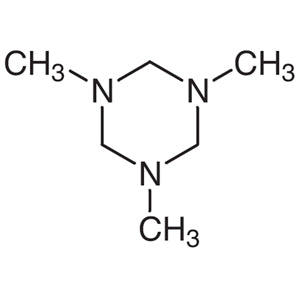
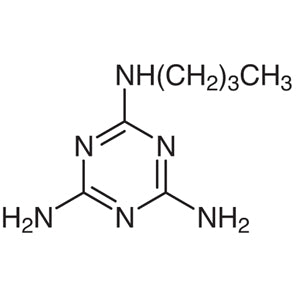
1,3,5-Triazine is a heterocyclic chemical compound characterized by a seven-membered ring containing three nitrogen atoms at positions 1, 3, and 5. This compound plays a vital role in laboratory settings as a foundational building block for the synthesis of complex organic molecules. Its unique structure allows for versatile chemical modifications, making it an essential tool in both organic chemistry and pharmaceutical research. Researchers often utilize 1,3,5-Triazine to develop new compounds with specific biological activities, leveraging its adaptability in various chemical reactions.
The stability of its chemical structure and controlled reactivity make 1,3,5-Triazine a preferred choice for synthetic chemists. It exhibits good chemical resistance across a range of reaction conditions, enabling efficient and reliable synthesis processes. Its ability to undergo substitution, hydroxylation, and functional group replacement reactions further enhances its utility in laboratory applications. These properties contribute to its widespread use in the development of bioactive compounds and pharmaceuticals.
In Indonesian laboratories, 1,3,5-Triazine is commonly used in chemical, pharmaceutical, and materials research. Its availability in various packaging sizes, such as 1g, 5g, and 25g, supports both small-scale and larger experimental needs. This compound is particularly relevant for studies involving the synthesis of active compounds, drug development, and functional material research. Its versatility and reliability make it a valuable resource for researchers in Indonesia.
Related TCI products
- TCI T4122 823-94-9 2,4,6-Trimethyl-1,3,5-triazine
- TCI T4078 443922-06-3 4,4',4''-(1,3,5-Triazine-2,4,6-triyl)tribenzaldehyde
- TCI T4077 3140-75-8 2,4,6-Tris(4-formylphenoxy)-1,3,5-triazine
- TCI T3695 14544-47-9 4,4',4''-(1,3,5-Triazine-2,4,6-triyl)trianiline
- TCI T2785 493-77-6 2,4,6-Triphenyl-1,3,5-triazine
- TCI T2059 3089-11-0 2,4,6-Tris[bis(methoxymethyl)amino]-1,3,5-triazine
- Organic synthesis applications benefit from 1,3,5-Triazine due to its ability to undergo multiple chemical transformations, enabling the creation of complex organic structures.
- Pharmaceutical research utilizes this compound as a core building block for the development of bioactive molecules and drug candidates.
- Materials science applications leverage its structural versatility for the synthesis of functional materials with specific chemical properties.
- Analytical chemistry experiments often use 1,3,5-Triazine as a reference standard or reagent for the identification and quantification of compounds.
- Environmental studies incorporate this compound in the analysis of chemical pollutants and the development of remediation strategies.
| Brand | TCI |
|---|---|
| CAS number | 290-87-9 |
| Molecular formula | — |
| Purity | — |
| Category | Chemistry > Building Blocks > Heterocyclic Building Blocks |
| Pack sizes | 1g, 5g, 25g |
| Physical form | Solid |
| Storage | Store in a cool, dry place away from moisture and direct sunlight. |
1,3,5-Triazine should be stored in a cool, dry environment to maintain its chemical stability and prevent degradation. It is recommended to keep the compound in a sealed container to avoid exposure to moisture, which can affect its reactivity. Suitable storage containers include glass or high-density polyethylene (HDPE) bottles with tight-fitting lids. Laboratory personnel should handle the compound with care, using appropriate personal protective equipment such as gloves and safety goggles. It is important to ensure proper ventilation when working with this compound to minimize inhalation risks. Regular monitoring of storage conditions is advised to maintain the integrity of the material for research purposes.
—
Produk Terkait
-
2,4,6-Trimethyl-1,3,5-triazine TCI T4122
Regular price Rp 3.180.450,00Regular priceRp 2.239.650,00Sale price Rp 3.180.450,00 -
4,4',4''-(1,3,5-Triazine-2,4,6-triyl)tribenzaldehyde TCI T4078
Regular price Rp 4.796.400,00Regular priceRp 3.369.450,00Sale price Rp 4.796.400,00 -
2,4,6-Tris(4-formylphenoxy)-1,3,5-triazine TCI T4077
Regular price Rp 2.121.000,00Regular priceRp 1.498.350,00Sale price Rp 2.121.000,00 -
4,4',4''-(1,3,5-Triazine-2,4,6-triyl)trianiline TCI T3695
Regular price From Rp 4.504.500,00Regular priceRp 3.165.750,00Sale price From Rp 4.504.500,00 -
2,4,6-Triphenyl-1,3,5-triazine TCI T2785
Regular price From Rp 822.150,00Regular priceRp 590.100,00Sale price From Rp 822.150,00 -
2,4,6-Tris[bis(methoxymethyl)amino]-1,3,5-triazine TCI T2059
Regular price From Rp 2.702.700,00Regular priceRp 1.905.750,00Sale price From Rp 2.702.700,00 -
1,3,5-Trimethylhexahydro-1,3,5-triazine TCI T1422
Regular price From Rp 1.618.050,00Regular priceRp 1.146.600,00Sale price From Rp 1.618.050,00 -
2,4-Diamino-6-butylamino-1,3,5-triazine TCI B0727
Regular price From Rp 2.835.000,00Regular priceRp 1.998.150,00Sale price From Rp 2.835.000,00