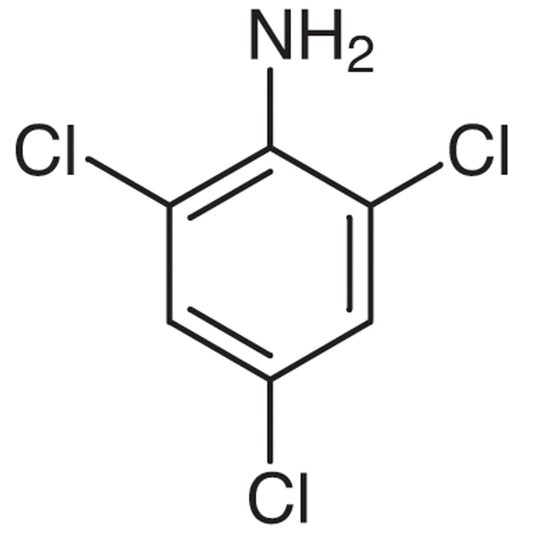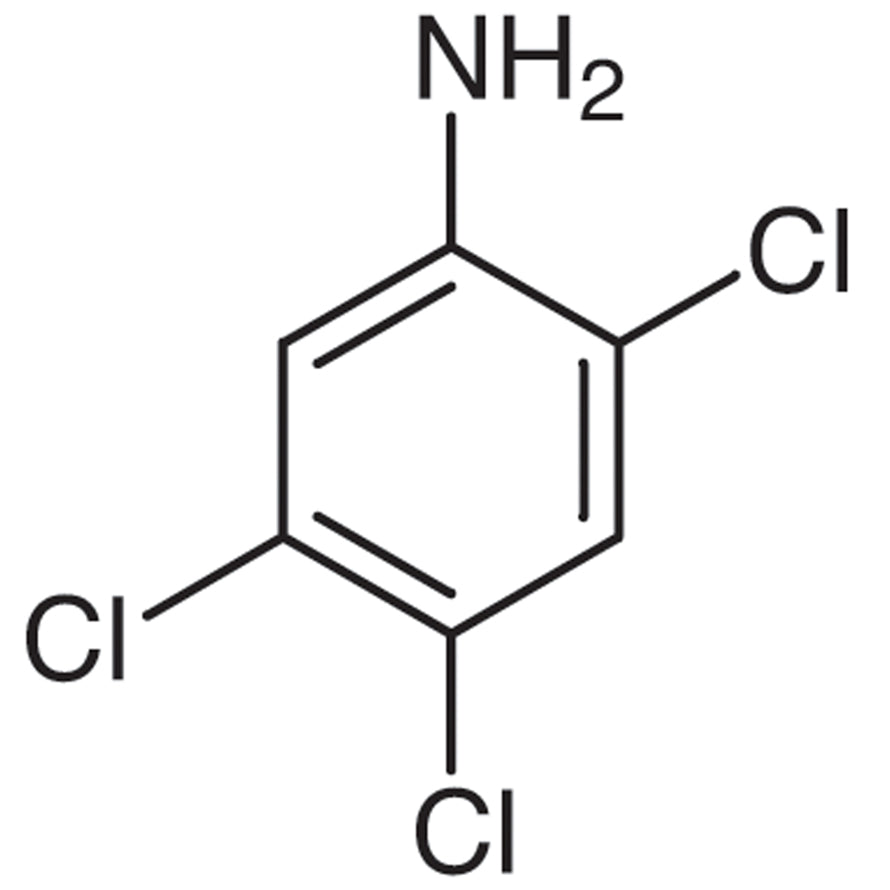
2,4,5-Trichloroaniline is a chemical compound widely used as a foundational building block in various chemical reactions, particularly in the synthesis of complex organic compounds. It plays a crucial role in laboratory settings where researchers aim to develop new materials, pharmaceuticals, or chemical intermediates. This compound is valued for its versatility and reactivity, making it an essential reagent in both academic and industrial research environments. Its presence in multiple chemical processes underscores its importance in advancing chemical innovation and discovery.
The compound is known for its stable yet reactive chemical properties, which allow it to participate in a range of reactions such as electrophilic substitution, coupling reactions, and reduction processes. Its aromatic structure, with three chlorine atoms attached at positions 2, 4, and 5, contributes to its high reactivity and functional versatility. These characteristics make it a preferred choice for chemists seeking to modify molecular structures or introduce functional groups into organic molecules. Its ability to undergo various chemical transformations enhances its utility in synthetic chemistry.
In Indonesian laboratories, 2,4,5-Trichloroaniline is commonly used in organic chemistry research, especially in the fields of pharmaceuticals and materials science. It is frequently employed in the development of new drugs, polymers, and specialty chemicals. Its availability and chemical properties make it a reliable and essential component in the chemical toolkit of Indonesian researchers, supporting both fundamental and applied scientific investigations.
- Organic synthesis is a key application where 2,4,5-Trichloroaniline is used to create complex molecules through substitution and coupling reactions.
- Pharmaceutical research benefits from its role in the development of new drugs, as it can be modified to produce various therapeutic agents.
- Material science applications rely on its reactivity to form polymers and other advanced materials with specific properties.
- Industrial chemical production uses it as a precursor for the synthesis of agrochemicals and specialty chemicals.
- Environmental studies may incorporate it to analyze the behavior of chlorinated aromatic compounds in different chemical systems.
| Brand | TCI |
|---|---|
| CAS number | 636-30-6 |
| Molecular formula | — |
| Purity | — |
| Category | Chemistry > Building Blocks > Non-Heterocyclic Building Blocks |
| Pack sizes | Available in various quantities as per standard laboratory requirements |
| Physical form | Solid, typically in crystalline form |
| Storage | Store in a cool, dry place away from light and moisture |
2,4,5-Trichloroaniline should be stored in a cool, dry environment, away from direct light and moisture to maintain its chemical stability. It is recommended to use airtight containers made of materials such as glass or polyethylene to prevent contamination and degradation. Due to its chemical reactivity, it should be handled with appropriate personal protective equipment, including gloves and safety goggles, to ensure laboratory safety. It is important to keep it away from incompatible substances such as strong oxidizers or acids. Proper ventilation should be maintained in the workspace to minimize exposure to vapors. Regular inspection of storage conditions ensures the compound remains suitable for use in research applications.
—
Produk Terkait
-
3,4,5-Trichloroaniline TCI T3008
Regular price Rp 4.664.100,00Regular priceRp 3.261.300,00Sale price Rp 4.664.100,00 -
2,3,4-Trichloroaniline TCI T0798
Regular price From Rp 3.605.700,00Regular priceRp 2.521.050,00Sale price From Rp 3.605.700,00 -
2,4,6-Trichloroaniline TCI T0375
Regular price From Rp 584.850,00Regular priceRp 408.450,00Sale price From Rp 584.850,00 -
3-Bromo-4-chloroaniline TCI B4160
Regular price Rp 1.538.250,00Regular priceRp 1.075.200,00Sale price Rp 1.538.250,00 -
4-Bromo-3-chloroaniline TCI B3709
Regular price From Rp 848.400,00Regular priceRp 593.250,00Sale price From Rp 848.400,00 -
2-Bromo-5-chloroaniline TCI B3182
Regular price From Rp 505.050,00Regular priceRp 352.800,00Sale price From Rp 505.050,00 -
2-Bromo-4-chloroaniline TCI B2268
Regular price From Rp 1.193.850,00Regular priceRp 834.750,00Sale price From Rp 1.193.850,00 -
2-Bromo-4,6-dichloroaniline TCI B2197
Regular price Rp 848.400,00Regular priceRp 593.250,00Sale price Rp 848.400,00