


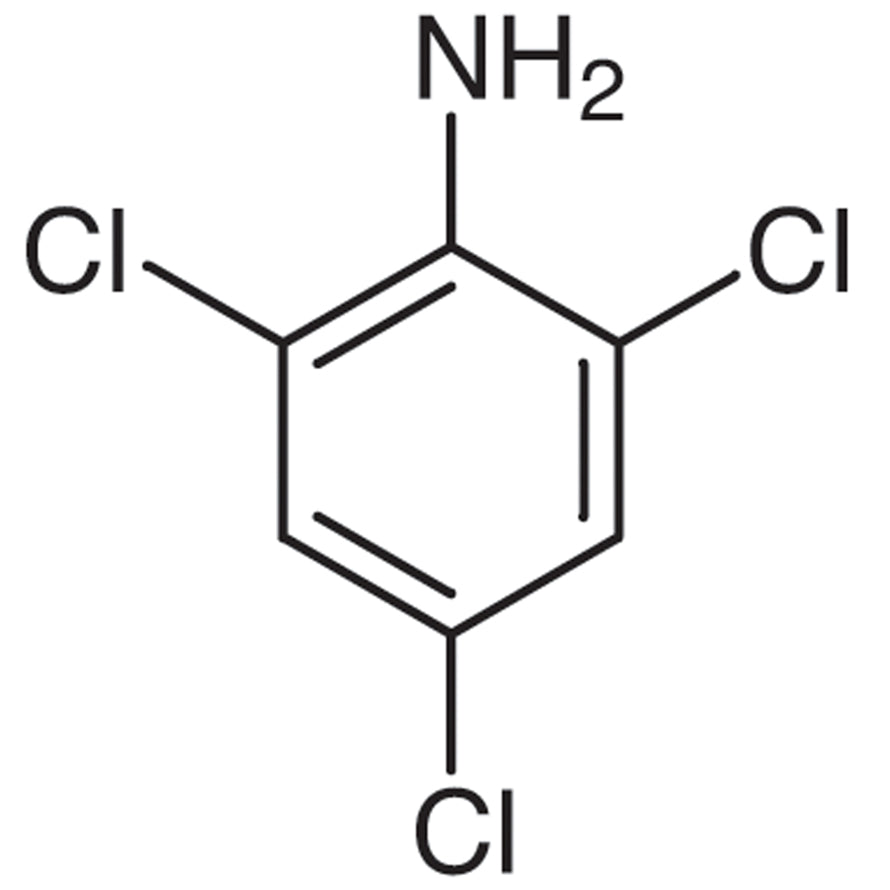
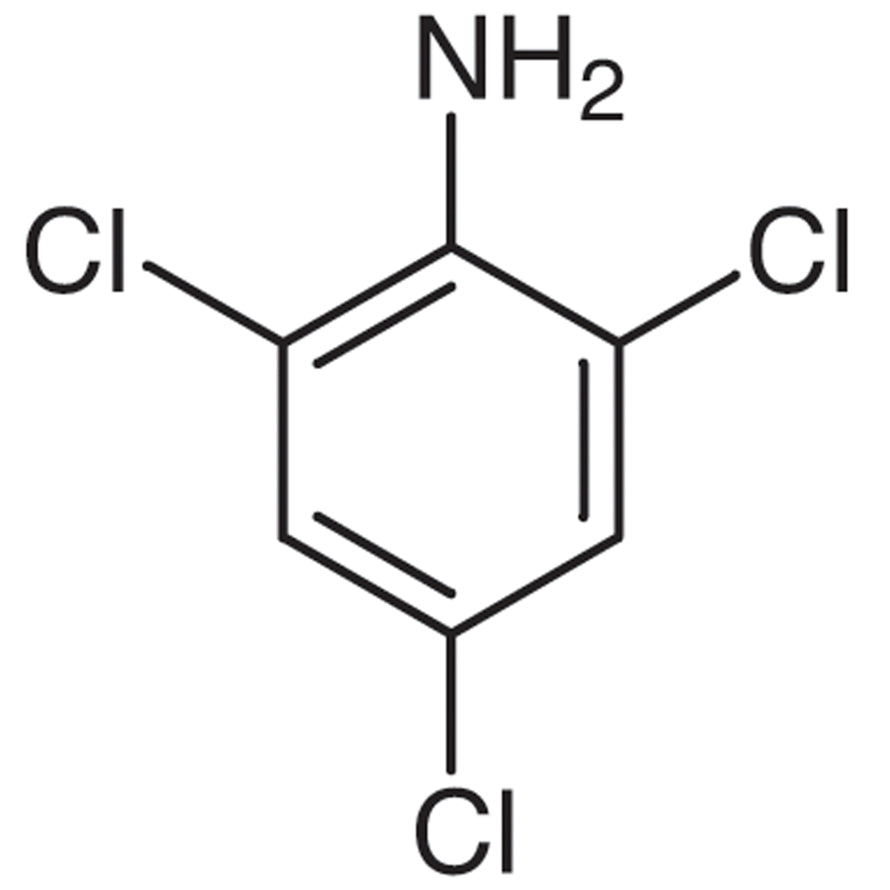
2,4,6-Trichloroaniline is a chemical compound widely used in synthetic chemistry reactions. As a fundamental building block in organic chemistry, it serves as a versatile intermediate in the synthesis of heterocyclic compounds, pharmaceuticals, and industrial chemicals. Its aromatic structure with three chlorine substituents provides a stable yet reactive platform for various chemical transformations. In the laboratory, it functions as a substrate or reagent in substitution, reduction, and condensation reactions. Its chemical properties make it a valuable tool for researchers seeking controlled reactivity in synthetic processes.
The compound’s chemical stability, combined with its reactivity towards bases, alkali metals, and halide compounds, makes it a preferred choice for controlled synthetic applications. Its relatively high melting and boiling points facilitate handling during heating and cooling procedures in the lab. These physical properties contribute to its reliability in both routine and specialized chemical experiments. The compound’s predictable behavior under different reaction conditions enhances its utility in laboratory settings where precision is essential.
In Indonesian laboratories, 2,4,6-Trichloroaniline is commonly used in chemical research, including the development of pharmacological compounds, industrial raw materials, and studies on aromatic reactivity. It is frequently accessed by researchers and students working on synthetic chemistry projects, making it an essential component of many laboratory inventories. Its availability and well-documented properties support its widespread use in academic and industrial research environments.
- Pharmaceutical research for the synthesis of heterocyclic compounds due to its aromatic structure and reactivity.
- Industrial chemical production as a building block for the development of various chemical intermediates.
- Organic synthesis experiments involving substitution and condensation reactions due to its functional group versatility.
- Analytical chemistry applications for studying reactivity and stability of aromatic compounds in different conditions.
- Educational purposes in teaching synthetic chemistry and reaction mechanisms to undergraduate and graduate students.
| Brand | TCI |
|---|---|
| CAS number | 634-93-5 |
| Molecular formula | — |
| Purity | — |
| Category | Chemistry > Building Blocks > Non-Heterocyclic Building Blocks |
| Pack sizes | Available in standard laboratory quantities as per supplier specifications |
| Physical form | Solid, typically in crystalline or powder form |
| Storage | Store in a cool, dry place away from light and incompatible substances |
2,4,6-Trichloroaniline should be stored in a cool, dry environment to maintain its chemical stability. It is recommended to use sealed containers to prevent moisture absorption and contamination. Proper ventilation is essential when handling the compound to minimize exposure to vapors. The substance should be kept away from incompatible materials such as strong bases and oxidizing agents. Laboratory personnel should wear appropriate personal protective equipment, including gloves and safety goggles, to ensure safe handling. Regular monitoring of storage conditions helps maintain the integrity of the compound and ensures compliance with safety protocols.
—
Produk Terkait
-
3,4,5-Trichloroaniline TCI T3008
Regular price Rp 4.664.100,00Regular priceRp 3.261.300,00Sale price Rp 4.664.100,00 -
2,3,4-Trichloroaniline TCI T0798
Regular price From Rp 3.605.700,00Regular priceRp 2.521.050,00Sale price From Rp 3.605.700,00 -
2,4,5-Trichloroaniline TCI T0374
Regular price Rp 1.220.100,00Regular priceRp 852.600,00Sale price Rp 1.220.100,00 -
3-Bromo-4-chloroaniline TCI B4160
Regular price Rp 1.538.250,00Regular priceRp 1.075.200,00Sale price Rp 1.538.250,00 -
4-Bromo-3-chloroaniline TCI B3709
Regular price From Rp 848.400,00Regular priceRp 593.250,00Sale price From Rp 848.400,00 -
2-Bromo-5-chloroaniline TCI B3182
Regular price From Rp 505.050,00Regular priceRp 352.800,00Sale price From Rp 505.050,00 -
2-Bromo-4-chloroaniline TCI B2268
Regular price From Rp 1.193.850,00Regular priceRp 834.750,00Sale price From Rp 1.193.850,00 -
2-Bromo-4,6-dichloroaniline TCI B2197
Regular price Rp 848.400,00Regular priceRp 593.250,00Sale price Rp 848.400,00


