Trifluoroacetic acid (TFA) is a powerful chemical compound widely used in various laboratory applications, particularly in organic chemistry and biochemical research. As a strong acid, it plays a critical role in molecular modification processes, including drying, separation, and structural alteration of organic compounds. Its high reactivity and ability to create extreme reaction conditions make it an essential reagent in advanced chemical synthesis. TFA is also a key component in glycoscience, where it supports chemical reactions involving glycosides or glycans. Its unique properties enable it to facilitate complex transformations that are otherwise difficult to achieve in standard laboratory settings.
One of the main reasons TFA is preferred in laboratories is its high polarity and strong ionization capability. These characteristics make it highly effective in altering the structure of organic compounds. Additionally, TFA exhibits excellent solubility in organic solvents, which simplifies dissolution and reaction processes. Its strong acidic nature allows it to act as a catalyst or reagent in a wide range of chemical reactions, making it versatile for different experimental needs. The consistency of its performance and reliability in various experimental conditions further solidify its position as a valuable laboratory reagent.
In Indonesian laboratories, TFA is commonly used in biochemical research, pharmaceutical chemistry, and the analysis of complex compounds. Its availability and consistent performance make it a preferred choice for researchers working on advanced chemical synthesis and molecular modification. Due to its broad applications, TFA remains a fundamental reagent in both academic and industrial research settings across Indonesia.
TCI brochures (PDF)
- Fluorinated Alcohol with Unique Properties HFIP 2025-02-03 · p. 2
- Di(2-picolyl)amine Ligands for C(sp2)-C(sp3) Cross-Coupling Reaction 2024-02-15 · p. 1
- Ligands for Reductive Cross Electrophile Coupling Capable of C(sp2)-C(sp3) Bond Formation 2024-02-06 · p. 1
- Nucleic Acid Medicine Synthesis Research Reagents 2024-11-07 · p. 1
- Oligonucleotide Synthesis Reagents 2025-07-24 · p. 2
- Oxidizing Agents 2025-06-11 · p. 3
- Biochemical research utilizes TFA for molecular modification and structural analysis due to its strong acidic properties and ability to create extreme reaction conditions.
- Pharmaceutical chemistry benefits from TFA’s solubility and reactivity in synthesizing complex organic compounds and modifying drug molecules.
- Glycoscience applications rely on TFA for supporting chemical reactions involving glycosides and glycans, enhancing the efficiency of carbohydrate-related studies.
- Analytical chemistry employs TFA for its effectiveness in dissolving and reacting with complex organic compounds, aiding in the analysis of various substances.
- Organic synthesis experiments use TFA as a catalyst or reagent to facilitate challenging chemical transformations under extreme conditions.
From the TCI brochure
- Additive in the reductive cross-electrophile coupling conditions (Zn, NaI, TFA, DMA, 80˚C)
| Brand | TCI |
|---|---|
| CAS number | 76-05-1 |
| Molecular formula | — |
| Purity | — |
| Category | Chemistry > Chemical Biology > Glycoscience |
| Pack sizes | Available in various sizes as per standard laboratory supply |
| Physical form | Liquid |
| Storage | Store in a cool, dry place away from moisture and incompatible materials |
TFA should be stored in a cool, dry environment, away from moisture and incompatible substances to maintain its stability and effectiveness. It is recommended to use airtight containers made of materials resistant to strong acids, such as glass or high-density polyethylene. Due to its strong acidic nature, proper personal protective equipment, including gloves, goggles, and a lab coat, should always be worn when handling TFA. In case of spills, neutralizing agents should be used immediately to prevent damage to laboratory surfaces and equipment. Regular monitoring of storage conditions is essential to ensure the safety and integrity of the compound during long-term use.
References cited in the TCI brochure
- Alexander J. Rago. Di(2-picolyl)amines as Modular and Robust Ligands for Nickel-Catalyzed C(sp2)–C(sp3) Cross-Electrophile Coupling Organic Letters, 2022. doi:10.1021/acs.orglett.2c03346
- Eric C. Hansen. Coupling of Challenging Heteroaryl Halides with Alkyl Halides via Nickel-Catalyzed Cross-Electrophile Coupling The Journal of Organic Chemistry, 2017. doi:10.1021/acs.joc.7b01334
Product Categories
- Chemical BiologyGlycoscienceReagents for Oligosaccharide Synthesis [Glycoscience]
- Chemical BiologyNucleic Acid ChemistryDeprotecting Agents [Nucleic Acid Synthesis]
- Synthetic ReagentsAcids, Bases [Synthetic Reagents]Acids [Synthetic Reagents]
- Synthetic ReagentsC-X(Non-Halogen) Bond Formation [Synthetic Reagents]C-H Bond Activation Reaction [Synthetic Reagents]
- Synthetic ReagentsProtection, Deprotection, DerivatizationDeprotecting Reagents [Synthetic Reagents]
- Pharmaceutical Development and Drug Discovery Research ReagentsNucleic Acid ChemistryDeprotecting Agents [Nucleic Acid Synthesis]
Produk Terkait
-
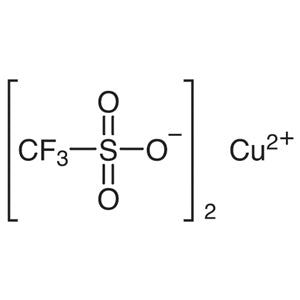
Copper(II)Trifluoromethanesulfonate TCI T1292
Regular price From Rp 1.510.950,00Regular priceRp 1.056.300,00Sale price From Rp 1.510.950,00 -
DifluoroaceticAcid TCI D1423
Regular price From Rp 530.250,00Regular priceRp 386.400,00Sale price From Rp 530.250,00 -
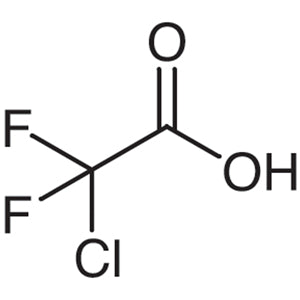
ChlorodifluoroaceticAcid TCI C0990
Regular price From Rp 822.150,00Regular priceRp 590.100,00Sale price From Rp 822.150,00 -
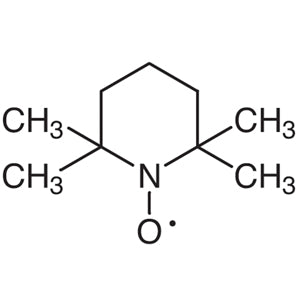
2,2,6,6-Tetramethylpiperidine1-OxylFreeRadical TCI T1560
Regular price From Rp 1.590.750,00Regular priceRp 1.111.950,00Sale price From Rp 1.590.750,00 -
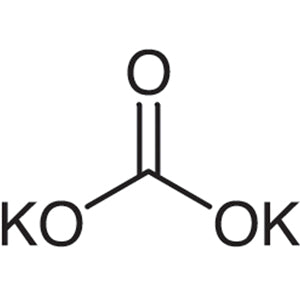
PotassiumCarbonate TCI P1748
Regular price Rp 505.050,00Regular priceRp 352.800,00Sale price Rp 505.050,00 -
Zinc(Powder) TCI Z0015
Regular price Rp 477.750,00Regular priceRp 333.900,00Sale price Rp 477.750,00 -
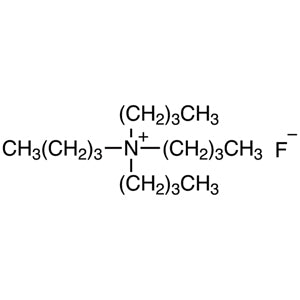
TetrabutylammoniumFluoride(ca1mol/LinTetrahydrofuran) TCI T1338
Regular price From Rp 717.150,00Regular priceRp 516.600,00Sale price From Rp 717.150,00 -
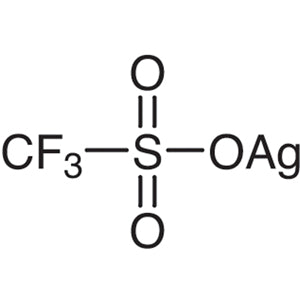
SilverTrifluoromethanesulfonate TCI T1331
Regular price From Rp 610.050,00Regular priceRp 426.300,00Sale price From Rp 610.050,00