Potassium carbonate (K2CO3), with CAS number 584-08-7, is an inorganic salt supplied as a white powder that is very commonly used in chemistry laboratories as a mild to moderately strong inorganic base. In organic synthesis, this compound plays an important role as a proton acceptor (base) that helps activate substrates, for example in the deprotonation of acidic groups or phenols, and it facilitates nucleophilic substitution reactions as well as cross-coupling reactions involving transition metal catalysts. As a base, it supports a broad range of routine laboratory procedures by providing controlled basicity that drives reactions toward the desired products while minimizing unwanted side reactions.
In cross-coupling reactions such as the Suzuki–Miyaura and Sonogashira reactions, potassium carbonate is frequently selected as the base to accelerate the transmetalation step and keep the catalytic cycle running smoothly. The TCI P1748 product is packaged in a 300 gram bottle, making it practical for laboratory-scale preparative work, whether for academic research or industrial development in Indonesia. With consistent purity and stable availability, TCI potassium carbonate is one of the essential reagents that supports the success of a wide variety of organic chemistry experiments. Its main advantage over other inorganic bases, such as sodium carbonate or potassium hydroxide, lies in its convenient balance of basicity, solubility, and ease of handling.
In Indonesian laboratories, TCI P1748 potassium carbonate is commonly used in organic synthesis courses, academic research projects, and industrial process development where a dependable base is required. It is especially valued in pharmaceutical and fine-chemical research settings that routinely perform palladium-catalyzed coupling reactions, where consistent base quality directly affects reproducibility. Because the product is supplied in a convenient 300 gram pack, laboratories can maintain a steady working stock for routine experiments, ensuring that researchers in Indonesia can rely on the same dependable reagent performance from one batch to another.
TCI brochures (PDF)
- Ruthenium Catalyst for the C-H Activation at meta-Position of Directing Group 2026-01-29 · p. 1
- Thianthrenium Salt Useful for Electrophilic Vinylation 2023-09-29 · p. 1
- Alternative Cross-coupling Reagents to Unstable Pyridineboronic Acids 2026-07-24 · p. 1
- Reagent for Incorporating a High-Performance Protecting Group (Nms) into Amines 2025-07-10 · p. 1
- Trifluoroborate Salts for Direct Introduction of Hydroxymethyl Group and Aminomethyl Group 2026-01-05 · p. 2
- Sulfonylation Reagents 2023-01-20 · p. 1
- Suzuki–Miyaura cross-coupling: Potassium carbonate acts as the base that drives the transmetalation step, helping transfer the organic group from the boronic acid to the palladium catalyst efficiently and keeping the catalytic cycle productive.
- Sonogashira coupling: As a mild inorganic base, it neutralizes the acidic proton of terminal alkynes and supports the copper–palladium catalytic cycle under relatively mild conditions, making it a practical choice for this reaction.
- Deprotonation of phenols and acidic groups: Its moderate basicity activates acidic substrates such as phenols or carboxylic acids, enabling subsequent nucleophilic substitution or alkylation steps to proceed under controlled conditions.
- Nucleophilic substitution reactions: Potassium carbonate facilitates SN2-type transformations in polar solvents by generating the required nucleophilic species from less reactive starting materials, which makes it a versatile base for routine synthesis.
- General base for organic synthesis: Its white powder form dissolves readily in aqueous or mixed solvent systems, making it a convenient and reliable base for a wide range of laboratory-scale reactions and preparative procedures.
From the TCI brochure
- Base in the meta-alkylation scheme with C3456 (dioxane, 100 °C)
| Brand | TCI |
|---|---|
| CAS number | 584-08-7 |
| Molecular formula | — |
| Purity | — |
| Category | Chemistry > Catalysis and Inorganic Chemistry > Cross-coupling Reaction using Transition Metal Catalysts [C-C Bond Formation] |
| Pack sizes | 300 gram bottle |
| Physical form | white powder |
| Storage | — |
- Product code: P1748
Potassium carbonate should be stored in its original, tightly closed container in a cool, dry, and well-ventilated area, protected from moisture and humidity because the salt is hygroscopic and may absorb water from the surrounding air. A desiccator or a sealed bottle with a tight-fitting lid is suitable for long-term storage. When handling the powder, wear appropriate personal protective equipment such as laboratory gloves and safety goggles to avoid contact with skin and eyes. Avoid generating dust, and work in a fume hood if large amounts are handled. Keep the container away from acids and strong oxidizing agents, and always recap the bottle immediately after use to preserve product quality and ensure reliable results in subsequent experiments.
References cited in the TCI brochure
- Nora Hofmann. meta-Selective C–H Bond Alkylation with Secondary Alkyl Halides Journal of the American Chemical Society, 2013. doi:10.1021/ja401466y
- Tim Markovic. Pyridine sulfinates as general nucleophilic coupling partners in palladium-catalyzed cross-coupling reactions with aryl halides Chemical Science, 2017. doi:10.1039/c7sc00675f
- Philipp Spieß. Nms‐Amides: An Amine Protecting Group with Unique Stability and Selectivity Chemistry – A European Journal, 2023. doi:10.1002/chem.202301312
- Rammohan Devulapally. Synthesis and cross-coupling reactions of imidomethyltrifluoroborates with aryl chlorides Tetrahedron Letters, 2012. doi:10.1016/j.tetlet.2011.12.062
- Gary A. Molander. Synthesis and Suzuki–Miyaura Cross-Coupling Reactions of Potassium Boc-Protected Aminomethyltrifluoroborate with Aryl and Hetaryl Halides Organic Letters, 2011. doi:10.1021/ol2014768
Product Categories
- Catalysis and Inorganic ChemistryCross-coupling Reaction using Transition Metal Catalysts [C-C Bond Formation]Bases and Additives [Cross-coupling Reaction using Transition Metal Catalysts]
- Catalysis and Inorganic ChemistryMetallic Salts [Catalysis and Inorganic Chemistry]Carbonate Salts [Metallic Salts]
- Chemical BiologyGlycoscienceReagents for Oligosaccharide Synthesis [Glycoscience]
- Synthetic ReagentsAcids, Bases [Synthetic Reagents]Bases [Synthetic Reagents]
- Synthetic ReagentsC-C Bond Formation [Synthetic Reagents]Cross-coupling Reaction using Transition Metal Catalysts [C-C Bond Formation]
- Synthetic ReagentsC-X(Non-Halogen) Bond Formation [Synthetic Reagents]C-H Bond Activation Reaction [Synthetic Reagents]
Produk Terkait
-
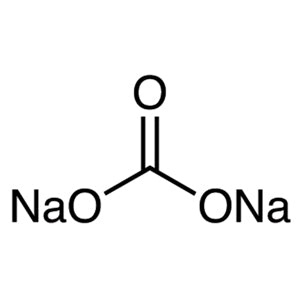
SodiumCarbonate TCI S0560
Regular price Rp 477.750,00Regular priceRp 333.900,00Sale price Rp 477.750,00 -
CesiumCarbonate TCI C2160
Regular price From Rp 1.378.650,00Regular priceRp 979.650,00Sale price From Rp 1.378.650,00 -
LithiumCarbonate TCI L0224
Regular price From Rp 557.550,00Regular priceRp 405.300,00Sale price From Rp 557.550,00 -
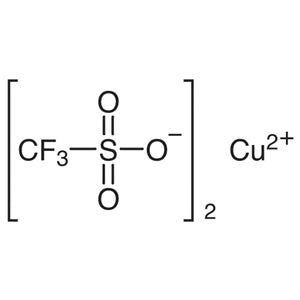
Copper(II)Trifluoromethanesulfonate TCI T1292
Regular price From Rp 1.510.950,00Regular priceRp 1.056.300,00Sale price From Rp 1.510.950,00 -
Palladium(II)Chloride TCI P1489
Regular price From Rp 3.127.950,00Regular priceRp 2.202.900,00Sale price From Rp 3.127.950,00 -
Zinc(Powder) TCI Z0015
Regular price Rp 477.750,00Regular priceRp 333.900,00Sale price Rp 477.750,00 -
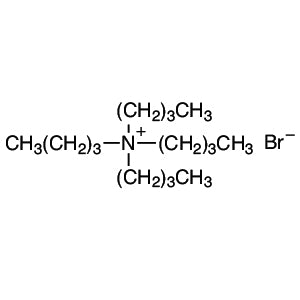
TetrabutylammoniumBromide TCI T0054
Regular price From Rp 557.550,00Regular priceRp 405.300,00Sale price From Rp 557.550,00 -
PotassiumHydroxide(Powder) TCI P2844
Regular price From Rp 505.050,00Regular priceRp 352.800,00Sale price From Rp 505.050,00