TCI T0054 Tetrabutylammonium Bromide, often abbreviated as TBAB, is a quaternary ammonium salt found in many organic synthesis laboratories. It is best known as a phase-transfer catalyst. It moves anions from the aqueous phase into the organic phase, which lets reactions between mutually immiscible reactants proceed smoothly. In cross-coupling reactions that use transition metal catalysts, TBAB is widely used as an additive. A common example is the Heck reaction under Jeffery conditions, where it helps stabilise palladium species and speeds up the reaction.
Chemists choose TBAB because its large, lipophilic tetrabutylammonium cation can carry anions into organic solvents, which is the basis of its phase-transfer behaviour. The salt is also fairly stable and easy to handle as a solid, so it is practical for routine weighing and reaction setup. In cross-coupling chemistry, TBAB is believed to stabilise palladium nanoparticles or active palladium species while also supplying bromide ions. As a result, reactions can often run under milder conditions, sometimes even without phosphine ligands, which keeps reaction design simpler.
In Indonesia, TBAB is a versatile reagent for organic chemistry laboratories at universities and research centres. Researchers use it in phase-transfer catalysis, in palladium-catalysed carbon–carbon bond formation, and in work on alternative reaction media. Besides its catalytic roles, TBAB is used as a component of ionic liquids and deep eutectic solvents. It also serves as a supporting electrolyte in electrochemistry. Because it covers so many uses, TBAB is a sensible reagent to keep on hand in synthesis, teaching and research laboratories.
TCI brochures (PDF)
- Highly Active Catalyst for Alcohol Oxidation - AZADOL® 2024-07-03 · p. 2
- Sulfur Dioxide (SO2) Surrogate Reagents Usable for Sulfonation 2026-05-18 · p. 1
- Halogenation Reagents 2026-04-03 · p. 7
- Oxidizing Agents 2025-06-11 · p. 4
- Glycosidation 2026-04-14 · p. 2
- Ionic Liquids 2026-06-08 · p. 6
- Phase-transfer catalysis: the lipophilic tetrabutylammonium cation carries anions from the aqueous phase into the organic phase, so reactions between immiscible reactants can proceed efficiently.
- Heck reaction under Jeffery conditions: TBAB is a well-established additive that helps stabilise palladium species and speed up carbon–carbon bond formation between aryl halides and alkenes.
- Phosphine-free palladium cross-coupling: by stabilising palladium nanoparticles or active palladium species and supplying bromide ions, TBAB allows some couplings to run under milder conditions without phosphine ligands.
- Ionic liquids and deep eutectic solvents: TBAB is used as a component when preparing these alternative reaction media for green chemistry and solvent research in academic laboratories.
- Electrochemistry: TBAB serves as a supporting electrolyte, providing ionic conductivity in organic solvents for electrochemical measurements and electrosynthesis experiments.
From the TCI brochure
- Additive in alkyl sulfone synthesis scheme with P2480
| Brand | TCI (product code T0054) |
|---|---|
| CAS number | 1643-19-2 |
| Molecular formula | — |
| Purity | — |
| Category | Chemistry > Catalysis and Inorganic Chemistry > Cross-coupling Reaction using Transition Metal Catalysts [C-C Bond Formation] |
| Pack sizes | as listed in the TCI catalogue for product T0054 |
| Physical form | solid |
| Storage | keep tightly closed in a cool, dry place, protected from moisture |
Store Tetrabutylammonium Bromide in its original, tightly sealed container in a cool, dry, well-ventilated area, away from moisture and incompatible substances such as strong oxidising agents. Close the container promptly after each use to keep the solid in good condition. Use clean, dry spatulas and glassware when weighing to avoid contamination. Follow standard laboratory safety practice: wear gloves, safety glasses and a lab coat, avoid creating or inhaling dust, and avoid contact with skin and eyes. Work in a fume hood or well-ventilated area when possible. Read the TCI Safety Data Sheet before use, and dispose of waste according to local regulations.
—
Product Categories
- Catalysis and Inorganic ChemistryCross-coupling Reaction using Transition Metal Catalysts [C-C Bond Formation]Bases and Additives [Cross-coupling Reaction using Transition Metal Catalysts]
- Chemical BiologyGlycoscienceReagents for Oligosaccharide Synthesis [Glycoscience]
- Specialty SynthesisIonic Liquids [Specialty Synthesis]Ammonium Salts [Ionic Liquids]
- Synthetic ReagentsC-C Bond Formation [Synthetic Reagents]Cross-coupling Reaction using Transition Metal Catalysts [C-C Bond Formation]
- Synthetic ReagentsPhase Transfer CatalystsAmmonium Salts [Phase Transfer Catalysts]
- Synthetic ReagentsC-X(Halogen) Bond Formation [Synthetic Reagents]Bromination [Synthetic Reagents]
Produk Terkait
-
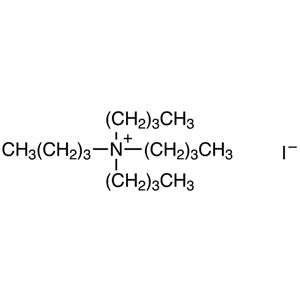
TetrabutylammoniumIodide TCI T0057
Regular price From Rp 769.650,00Regular priceRp 553.350,00Sale price From Rp 769.650,00 -
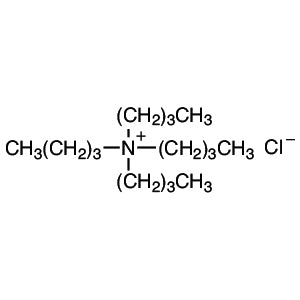
TetrabutylammoniumChloride TCI T0055
Regular price From Rp 928.200,00Regular priceRp 664.650,00Sale price From Rp 928.200,00 -
Tetra-n-octylammoniumBromide TCI T1603
Regular price From Rp 1.618.050,00Regular priceRp 1.146.600,00Sale price From Rp 1.618.050,00 -
TetraheptylammoniumBromide TCI T1602
Regular price From Rp 1.298.850,00Regular priceRp 924.000,00Sale price From Rp 1.298.850,00 -
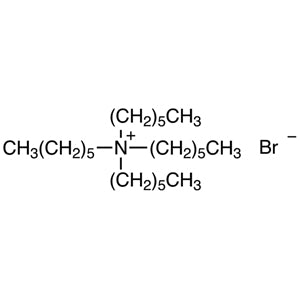
TetrahexylammoniumBromide TCI T1599
Regular price Rp 2.889.600,00Regular priceRp 2.035.950,00Sale price Rp 2.889.600,00 -
TetraamylammoniumBromide TCI T1432
Regular price From Rp 1.326.150,00Regular priceRp 942.900,00Sale price From Rp 1.326.150,00 -
Tetrabutylammoniump-Toluenesulfonate TCI T3660
Regular price From Rp 1.405.950,00Regular priceRp 998.550,00Sale price From Rp 1.405.950,00 -
TetrabutylammoniumAcetate TCI T2694
Regular price From Rp 822.150,00Regular priceRp 590.100,00Sale price From Rp 822.150,00