TCI T0057 Tetrabutylammonium Iodide, commonly abbreviated as TBAI, is a quaternary ammonium salt with an iodide anion. It plays a wide role in organic synthesis. TBAI is used as a phase-transfer catalyst, as an iodide source that dissolves in organic solvents, and as an additive in cross-coupling reactions that use transition metal catalysts. In recent decades, TBAI has also often appeared as a catalyst in oxidative coupling reactions run with peroxide oxidants. For this reason it has become an important reagent in modern synthetic laboratories, where chemists value its versatility across many types of transformation.
Chemists choose TBAI because iodide is both a good nucleophile and a good leaving group. In catalytic amounts, iodide can speed up the substitution of alkyl chlorides or bromides through in situ halogen exchange. The tetrabutylammonium cation makes the salt soluble in organic solvents and helps move anions between phases, which is the basis of its phase-transfer activity. In oxidative systems, iodide can be oxidised to active iodine species that drive the formation of carbon-heteroatom and carbon-carbon bonds. As a result, TBAI offers a metal-free alternative for some transformations.
In Indonesian laboratories, TBAI is in steady demand among synthetic organic chemistry research groups at universities and research institutions. It is used in student and postgraduate research projects that explore alkylation, halogen exchange, and oxidative coupling methods. Research teams that study cross-coupling chemistry with transition metal catalysts also keep it on hand as an additive. Because TBAI supports both metal-catalysed and metal-free approaches, a single stock of this TCI reagent can serve several research directions within the same laboratory, which makes it a practical choice for groups working with limited budgets.
TCI brochures (PDF)
- Alkyl Iodide Initiators for Organocatalyzed Living Radical Polymerization 2024-05-27 · p. 2
- Ionic Liquids 2026-06-08 · p. 6
- Solar Cell Materials 2026-04-21 · p. 12
- Quaternary Ammonium Salts 2025-11-10 · p. 7
- Colloidal Quantum Dot (QD) Research Reagents 2026-05-21 · p. 8
- Suzuki-Miyaura Cross Coupling Reaction 2025-12-01 · p. 27
Related TCI products
- Phase-transfer catalysis: the tetrabutylammonium cation carries anions from an aqueous or solid phase into the organic phase, so reactions between reagents in different phases can proceed efficiently.
- Halogen exchange in alkylation reactions: catalytic iodide converts alkyl chlorides or bromides in situ into more reactive alkyl iodides, which speeds up nucleophilic substitution under milder conditions.
- Additive in transition-metal-catalysed cross-coupling: TBAI supplies soluble iodide in organic solvents, so researchers use it in C-C bond formation reactions that rely on transition metal catalysts.
- Oxidative coupling with peroxide oxidants: iodide is oxidised to active iodine species that promote carbon-heteroatom and carbon-carbon bond formation, which makes TBAI a common catalyst in these systems.
- Metal-free synthetic methodology research: because TBAI can drive certain bond-forming transformations without a transition metal, it is useful for groups that develop greener or lower-cost synthetic routes.
From the TCI brochure
- Catalyst for BA polymerization with alkyl iodide initiators
| Brand | TCI (product code T0057) |
|---|---|
| CAS number | 311-28-4 |
| Molecular formula | — |
| Purity | — |
| Category | Chemistry > Catalysis and Inorganic Chemistry > Cross-coupling Reaction using Transition Metal Catalysts [C-C Bond Formation] |
| Pack sizes | available in the pack sizes listed on the product page |
| Physical form | please refer to the product label and the TCI certificate of analysis |
| Storage | follow the storage conditions stated on the TCI label and Safety Data Sheet |
Keep Tetrabutylammonium Iodide in its original, tightly closed TCI container in a cool, dry, well-ventilated place. As good practice for iodide salts, protect it from light and moisture, and store it away from strong oxidising agents. Always follow the specific storage conditions printed on the label and in the Safety Data Sheet. When handling the reagent, wear standard laboratory protective equipment, including gloves, safety glasses, and a lab coat. Avoid creating or breathing in dust, and work in a fume hood whenever possible. Reseal the container right after use, label any transferred portions clearly, and dispose of waste according to institutional and local chemical waste regulations.
—
Product Categories
- Catalysis and Inorganic ChemistryCross-coupling Reaction using Transition Metal Catalysts [C-C Bond Formation]Bases and Additives [Cross-coupling Reaction using Transition Metal Catalysts]
- Specialty SynthesisIonic Liquids [Specialty Synthesis]Ammonium Salts [Ionic Liquids]
- Synthetic ReagentsC-C Bond Formation [Synthetic Reagents]Cross-coupling Reaction using Transition Metal Catalysts [C-C Bond Formation]
- Synthetic ReagentsPhase Transfer CatalystsAmmonium Salts [Phase Transfer Catalysts]
- Battery MaterialsIonic Liquids [Battery Materials]Ammonium Salts [Ionic Liquids]
- Electronic MaterialsBattery MaterialsIonic Liquids [Battery Materials]
- Electronic MaterialsColloidal Quantum Dot (QD) Research ReagentsCapping Agents [Colloidal Quantum Dot (QD) Research Reagents]
- Electronic MaterialsDye-Sensitized Solar Cell (DSSC) MaterialsElectrolytes [Dye-Sensitized Solar Cell (DSSC) Materials]
- Polymer/Macromolecule ReagentsPolymerization ReagentsControlled Radical Polymerization Reagents
- Biomaterials/Biocompatible Materials Research ReagentsPolymerization Reagents (Initiators, Catalysts, Ligands) [Biomaterials/Biocompatible Materials Research Reagents]Organocatalyzed Living Radical Polymerization Reagents
Produk Terkait
-
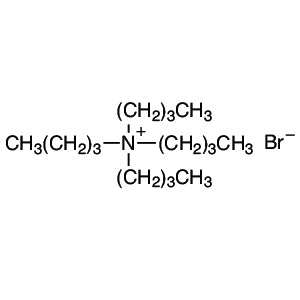
TetrabutylammoniumBromide TCI T0054
Regular price From Rp 557.550,00Regular priceRp 405.300,00Sale price From Rp 557.550,00 -
TetrahexylammoniumIodide TCI T1010
Regular price From Rp 1.167.600,00Regular priceRp 831.600,00Sale price From Rp 1.167.600,00 -
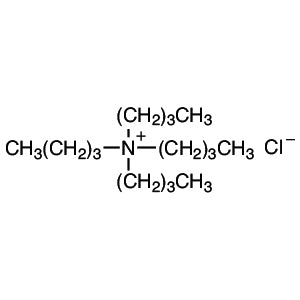
TetrabutylammoniumChloride TCI T0055
Regular price From Rp 928.200,00Regular priceRp 664.650,00Sale price From Rp 928.200,00 -
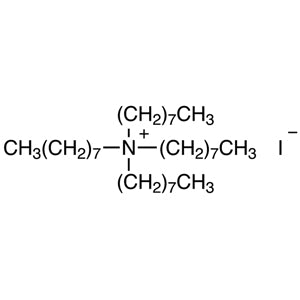
Tetra-n-octylammoniumIodide TCI T1155
Regular price Rp 6.598.200,00Regular priceRp 4.629.450,00Sale price Rp 6.598.200,00 -
TetraamylammoniumIodide TCI T1011
Regular price From Rp 1.643.250,00Regular priceRp 1.164.450,00Sale price From Rp 1.643.250,00 -
Tetrabutylammoniump-Toluenesulfonate TCI T3660
Regular price From Rp 1.405.950,00Regular priceRp 998.550,00Sale price From Rp 1.405.950,00 -
TetrabutylammoniumAcetate TCI T2694
Regular price From Rp 822.150,00Regular priceRp 590.100,00Sale price From Rp 822.150,00 -
TetrabutylammoniumTrifluoromethanesulfonate TCI T1568
Regular price From Rp 2.914.800,00Regular priceRp 2.053.800,00Sale price From Rp 2.914.800,00