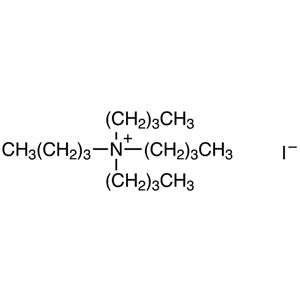
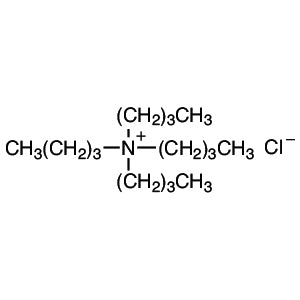
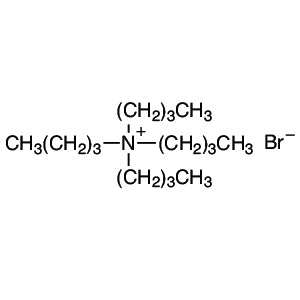
Tetra-n-octylammonium iodide is a chemical compound widely used in chemical synthesis and scientific research applications. As an ionic liquid, it plays a crucial role in laboratories where stable and non-volatile solvents are required. Its unique properties make it an essential component in various chemical processes, supporting both fundamental and applied research. This compound is particularly valued for its ability to dissolve a wide range of organic and inorganic substances, making it versatile for different experimental setups. Its chemical stability ensures consistent performance across multiple experiments, enhancing reproducibility and reliability in laboratory settings.
The compound's high boiling point and low viscosity contribute to its effectiveness as a solvent and catalyst in complex chemical reactions. These properties allow it to maintain its structure and functionality under a variety of reaction conditions, reducing the need for frequent replenishment. Additionally, its non-volatile nature minimizes evaporation, ensuring that the material remains available throughout the duration of the experiment. The ionic structure of Tetra-n-octylammonium iodide also enables it to interact effectively with both polar and non-polar compounds, broadening its applicability in synthetic chemistry.
In Indonesian laboratories, Tetra-n-octylammonium iodide is commonly used in organic chemistry research, especially in the synthesis of complex compounds and material characterization. Its role in green chemistry and environmental research further highlights its importance in sustainable scientific practices. The compound's stability and low reactivity make it a safe and reliable choice for a wide range of experimental applications, supporting both academic and industrial research efforts.
TCI brochures (PDF)
- Ionic Liquids 2026-06-08 · p. 6
- Quaternary Ammonium Salts 2025-11-10 · p. 7
- Colloidal Quantum Dot (QD) Research Reagents 2026-05-21 · p. 8
- Organic synthesis reactions benefit from its ability to dissolve a wide range of substrates and act as a non-volatile solvent.
- Material characterization techniques often use it as a medium for dissolving and analyzing complex compounds.
- Green chemistry initiatives leverage its low volatility and stability to reduce environmental impact during experiments.
- Catalytic processes in chemical reactions utilize its ionic structure to enhance reaction efficiency and selectivity.
- Environmental research applications take advantage of its non-toxic properties under controlled conditions for sustainable experimentation.
| Brand | TCI |
|---|---|
| CAS number | 16829-91-7 |
| Molecular formula | — |
| Purity | — |
| Category | Chemistry > Specialty Synthesis > Ionic Liquids [Specialty Synthesis] |
| Pack sizes | Available in various quantities as per standard laboratory supply |
| Physical form | Solid or liquid, depending on formulation |
| Storage | Store in a cool, dry place away from direct sunlight |
Tetra-n-octylammonium iodide should be stored in a cool, dry environment to maintain its chemical stability and prevent degradation. It is recommended to use sealed containers to minimize exposure to moisture and air, which could affect its performance. Due to its non-volatile nature, it does not require special refrigeration, but it should be kept away from heat sources. In laboratory settings, proper ventilation is advised when handling the compound to ensure safe working conditions. Always follow standard safety protocols, including the use of personal protective equipment, to prevent any potential exposure. Regular inspection of storage conditions ensures the material remains in optimal condition for use in research applications.
—
Product Categories
Produk Terkait
-
Tetra-n-octylammoniumBromide TCI T1603
Regular price From Rp 1.618.050,00Regular priceRp 1.146.600,00Sale price From Rp 1.618.050,00 -
TetrahexylammoniumIodide TCI T1010
Regular price From Rp 1.167.600,00Regular priceRp 831.600,00Sale price From Rp 1.167.600,00 -
TetrabutylammoniumIodide TCI T0057
Regular price From Rp 769.650,00Regular priceRp 553.350,00Sale price From Rp 769.650,00 -
TetraheptylammoniumBromide TCI T1602
Regular price From Rp 1.298.850,00Regular priceRp 924.000,00Sale price From Rp 1.298.850,00 -
TetrabutylammoniumChloride TCI T0055
Regular price From Rp 928.200,00Regular priceRp 664.650,00Sale price From Rp 928.200,00 -
TetrabutylammoniumBromide TCI T0054
Regular price From Rp 557.550,00Regular priceRp 405.300,00Sale price From Rp 557.550,00 -
TributylmethylammoniumIodide TCI T3692
Regular price From Rp 1.908.900,00Regular priceRp 1.350.300,00Sale price From Rp 1.908.900,00 -
TetraamylammoniumIodide TCI T1011
Regular price From Rp 1.643.250,00Regular priceRp 1.164.450,00Sale price From Rp 1.643.250,00