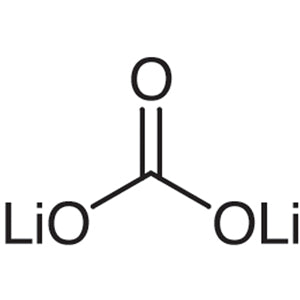
Lithium carbonate (Li₂CO₃), with CAS number 554-13-2, is a versatile inorganic compound widely used in chemical experiments, especially in catalysis and inorganic chemistry. As a lithium salt, it plays a crucial role in various chemical reactions due to its reactivity and ability to act as both a catalyst and a reactant. This white, odorless powder dissolves easily in water, making it a practical choice for laboratory applications. Its chemical stability, combined with reactivity towards acids and bases, allows it to be a valuable reagent in the synthesis of both organic and inorganic compounds.
The unique properties of lithium carbonate, such as its solubility and chemical reactivity, make it a preferred choice for researchers and scientists. Its ability to interact with a variety of compounds enables it to be used in the modification of chemical structures and the formation of complex compounds. This makes it essential in electrochemical processes and in the development of new materials. Its role in both organic and inorganic synthesis further enhances its importance in laboratory settings.
In Indonesian laboratories, lithium carbonate is commonly used in scientific research across various fields such as chemistry, pharmacy, and material science. It is particularly relevant for higher education institutions and research organizations focused on technological development and innovation. Its availability and reliability make it a staple in many laboratory environments, supporting both academic and industrial research activities.
- Inorganic synthesis applications benefit from lithium carbonate due to its reactivity and ability to participate in complex chemical reactions.
- Electrochemical processes often utilize lithium carbonate as a key component in battery development and other energy storage systems.
- Pharmaceutical research uses lithium carbonate in the synthesis of various compounds and drug formulations.
- Material science applications rely on lithium carbonate for the creation of advanced materials and composite structures.
- Catalytic reactions in chemical processes benefit from lithium carbonate’s role as a catalyst or reagent in various synthetic pathways.
| Brand | TCI |
|---|---|
| CAS number | 554-13-2 |
| Molecular formula | — |
| Purity | — |
| Category | Chemistry > Catalysis and Inorganic Chemistry > Metallic Salts |
| Pack sizes | Available in various quantities as per standard laboratory requirements |
| Physical form | White powder |
| Storage | Store in a cool, dry place away from moisture and direct sunlight |
Lithium carbonate should be stored in a cool, dry place, away from moisture and direct sunlight to maintain its chemical stability. It is recommended to use airtight containers to prevent exposure to humidity, which can affect its purity and reactivity. Due to its reactivity with acids and bases, it should be handled with appropriate personal protective equipment, including gloves and safety goggles. In laboratory settings, it is important to ensure proper ventilation when working with this compound to avoid inhalation of dust particles. Always follow standard safety protocols to minimize risks associated with handling reactive chemicals.
—
Produk Terkait
-
TCI B5774 5,10-Bis(4,4,5,5-tetramethyl-1,3,2-dioxaborolan-2-yl)naphtho[1,2-c:5,6-c']bis([1,2,5]oxadiazole)
Regular price Rp 10.255.350,00Regular price -
Dihydroiodide TCI B6569
Regular price From Rp 1.936.200,00Regular price -
Trifluoromethanesulfonate TCI B7003
Regular price From Rp 1.936.200,00Regular price
![5,10-Bis(4,4,5,5-tetramethyl-1,3,2-dioxaborolan-2-yl)naphtho[1,2-c:5,6-c']bis([1,2,5]oxadiazole) - TCI B5774 - AMI Scientific](http://amiscientific.com/cdn/shop/files/TCI2510B5774.jpg?v=1769180228&width=533)