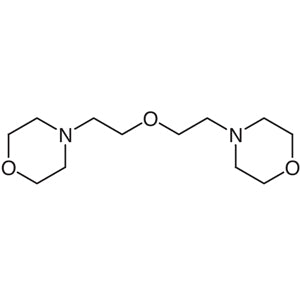
N,N,N',N'-Tetramethyl-1,6-diaminohexane is a nitrogen-donor ligand widely used in catalytic reactions and organic synthesis within laboratory settings. This compound is a key component in the development of transition metal complexes, particularly in catalytic processes that require stability and reactivity. Its unique molecular structure features two amino groups at the terminal ends of a six-carbon chain, with methyl groups attached to each nitrogen atom. This structural feature enhances its ability to coordinate with metal ions, making it a versatile tool in inorganic and catalytic chemistry.
The compound’s reactivity and capacity to form stable metal complexes make it a preferred choice for researchers working in catalysis and synthetic chemistry. Its nitrogen-rich structure allows it to act as either a monodentate or polydentate ligand, depending on the metal and reaction conditions. This adaptability enables it to participate in a wide range of chemical transformations, including oxidation, reduction, and coordination reactions. Its volatility also influences its handling and storage requirements, which must be carefully managed to maintain its chemical integrity.
In Indonesian laboratories, N,N,N',N'-Tetramethyl-1,6-diaminohexane is commonly used in research focused on catalytic processes and the synthesis of complex organic and inorganic compounds. It is particularly valuable in studies involving transition metal-based catalysts, where its ability to stabilize reactive intermediates is crucial. Its presence in laboratory workflows underscores its importance in advancing chemical research and innovation in the region.
TCI brochures (PDF)
- Ligands 2025-12-01 · p. 9
- Biomaterials Research Reagents 2025-02-19 · p. 31
Related TCI products
- TCI T1289 111-51-3 N,N,N',N'-Tetramethyl-1,4-diaminobutane
- TCI I0939 6711-48-4 3,3'-Iminobis(N,N-dimethylpropylamine)
- TCI D0134 280-57-9 1,4-Diazabicyclo[2.2.2]octane
- TCI T1877 41203-22-9 1,4,8,11-Tetramethyl-1,4,8,11-tetraazacyclotetradecane
- TCI Z0006 17501-44-9 Tetrakis(2,4-pentanedionato)zirconium(IV)
- TCI T3149 301-10-0 Tin(II) 2-Ethylhexanoate
- Used in transition metal complex synthesis due to its ability to form stable coordination bonds with various metal ions.
- Applied in catalytic reactions where nitrogen-donor ligands are required to enhance reactivity and selectivity.
- Employed in organic synthesis to facilitate the formation of complex molecules through ligand-assisted reactions.
- Utilized in oxidation and reduction processes to stabilize reactive intermediates and improve reaction efficiency.
- Integrated into research projects involving inorganic chemistry to explore new catalytic mechanisms and reaction pathways.
| Brand | TCI |
|---|---|
| CAS number | 111-18-2 |
| Molecular formula | — |
| Purity | — |
| Category | Chemistry > Catalysis and Inorganic Chemistry > Nitrogen-Donor Ligands [Catalysis] |
| Pack sizes | — |
| Physical form | — |
| Storage | Requires storage in a cool, dry, and well-ventilated area away from oxidizing agents |
N,N,N',N'-Tetramethyl-1,6-diaminohexane should be stored in a cool, dry, and well-ventilated area to prevent degradation and maintain its chemical stability. It is recommended to use airtight containers to minimize exposure to air and moisture, which can affect its reactivity. Due to its volatility, it should be handled in a fume hood to ensure proper ventilation and reduce the risk of inhalation. Avoid contact with oxidizing agents and strong acids to prevent unwanted chemical reactions. Always wear appropriate personal protective equipment, including gloves and safety goggles, when handling this compound. Proper storage and handling are essential to ensure the safety of laboratory personnel and the integrity of the compound.
—
Product Categories
Produk Terkait
-
N,N,N',N'-Tetramethyl-1,4-diaminobutane TCI T1289
Regular price Rp 3.630.900,00Regular priceRp 2.538.900,00Sale price Rp 3.630.900,00 -
3,3'-Iminobis(N,N-dimethylpropylamine) TCI I0939
Regular price Rp 848.400,00Regular priceRp 593.250,00Sale price Rp 848.400,00 -
1,4-Diazabicyclo[2.2.2]octane TCI D0134
Regular price From Rp 557.550,00Regular priceRp 405.300,00Sale price From Rp 557.550,00 -
1,4,8,11-Tetramethyl-1,4,8,11-tetraazacyclotetradecane TCI T1877
Regular price From Rp 2.677.500,00Regular priceRp 1.887.900,00Sale price From Rp 2.677.500,00 -
Tetrakis(2,4-pentanedionato)zirconium(IV) TCI Z0006
Regular price From Rp 1.353.450,00Regular priceRp 946.050,00Sale price From Rp 1.353.450,00 -
Tin(II)2-Ethylhexanoate TCI T3149
Regular price From Rp 848.400,00Regular priceRp 609.000,00Sale price From Rp 848.400,00 -
2,6,10-Trimethyl-2,6,10-triazaundecane TCI T1618
Regular price From Rp 955.500,00Regular priceRp 667.800,00Sale price From Rp 955.500,00 -
Bis(2-morpholinoethyl)Ether TCI B1784
Regular price From Rp 848.400,00Regular priceRp 609.000,00Sale price From Rp 848.400,00