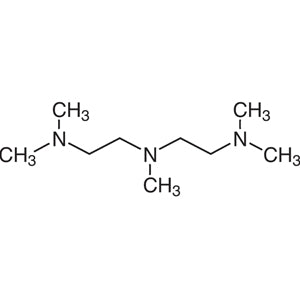
Bis(2-morpholinoethyl) Ether is a chemical compound widely used in laboratory settings, particularly in materials science and organic chemistry. It serves as a versatile reagent in polymerization reactions and molecular modification processes due to its ability to interact with various functional groups. This compound plays a crucial role in the synthesis of complex organic molecules and polymers, making it an essential tool for researchers working on advanced chemical structures. Its presence in laboratory workflows supports the development of new materials and the refinement of existing chemical processes.
The compound is known for its chemical stability and high reactivity, which make it a preferred choice for a wide range of experimental conditions. Its molecular structure allows for strong interactions with different substrates, enabling it to participate effectively in multiple reaction pathways. These properties ensure that it remains a reliable component in both academic and industrial research environments. The combination of stability and reactivity makes it suitable for applications requiring precise chemical control and high-performance outcomes.
In Indonesian laboratories, Bis(2-morpholinoethyl) Ether is commonly used in scientific research and material development projects. Its availability and consistent quality make it a go-to reagent for chemists and material scientists. Researchers in Indonesia rely on this compound for experiments involving polymer synthesis, functional group modification, and the creation of advanced chemical materials. Its role in supporting innovation in the field is well recognized among local scientific communities.
TCI brochures (PDF)
- Biomaterials Research Reagents 2025-02-19 · p. 30
Related TCI products
- TCI B1291 3033-62-3 Bis(2-dimethylaminoethyl) Ether
- TCI Z0006 17501-44-9 Tetrakis(2,4-pentanedionato)zirconium(IV)
- TCI T3149 301-10-0 Tin(II) 2-Ethylhexanoate
- TCI T1618 3855-32-1 2,6,10-Trimethyl-2,6,10-triazaundecane
- TCI T1289 111-51-3 N,N,N',N'-Tetramethyl-1,4-diaminobutane
- TCI T0537 111-18-2 N,N,N',N'-Tetramethyl-1,6-diaminohexane
- Polymer synthesis where it acts as a cross-linking agent due to its ability to form stable bonds with functional groups.
- Organic synthesis reactions where it serves as a versatile intermediate for creating complex molecular structures.
- Molecular modification processes where it facilitates the introduction of morpholine groups into target molecules.
- Research in advanced materials development where its reactivity supports the creation of novel polymer systems.
- Chemical engineering applications where it is used in the formulation of specialized chemical compounds and coatings.
| Brand | TCI |
|---|---|
| CAS number | 6425-39-4 |
| Molecular formula | — |
| Purity | — |
| Category | Materials Science > Polymer/Macromolecule Reagents > Polymerization Reagents |
| Pack sizes | Available in various sizes as per standard laboratory supply options |
| Physical form | Liquid |
| Storage | Store in a cool, dry place away from direct sunlight and incompatible materials |
Bis(2-morpholinoethyl) Ether should be stored in a cool, dry environment to maintain its chemical stability. It is recommended to keep it in a sealed container to prevent exposure to air and moisture. The compound should be stored away from strong oxidizing agents and incompatible substances to avoid any potential chemical reactions. Suitable containers for storage include glass or high-density polyethylene vessels that are resistant to chemical degradation. Laboratory personnel should handle the compound with appropriate personal protective equipment, such as gloves and safety goggles, to ensure safe usage. Regular monitoring of storage conditions is essential to maintain the integrity and effectiveness of the material in research applications.
—
Product Categories
Produk Terkait
-
Bis(2-dimethylaminoethyl)Ether TCI B1291
Regular price From Rp 900.900,00Regular priceRp 645.750,00Sale price From Rp 900.900,00 -
Tetrakis(2,4-pentanedionato)zirconium(IV) TCI Z0006
Regular price From Rp 1.353.450,00Regular priceRp 946.050,00Sale price From Rp 1.353.450,00 -
Tin(II)2-Ethylhexanoate TCI T3149
Regular price From Rp 848.400,00Regular priceRp 609.000,00Sale price From Rp 848.400,00 -
2,6,10-Trimethyl-2,6,10-triazaundecane TCI T1618
Regular price From Rp 955.500,00Regular priceRp 667.800,00Sale price From Rp 955.500,00 -
N,N,N',N'-Tetramethyl-1,4-diaminobutane TCI T1289
Regular price Rp 3.630.900,00Regular priceRp 2.538.900,00Sale price Rp 3.630.900,00 -
N,N,N',N'-Tetramethyl-1,6-diaminohexane TCI T0537
Regular price From Rp 477.750,00Regular priceRp 333.900,00Sale price From Rp 477.750,00 -
N,N,N',N'',N''-Pentamethyldiethylenetriamine TCI P0881
Regular price From Rp 557.550,00Regular priceRp 389.550,00Sale price From Rp 557.550,00 -
3,3'-Iminobis(N,N-dimethylpropylamine) TCI I0939
Regular price Rp 848.400,00Regular priceRp 593.250,00Sale price Rp 848.400,00