Bis(2-dimethylaminoethyl) ether is a chemical compound widely used as a building block in the synthesis of complex organic molecules. This versatile reagent plays a crucial role in laboratory settings, enabling chemists to modify molecular structures through various chemical reactions. Its unique structure allows it to participate in substitution reactions and bond-forming processes, making it an essential tool for synthetic chemists. In research and development, it is frequently employed to create compounds with applications in pharmaceuticals, materials science, and organic chemistry.
The compound is known for its high reactivity towards acids, bases, and organic solvents, which makes it suitable for a wide range of chemical transformations. Its solubility in solvents such as ethyl acetate and ethanol facilitates its use in purification and reaction processes. The chemical stability under specific conditions ensures that it remains effective during experiments. This reactivity and solubility profile make it a preferred choice for chemists seeking to synthesize complex and functional molecules.
In Indonesian laboratories, Bis(2-dimethylaminoethyl) ether is commonly used in scientific research, particularly in the fields of organic chemistry and pharmaceutical development. Its role in creating heterocyclic compounds and complex molecular structures is well recognized. Many research institutions and academic labs rely on this compound for its reliability and effectiveness in various synthetic processes. Its widespread use highlights its importance in advancing chemical research in Indonesia.
TCI brochures (PDF)
- Biomaterials Research Reagents 2025-02-19 · p. 30
Related TCI products
- TCI I0939 6711-48-4 3,3'-Iminobis(N,N-dimethylpropylamine)
- TCI D0705 98-94-2 N,N-Dimethylcyclohexylamine
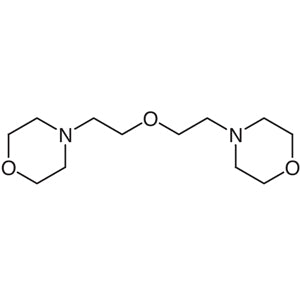
- TCI B1784 6425-39-4 Bis(2-morpholinoethyl) Ether
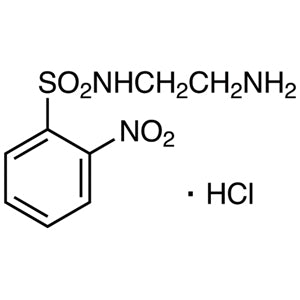
- TCI A2329 92504-03-5 N-(2-Aminoethyl)-2-nitrobenzenesulfonamide Hydrochloride
- TCI A1284 19248-13-6 N-(2-Aminoethyl)-N-ethyl-m-toluidine
- TCI D0469 29473-53-8 N-(2-Diethylaminoethyl)-1-naphthylamine Oxalate
- Organic synthesis applications benefit from its ability to participate in substitution and bond-forming reactions, enabling the creation of complex molecular structures.
- Pharmaceutical research utilizes this compound to develop new drug molecules, leveraging its reactivity in modifying molecular frameworks.
- Material science experiments rely on its chemical versatility for synthesizing compounds with specific functional properties.
- Analytical chemistry procedures use it as a reagent for testing reactivity and compatibility with various chemical environments.
- Educational institutions incorporate it into teaching labs to demonstrate fundamental chemical reactions and molecular modifications.
| Brand | TCI |
|---|---|
| CAS number | 3033-62-3 |
| Molecular formula | — |
| Purity | — |
| Category | Chemistry > Building Blocks > Non-Heterocyclic Building Blocks |
| Pack sizes | Available in various quantities as per standard laboratory supply |
| Physical form | Liquid |
| Storage | Store in a cool, dry place away from direct sunlight and incompatible materials |
This compound should be stored in a cool, dry place, away from direct sunlight and incompatible substances such as strong acids or bases. It is recommended to use airtight containers made of glass or high-density polyethylene to prevent contamination and maintain chemical integrity. Due to its reactivity, it should be handled in a well-ventilated area, preferably under a fume hood, to minimize exposure. Avoid contact with skin and eyes, and use appropriate personal protective equipment such as gloves and safety goggles. Regular monitoring of storage conditions ensures the compound remains stable and safe for use in laboratory settings.
—
Product Categories
Produk Terkait
-
3,3'-Iminobis(N,N-dimethylpropylamine) TCI I0939
Regular price Rp 848.400,00Regular priceRp 593.250,00Sale price Rp 848.400,00 -
N,N-Dimethylcyclohexylamine TCI D0705
Regular price From Rp 505.050,00Regular priceRp 368.550,00Sale price From Rp 505.050,00 -
Bis(2-morpholinoethyl)Ether TCI B1784
Regular price From Rp 848.400,00Regular priceRp 609.000,00Sale price From Rp 848.400,00 -
N-(2-Aminoethyl)-2-nitrobenzenesulfonamideHydrochloride TCI A2329
Regular price Rp 3.815.700,00Regular priceRp 2.683.800,00Sale price Rp 3.815.700,00 -
N-(2-Aminoethyl)-N-ethyl-m-toluidine TCI A1284
Regular price Rp 4.001.550,00Regular priceRp 2.798.250,00Sale price Rp 4.001.550,00 -
N-(2-Diethylaminoethyl)-1-naphthylamineOxalate TCI D0469
Regular price From Rp 637.350,00Regular priceRp 460.950,00Sale price From Rp 637.350,00 -
Benzyl(2-Aminoethyl)carbamate TCI B6489
Regular price From Rp 1.431.150,00Regular priceRp 1.016.400,00Sale price From Rp 1.431.150,00 -
Methyl2-(2-Chloro-1-iminoethyl)hydrazine-1-carboxylate TCI C3681
Regular price From Rp 1.351.350,00Regular priceRp 960.750,00Sale price From Rp 1.351.350,00