Thiophene-2-acetonitrile is a chemical compound classified under the category of heterocyclic building blocks, widely utilized in organic chemistry research. It serves as a key intermediate in the synthesis of complex organic compounds, particularly in reactions involving nitrogen bond formation and heterocyclic structure development. This compound is essential for constructing molecules with specific functional groups, such as pharmaceuticals, industrial chemicals, and analytical reagents. Its structural composition includes a thiophene ring linked to an acetonitrile group, which contributes to its high reactivity and versatility in chemical transformations.
The compound's reactivity stems from its ability to participate in substitution and electrophilic reactions, making it a preferred choice for chemists seeking to modify molecular structures. Its presence of a nitrile group also allows for a variety of chemical transformations, including hydrolysis, reduction, and nucleophilic reactions. These properties make it a valuable tool in laboratories aiming to develop new compounds with specific functionalities. The stability of Thiophene-2-acetonitrile under certain conditions further enhances its utility in controlled chemical environments.
In Indonesian laboratories, Thiophene-2-acetonitrile is extensively used in organic chemistry research, particularly in chemical, pharmaceutical, and industrial chemistry laboratories. Its role in creating complex molecular structures is critical for advancing research in drug development and chemical synthesis. Its reactivity and structural versatility make it a standard material in many laboratory workflows, supporting both academic and industrial research efforts.
TCI brochures (PDF)
- Thiophenes 2026-06-29 · p. 7
Related TCI products
- Organic synthesis: Thiophene-2-acetonitrile is ideal for constructing complex organic molecules due to its reactivity and structural versatility.
- Pharmaceutical research: It is used in the development of new drugs, as it can be modified to create various functional groups essential for pharmaceutical applications.
- Industrial chemical production: Its ability to undergo multiple chemical transformations makes it suitable for the synthesis of industrial chemicals.
- Analytical chemistry: It serves as a reagent in analytical processes, aiding in the detection and analysis of various compounds.
- Heterocyclic compound development: Its thiophene ring structure makes it a key component in the synthesis of heterocyclic compounds used in multiple scientific fields.
| Brand | TCI |
|---|---|
| CAS number | 20893-30-5 |
| Molecular formula | — |
| Purity | — |
| Category | Chemistry > Building Blocks > Heterocyclic Building Blocks |
| Pack sizes | Available in various quantities as per supplier specifications |
| Physical form | Liquid |
| Storage | Store in a cool, dry place away from light and incompatible materials |
Thiophene-2-acetonitrile should be stored in a cool, dry place, away from direct light and incompatible substances. It is recommended to use airtight containers made of glass or polyethylene to prevent contamination and evaporation. Due to its reactivity, it should be handled in a well-ventilated area, preferably under a fume hood, to minimize exposure. Avoid contact with strong oxidizing agents or reactive metals. Always wear appropriate personal protective equipment, including gloves and safety goggles, when handling this compound. Proper storage and handling ensure the compound remains stable and safe for use in laboratory settings.
—
Produk Terkait
-
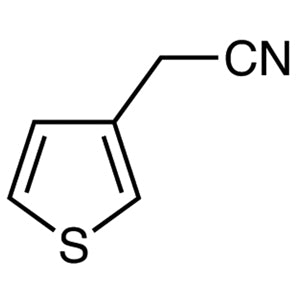
Thiophene-3-acetonitrile TCI T1193
Regular price Rp 1.934.100,00Regular priceRp 1.368.150,00Sale price Rp 1.934.100,00 -
(2-Benzimidazolyl)acetonitrile TCI B2821
Regular price From Rp 1.087.800,00Regular priceRp 775.950,00Sale price From Rp 1.087.800,00 -
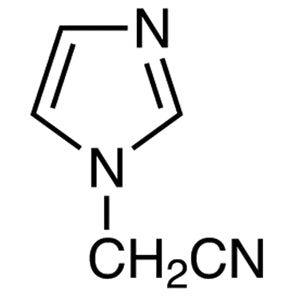
(1-Imidazolyl)acetonitrile TCI I0990
Regular price From Rp 3.260.250,00Regular priceRp 2.295.300,00Sale price From Rp 3.260.250,00 -
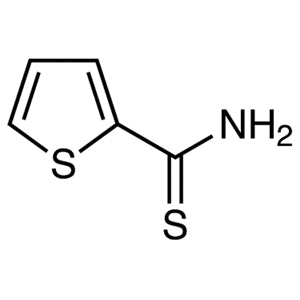
Thiophene-2-carbothioamide TCI T3604
Regular price From Rp 8.613.150,00Regular priceRp 6.038.550,00Sale price From Rp 8.613.150,00 -
Thieno[3,2-b]thiophene-2,5-dicarboxaldehyde TCI T3212
Regular price From Rp 1.351.350,00Regular priceRp 960.750,00Sale price From Rp 1.351.350,00 -
Thieno[2,3-b]thiophene TCI T2729
Regular price From Rp 2.384.550,00Regular priceRp 1.683.150,00Sale price From Rp 2.384.550,00 -
Thieno[3,2-b]thiophene TCI T2513
Regular price From Rp 1.590.750,00Regular priceRp 1.127.700,00Sale price From Rp 1.590.750,00 -
Thiophene-2,5-dicarbaldehyde TCI T2480
Regular price From Rp 1.696.800,00Regular priceRp 1.202.250,00Sale price From Rp 1.696.800,00