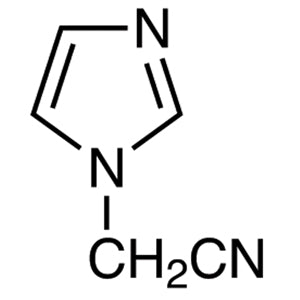
(1-Imidazolyl)acetonitrile is a chemical compound widely used as a building block in the synthesis of heterocyclic compounds. This material plays a crucial role in organic chemistry laboratories, particularly in the formation of imidazole-based structures. Its unique chemical structure makes it an essential component for researchers aiming to develop complex molecules. The compound is commonly employed in pharmaceutical and organic synthesis research, where it serves as a versatile intermediate. Due to its stability and reactivity, it is a reliable choice for various chemical reactions, including nucleophilic and electrophilic processes.
The compound’s reactivity is largely attributed to its nitrile group, which is highly reactive in chemical reactions. Additionally, the imidazole ring provides structural stability, making it suitable for a wide range of synthetic applications. It is soluble in common organic solvents such as ethyl acetate and acetone, which enhances its usability in laboratory settings. These properties make it a preferred choice for chemists who require a stable and reactive starting material for their experiments.
In Indonesian laboratories, (1-Imidazolyl)acetonitrile is frequently used in research related to drug development and organic synthesis. Its availability in solid form and practical packaging makes it accessible for both small-scale and larger research projects. The compound’s reliability and chemical characteristics make it a valuable resource for scientists working in various fields of chemistry.
Related TCI products
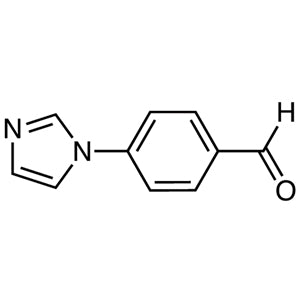
- TCI I0818 10040-98-9 4-(1-Imidazolyl)benzaldehyde
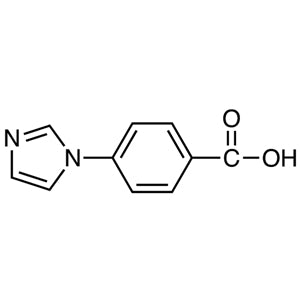
- TCI I1017 17616-04-5 4-(1-Imidazolyl)benzoic Acid
- TCI D3239 50729-75-4 2,4-Diamino-6-[2-(2-undecyl-1-imidazolyl)ethyl]-1,3,5-triazine
- TCI D3238 38668-46-1 2,4-Diamino-6-[2-(2-methyl-1-imidazolyl)ethyl]-1,3,5-triazine
- TCI B3510 28020-73-7 2,6-Bis(2-benzimidazolyl)pyridine
- TCI B2821 4414-88-4 (2-Benzimidazolyl)acetonitrile
- Organic synthesis research benefits from this compound due to its reactivity and structural versatility, enabling the creation of complex heterocyclic molecules.
- Pharmaceutical development utilizes this material as a key intermediate in the synthesis of bioactive compounds with potential therapeutic applications.
- Heterocyclic compound synthesis relies on its imidazole ring structure, which is essential for constructing molecules with specific biological activity.
- Chemical reaction studies take advantage of its solubility in organic solvents, allowing for efficient participation in nucleophilic and electrophilic reactions.
- Academic and industrial research applications benefit from its stability and reliability, making it a trusted building block in synthetic pathways.
| Brand | TCI |
|---|---|
| CAS number | 98873-55-3 |
| Molecular formula | — |
| Purity | — |
| Category | Chemistry > Building Blocks > Heterocyclic Building Blocks |
| Pack sizes | Available in various quantities as per standard laboratory supply |
| Physical form | Solid |
| Storage | Store in a cool, dry place away from moisture and direct sunlight |
This compound should be stored in a cool, dry environment to maintain its chemical stability. It is recommended to keep it in airtight containers to prevent exposure to moisture and air, which could affect its reactivity. Due to its chemical nature, it should be handled with appropriate personal protective equipment, such as gloves and safety goggles, to ensure laboratory safety. Avoid contact with incompatible substances to prevent unwanted reactions. The compound is generally stable under standard storage conditions, making it suitable for routine laboratory use. Proper storage ensures its effectiveness and safety in both research and industrial applications.
—
Produk Terkait
-
4-(1-Imidazolyl)benzaldehyde TCI I0818
Regular price From Rp 795.900,00Regular price -
4-(1-Imidazolyl)benzoicAcid TCI I1017
Regular price Rp 3.683.400,00Regular price -
2,4-Diamino-6-[2-(2-undecyl-1-imidazolyl)ethyl]-1,3,5-triazine TCI D3239
Regular price Rp 1.298.850,00Regular price -
2,4-Diamino-6-[2-(2-methyl-1-imidazolyl)ethyl]-1,3,5-triazine TCI D3238
Regular price Rp 664.650,00Regular price -
2,6-Bis(2-benzimidazolyl)pyridine TCI B3510
Regular price From Rp 2.809.800,00Regular price -
(2-Benzimidazolyl)acetonitrile TCI B2821
Regular price From Rp 1.035.300,00Regular price -
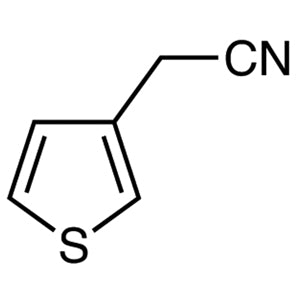
Thiophene-3-acetonitrile TCI T1193
Regular price Rp 1.881.600,00Regular price -
Thiophene-2-acetonitrile TCI T0799
Regular price From Rp 795.900,00Regular price
![2,4-Diamino-6-[2-(2-undecyl-1-imidazolyl)ethyl]-1,3,5-triazine (CAS 50729-75-4) - TCI D3239 - AMI Scientific](http://amiscientific.com/cdn/shop/files/TCI2510D3239.jpg?v=1767105841&width=533)
![2,4-Diamino-6-[2-(2-methyl-1-imidazolyl)ethyl]-1,3,5-triazine (CAS 38668-46-1) - TCI D3238 - AMI Scientific](http://amiscientific.com/cdn/shop/files/TCI2510D3238.jpg?v=1767105837&width=533)