

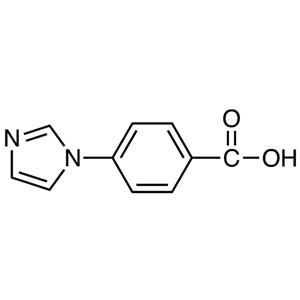
4-(1-Imidazolyl)benzoic Acid is a chemical compound widely used in laboratory settings for its versatility in chemical reactions and molecular synthesis. This compound combines an imidazole ring with a benzoic acid group, making it a valuable building block in the synthesis of heterocyclic compounds. Its unique structure enables it to participate in a variety of chemical transformations, making it essential for researchers working on complex organic molecules. Due to its stability and reactivity, it is frequently employed in synthetic pathways that require precise functional group manipulation.
The compound is favored for its chemical stability and reactivity in various reaction types, including nucleophilic, electrophilic, and substitution reactions. Its ability to form diverse functional groups allows for the creation of molecules with specific biological activities, such as pharmaceuticals and industrial chemicals. These properties make it a preferred choice for scientists aiming to develop new compounds with tailored properties. Its structural complexity also supports the synthesis of molecules with a wide range of applications in both academic and industrial research.
In Indonesian laboratories, 4-(1-Imidazolyl)benzoic Acid is commonly used in scientific research and chemical product development. It is a key component in experiments requiring heterocyclic building blocks, particularly in pharmacological and organic chemistry studies. Many educational institutions and research organizations rely on this compound for experiments that demand high chemical specificity and structural versatility. Its availability and reliability make it a staple in the chemical supply chain for Indonesian laboratories.
TCI brochures (PDF)
- Ligands 2025-12-01 · p. 11
Related TCI products
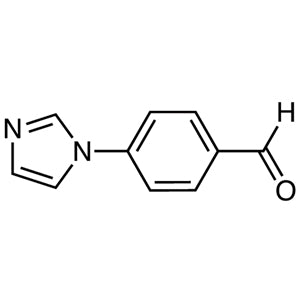
- TCI I0818 10040-98-9 4-(1-Imidazolyl)benzaldehyde
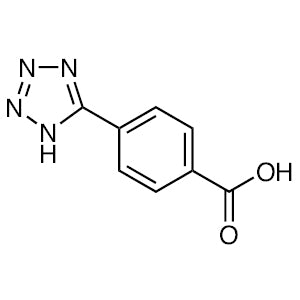
- TCI T3917 34114-12-0 4-(1H-Tetrazol-5-yl)benzoic Acid
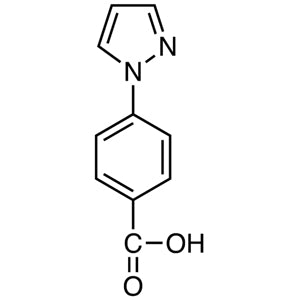
- TCI P2499 16209-00-0 4-(1H-Pyrazol-1-yl)benzoic Acid
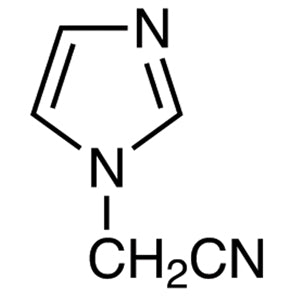
- TCI I0990 98873-55-3 (1-Imidazolyl)acetonitrile
- TCI D3239 50729-75-4 2,4-Diamino-6-[2-(2-undecyl-1-imidazolyl)ethyl]-1,3,5-triazine
- TCI D3238 38668-46-1 2,4-Diamino-6-[2-(2-methyl-1-imidazolyl)ethyl]-1,3,5-triazine
- Organic synthesis applications benefit from this compound due to its ability to participate in nucleophilic and electrophilic reactions, enabling the creation of complex molecular structures.
- Pharmaceutical research utilizes this compound as a building block for the development of bioactive molecules with targeted therapeutic effects.
- Heterocyclic compound synthesis relies on this material for its structural versatility, allowing for the formation of diverse functional groups in synthetic pathways.
- Industrial chemical development incorporates this compound for its stability and reactivity in the production of specialized chemical products.
- Academic research in chemistry and pharmacology frequently uses this compound to explore new synthetic methodologies and molecular structures.
| Brand | TCI |
|---|---|
| CAS number | 17616-04-5 |
| Molecular formula | — |
| Purity | — |
| Category | Chemistry > Building Blocks > Heterocyclic Building Blocks |
| Pack sizes | Available in various quantities as per standard laboratory supply |
| Physical form | Solid powder |
| Storage | Store in a cool, dry place away from moisture and direct light |
This compound should be stored in a cool, dry place, away from moisture and direct sunlight to maintain its chemical integrity. It is recommended to use airtight containers to prevent exposure to air and humidity, which could affect its stability. In laboratory settings, it should be handled with appropriate personal protective equipment, such as gloves and safety goggles, to ensure safe handling. While it is generally stable under normal storage conditions, it is important to avoid contact with strong acids or bases that could initiate unwanted reactions. Proper labeling and storage practices are essential to ensure the safety and effectiveness of this compound in research applications.
—
Produk Terkait
-
4-(1-Imidazolyl)benzaldehyde TCI I0818
Regular price From Rp 795.900,00Regular price -
4-(1H-Tetrazol-5-yl)benzoicAcid TCI T3917
Regular price From Rp 2.016.000,00Regular price -
4-(1H-Pyrazol-1-yl)benzoicAcid TCI P2499
Regular price Rp 1.724.100,00Regular price -
(1-Imidazolyl)acetonitrile TCI I0990
Regular price From Rp 3.207.750,00Regular price -
2,4-Diamino-6-[2-(2-undecyl-1-imidazolyl)ethyl]-1,3,5-triazine TCI D3239
Regular price Rp 1.298.850,00Regular price -
2,4-Diamino-6-[2-(2-methyl-1-imidazolyl)ethyl]-1,3,5-triazine TCI D3238
Regular price Rp 664.650,00Regular price -
2,6-Bis(2-benzimidazolyl)pyridine TCI B3510
Regular price From Rp 2.809.800,00Regular price -
(2-Benzimidazolyl)acetonitrile TCI B2821
Regular price From Rp 1.035.300,00Regular price
![2,4-Diamino-6-[2-(2-undecyl-1-imidazolyl)ethyl]-1,3,5-triazine (CAS 50729-75-4) - TCI D3239 - AMI Scientific](http://amiscientific.com/cdn/shop/files/TCI2510D3239.jpg?v=1767105841&width=533)
![2,4-Diamino-6-[2-(2-methyl-1-imidazolyl)ethyl]-1,3,5-triazine (CAS 38668-46-1) - TCI D3238 - AMI Scientific](http://amiscientific.com/cdn/shop/files/TCI2510D3238.jpg?v=1767105837&width=533)

