Tetrabutylammonium Hydrogen Sulfate (TBAHS) is a chemical compound widely used in laboratory experiments, particularly in the fields of chemistry and biochemical research. It serves as a versatile reagent that supports various analytical and separation processes due to its ionic properties. In the laboratory, TBAHS plays a critical role in ion binding and as a pH adjustment agent, making it essential for experiments requiring controlled ionization or specific chemical environments. Its unique chemical structure allows it to interact effectively with organic compounds, enhancing the accuracy and reliability of experimental outcomes.
One of the key properties that make TBAHS a preferred choice is its high solubility in water and its ability to form stable ionic solutions. These characteristics are crucial for applications such as chromatography, electrophoresis, and spectroscopic analysis, where consistent and reliable solutions are required. Additionally, TBAHS exhibits minimal reactivity with other compounds under normal conditions, which reduces the risk of unwanted chemical interactions or contamination. This stability ensures that the compound remains effective and safe to use in a wide range of experimental settings.
In Indonesian laboratories, TBAHS is commonly used in biochemical, pharmacological, and environmental research. Its availability and effectiveness make it a go-to reagent for supporting diverse scientific investigations. Researchers in these fields rely on TBAHS to achieve precise results in their experiments, contributing to the advancement of scientific knowledge. Its non-reactive nature and solubility further enhance its utility in laboratory settings, ensuring it remains a valuable tool for scientists.
TCI brochures (PDF)
- Crystalline Hypochlorite Salt with Ease of Handling 2025-06-17 · p. 1
- Oxidizing Agents 2025-06-11 · p. 2
- Glycosidation 2026-04-14 · p. 4
- Quaternary Ammonium Salts 2025-11-10 · p. 8
- Reagents for Glyco Chemistry & Biology 5th Edition · p. 148
Related TCI products
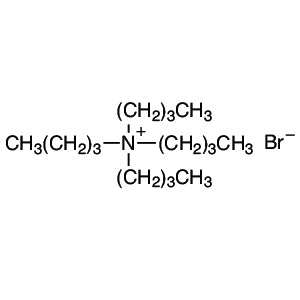
- TCI T0054 1643-19-2 Tetrabutylammonium Bromide
- TCI T3506 16873-13-5 Tetraethylammonium Hydrogen Sulfate
- TCI T3495 32503-34-7 Tetrahexylammonium Hydrogen Sulfate
- TCI M1457 59158-14-4 Methyltri-n-octylammonium Hydrogen Sulfate
- TCI H1616 68214-07-3 Hexadecyltrimethylammonium Hydrogen Sulfate
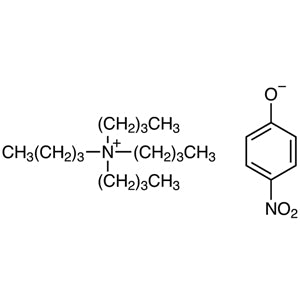
- TCI T2669 3002-48-0 Tetrabutylammonium p-Nitrophenoxide
- Biochemical analysis where ion binding and pH control are essential for accurate results.
- Chromatographic techniques that require stable ionic solutions for separation and detection.
- Electrophoretic experiments where controlled ionization and solution stability are critical.
- Spectroscopic studies that depend on consistent and reliable chemical environments.
- Environmental research involving the analysis of organic compounds in aqueous samples.
From the TCI brochure
- 0.05 eq (S0939 1.2 eq, TEMPO 0.013 eq, CH2Cl2, 5 °C)
- 0.05 eq (S0939 1.6 eq, TEMPO 0.01 eq, CH2Cl2, 15 °C)
| Brand | TCI |
|---|---|
| CAS number | 32503-27-8 |
| Molecular formula | — |
| Purity | — |
| Category | Chemistry > Chemical Biology > Glycoscience |
| Pack sizes | — |
| Physical form | — |
| Storage | Store in a cool, dry place away from moisture and direct sunlight. |
Data from the TCI brochure
| Massa dan jumlah mol pada prosedur | 0.17 g, 0.50 mmol (2-octanol 1.30 g (10.0 mmol), CH2Cl2 10 mL, 5 °C) |
|---|
Source: TCI brochure RR064 (2025-06-17)
Tetrabutylammonium Hydrogen Sulfate should be stored in a cool, dry place, away from moisture and direct sunlight to maintain its chemical stability. It is recommended to use airtight containers to prevent exposure to humidity, which could affect its solubility and performance. As a chemical reagent, it should be handled with care, ensuring proper ventilation in the laboratory to avoid inhalation of any vapors. While it is generally non-reactive under normal conditions, it is advisable to follow standard laboratory safety protocols when working with ionic compounds. Proper storage and handling ensure the compound remains effective and safe for use in various experimental applications.
References cited in the TCI brochure
- Yoshikazu Kimura. Sodium Hypochlorite Pentahydrate (NaOCl·5H2O) Crystals as an Extraordinary Oxidant for Primary and Secondary Alcohols Synlett, 2014. doi:10.1055/s-0033-1340483
Produk Terkait
-
TetrabutylammoniumBromide TCI T0054
Regular price From Rp 557.550,00Regular priceRp 405.300,00Sale price From Rp 557.550,00 -
TetraethylammoniumHydrogenSulfate TCI T3506
Regular price From Rp 795.900,00Regular priceRp 572.250,00Sale price From Rp 795.900,00 -
TetrahexylammoniumHydrogenSulfate TCI T3495
Regular price From Rp 3.180.450,00Regular priceRp 2.239.650,00Sale price From Rp 3.180.450,00 -
Methyltri-n-octylammoniumHydrogenSulfate TCI M1457
Regular price From Rp 2.041.200,00Regular priceRp 1.442.700,00Sale price From Rp 2.041.200,00 -
HexadecyltrimethylammoniumHydrogenSulfate TCI H1616
Regular price Rp 3.127.950,00Regular priceRp 2.202.900,00Sale price Rp 3.127.950,00 -
Tetrabutylammoniump-Nitrophenoxide TCI T2669
Regular price From Rp 1.326.150,00Regular priceRp 942.900,00Sale price From Rp 1.326.150,00 -
TetrabutylammoniumHydroxide(40%inWater) TCI T1685
Regular price From Rp 1.246.350,00Regular priceRp 887.250,00Sale price From Rp 1.246.350,00 -
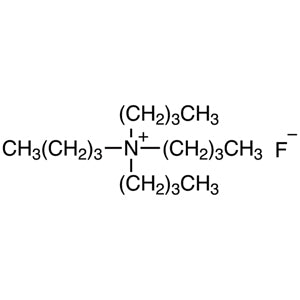
TetrabutylammoniumFluoride(ca1mol/LinTetrahydrofuran) TCI T1338
Regular price From Rp 717.150,00Regular priceRp 516.600,00Sale price From Rp 717.150,00