2,2',5,5'-Tetrachlorobenzidine is a chemical compound widely used in various laboratory applications, particularly in the synthesis of organic compounds and complex chemical reactions. This material plays a crucial role in research settings where high reactivity and stability are required. Its aromatic structure, combined with chlorine substituents, makes it a versatile reagent for chemical transformations. It is commonly used in the preparation of fluorescent compounds, dyes, and other high-reactivity chemical substances. Due to its molecular complexity and chemical stability, it is a preferred choice in reactions that demand specific conditions.
The compound's ability to react with a variety of functional groups makes it highly valuable in the synthesis of more complex molecules. This reactivity allows it to be a key component in the development of new materials and organic chemistry research. Its chemical stability ensures that it remains effective under a range of experimental conditions, making it a reliable option for researchers. The compound's unique properties make it an essential tool in both academic and industrial laboratory settings.
In Indonesian laboratories, 2,2',5,5'-Tetrachlorobenzidine is utilized in scientific research, including the development of new materials and the study of chemical reactivity. It is often selected by researchers who require high-quality chemical reagents for experiments that demand precision and accuracy. Its consistent performance and reliability make it a trusted choice for various chemical synthesis processes in the region.
TCI brochures (PDF)
- Monomers 2025-05-28 · p. 32
Related TCI products
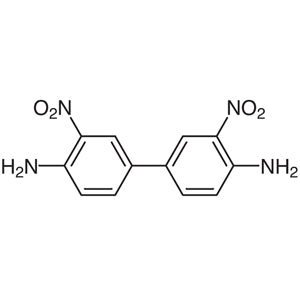
- TCI D0822 6271-79-0 3,3'-Dinitrobenzidine
- TCI T2378 50-74-8 2,3,4,5-Tetrachlorobenzoic Acid
- TCI T1023 54827-17-7 3,3',5,5'-Tetramethylbenzidine
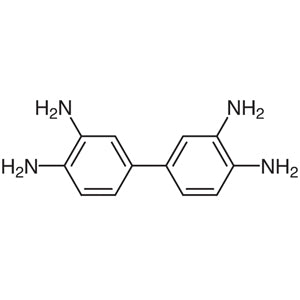
- TCI D0077 91-95-2 3,3'-Diaminobenzidine
- TCI D0078 868272-85-9 3,3'-Diaminobenzidine Tetrahydrochloride Hydrate
- TCI T2379 42221-52-3 2,3,4,5-Tetrachlorobenzoyl Chloride
- Organic synthesis reactions benefit from its reactivity and stability, making it ideal for complex molecule creation.
- Fluorescent compound development relies on its ability to form stable and reactive intermediates during synthesis.
- Dye and pigment production utilizes its aromatic structure to create compounds with desired optical properties.
- Material science research employs it to develop new polymers and macromolecules with specific functional properties.
- Chemical reactivity studies use it to explore how different functional groups interact under controlled laboratory conditions.
| Brand | TCI |
|---|---|
| CAS number | 15721-02-5 |
| Molecular formula | — |
| Purity | — |
| Category | Materials Science > Polymer/Macromolecule Reagents > Monomers |
| Pack sizes | Available in standard laboratory quantities |
| Physical form | Solid powder |
| Storage | Store in a cool, dry place away from light and moisture |
This compound should be stored in a cool, dry place, away from direct light and moisture to maintain its chemical stability. It is recommended to use airtight containers to prevent exposure to air and humidity, which could affect its reactivity. Proper labeling of storage containers is essential for safety and traceability. In laboratory settings, it should be handled with appropriate personal protective equipment, such as gloves and safety goggles, to minimize direct contact. Due to its chemical nature, it should be stored separately from incompatible substances to prevent any potential reactions. Regular inspection of storage conditions ensures the compound remains suitable for use in research applications.
—
Product Categories
Produk Terkait
-
3,3'-Dinitrobenzidine TCI D0822
Regular price Rp 9.434.250,00Regular priceRp 6.612.900,00Sale price Rp 9.434.250,00 -
2,3,4,5-TetrachlorobenzoicAcid TCI T2378
Regular price From Rp 1.033.200,00Regular priceRp 738.150,00Sale price From Rp 1.033.200,00 -
3,3',5,5'-Tetramethylbenzidine TCI T1023
Regular price From Rp 1.351.350,00Regular priceRp 960.750,00Sale price From Rp 1.351.350,00 -
3,3'-Diaminobenzidine TCI D0077
Regular price From Rp 2.093.700,00Regular priceRp 1.479.450,00Sale price From Rp 2.093.700,00 -
3,3'-DiaminobenzidineTetrahydrochlorideHydrate TCI D0078
Regular price From Rp 2.862.300,00Regular priceRp 2.017.050,00Sale price From Rp 2.862.300,00 -
2,3,4,5-TetrachlorobenzoylChloride TCI T2379
Regular price Rp 2.597.700,00Regular priceRp 1.832.250,00Sale price Rp 2.597.700,00 -
TrimethylolpropanePoly(oxypropylene)triamine(Mw=ca440) TCI T4350
Regular price From Rp 1.510.950,00Regular priceRp 1.072.050,00Sale price From Rp 1.510.950,00 -
4',4''',4'''''-(1,3,5-Triazine-2,4,6-triyl)tris[([1,1'-biphenyl]-4-amine)] TCI T4341
Regular price From Rp 2.677.500,00Regular priceRp 1.887.900,00Sale price From Rp 2.677.500,00