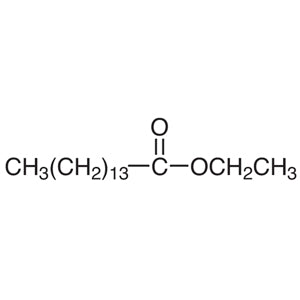
Ethyl Tridecanoate is a chemical compound classified under the category of lipids, widely used in scientific experiments, particularly in life sciences and biochemistry. It serves as a versatile reagent in laboratory settings, playing a crucial role in the study of lipid properties, metabolic processes, and the development of pharmaceutical and cosmetic products. Its molecular structure enables it to act as a building block for the synthesis of other compounds or as a key component in the formulation of specialized products. Due to its stability and chemical inertness, Ethyl Tridecanoate is a reliable choice for researchers seeking consistent results in their experiments.
One of the key attributes that make Ethyl Tridecanoate a preferred choice is its chemical stability and resistance to degradation under normal conditions. This stability ensures that it maintains its properties over extended periods, making it suitable for long-term storage and repeated use. Additionally, Ethyl Tridecanoate has relatively high boiling and melting points, which make it ideal for experiments requiring controlled thermal conditions. Its non-toxic and odorless nature further enhances its safety profile, allowing for safe handling in various laboratory environments.
In Indonesian laboratories, Ethyl Tridecanoate is extensively used in research related to life sciences, pharmacy, and biotechnology. It is commonly found in academic institutions and research centers where lipid-related studies are conducted. Its application spans across both fundamental research and applied development, supporting advancements in scientific understanding and product innovation.
TCI brochures (PDF)
- Lipids 2025-12-17 · p. 10
- Used in lipid research to study structural and functional properties of fatty acid derivatives.
- Applied in pharmaceutical development for the formulation of lipid-based drug delivery systems.
- Utilized in cosmetic science for the creation of emollients and skin conditioning agents.
- Employed in biochemical assays to investigate metabolic pathways involving lipid metabolism.
- Integrated into analytical methods for the characterization of complex lipid mixtures in biological samples.
| Brand | TCI |
|---|---|
| CAS number | 28267-29-0 |
| Molecular formula | — |
| Purity | — |
| Category | Life Science > Biochemicals and Reagents > Lipids |
| Pack sizes | Available in various quantities as per supplier specifications |
| Physical form | Liquid |
| Storage | Store in a cool, dry place away from direct sunlight |
Ethyl Tridecanoate should be stored in a cool, dry environment, away from direct sunlight and sources of heat. It is recommended to use airtight containers to prevent contamination and maintain its chemical integrity. Due to its non-toxic and odorless nature, it is generally safe to handle, but standard laboratory safety practices should still be followed. The compound should be kept in a well-ventilated area to ensure proper air circulation. Avoid exposure to incompatible materials, and ensure that storage conditions remain stable to preserve its properties over time. Proper labeling and secure storage are essential to prevent accidental use or spillage in laboratory settings.
—
Product Categories
Produk Terkait
-
MethylTridecanoate TCI T0960
Regular price Rp 1.563.450,00Regular priceRp 1.108.800,00Sale price Rp 1.563.450,00 -
MethylUndecanoate TCI U0050
Regular price Rp 3.153.150,00Regular priceRp 2.220.750,00Sale price Rp 3.153.150,00 -
EthylUndecanoate TCI U0049
Regular price From Rp 1.167.600,00Regular priceRp 831.600,00Sale price From Rp 1.167.600,00 -
TridecanoicAcid TCI T0412
Regular price From Rp 3.843.000,00Regular priceRp 2.702.700,00Sale price From Rp 3.843.000,00 -
PropylDodecanoate TCI P3211
Regular price From Rp 1.167.600,00Regular priceRp 831.600,00Sale price From Rp 1.167.600,00 -
IsopropylDodecanoate TCI I1169
Regular price From Rp 3.100.650,00Regular priceRp 2.184.000,00Sale price From Rp 3.100.650,00 -
MethylPentadecanoate TCI P0869
Regular price From Rp 3.735.900,00Regular priceRp 2.628.150,00Sale price From Rp 3.735.900,00 -
EthylPentadecanoate TCI P0868
Regular price From Rp 3.100.650,00Regular priceRp 2.184.000,00Sale price From Rp 3.100.650,00