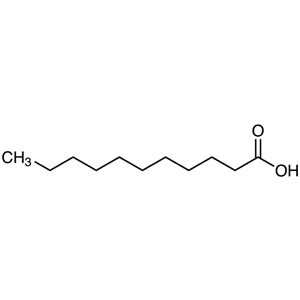
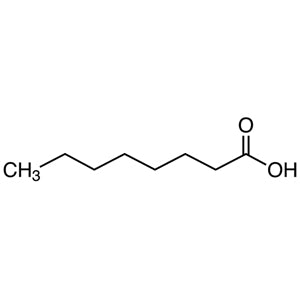
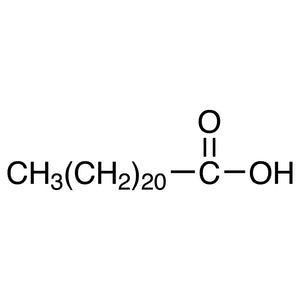
Tridecanoic Acid (TCI T0412, CAS 638-53-9) is an organic compound widely used in scientific research, particularly in the field of materials science and technology. It plays a crucial role in the synthesis of colloidal quantum dots (QDs), which are essential components in modern electronic and optical research. As a ligand, it helps stabilize the crystal structure of QDs, ensuring optimal optical properties and performance in various applications. Its presence is vital in the development of advanced nanomaterials that are used in photovoltaics, optoelectronics, and biomedical imaging.
This compound is favored for its chemical stability and solubility in organic solvents, which simplifies synthesis and manipulation in laboratory settings. Its high melting and boiling points make it suitable for applications requiring controlled thermal conditions. These properties contribute to its reliability and consistency, making it a preferred choice for researchers working on nanomaterial synthesis. Additionally, its non-reactive nature ensures safe handling and reduces the risk of unwanted side reactions during experimental procedures.
In Indonesian laboratories, Tridecanoic Acid is commonly used in material and technology research. It is a key reagent in projects related to colloidal quantum dots, especially in academic institutions and research centers. Its application spans across various scientific disciplines, supporting innovation in nanotechnology and electronic materials. Its availability through reliable suppliers like AMI Scientific ensures that researchers have access to this essential compound for their experiments.
TCI brochures (PDF)
- Colloidal Quantum Dot (QD) Research Reagents 2026-05-21 · p. 3
- Lipids 2025-12-17 · p. 4
- Building Blocks for Organic Semiconductor 2026-03-24 · p. 42
- Colloidal Quantum Dot Synthesis: Tridecanoic Acid is used to stabilize the crystal structure of quantum dots, ensuring consistent optical properties and performance in electronic and optical devices.
- Nanomaterial Development: It serves as a ligand in the synthesis of nanomaterials, enabling precise control over particle size and morphology for advanced applications.
- Photovoltaic Research: The compound is integral in creating semiconductor nanocrystals used in solar cell technologies, enhancing light absorption and charge transport efficiency.
- Optoelectronic Device Fabrication: Its role in stabilizing quantum dots makes it essential for the development of LEDs and other optoelectronic components with tunable emission properties.
- Biomedical Imaging Applications: Tridecanoic Acid is used in the functionalization of quantum dots for bioimaging, allowing for targeted delivery and improved contrast in diagnostic tools.
| Brand | TCI |
|---|---|
| CAS number | 638-53-9 |
| Molecular formula | — |
| Purity | — |
| Category | Materials Science > Electronic Materials > Colloidal Quantum Dot (QD) Research Reagents |
| Pack sizes | Available in various quantities as per supplier specifications |
| Physical form | Solid at room temperature |
| Storage | Store in a cool, dry place away from moisture and direct sunlight |
Tridecanoic Acid should be stored in a cool, dry environment to maintain its chemical stability. It is recommended to keep it in a sealed container to prevent exposure to moisture and air. Due to its solid form, it is best stored in airtight containers made of glass or high-density polyethylene to avoid contamination. While it is not highly reactive, it is advisable to handle it with care to prevent any accidental spills or exposure. In laboratory settings, it should be stored away from incompatible materials such as strong oxidizers. Proper labeling and storage conditions ensure the safety and effectiveness of the compound during research applications.
—
Product Categories
Produk Terkait
-
UndecanoicAcid TCI U0004
Regular price From Rp 1.008.000,00Regular priceRp 720.300,00Sale price From Rp 1.008.000,00 -
NonanoicAcid TCI P0952
Regular price From Rp 530.250,00Regular priceRp 386.400,00Sale price From Rp 530.250,00 -
n-OctanoicAcid TCI O0027
Regular price From Rp 557.550,00Regular priceRp 405.300,00Sale price From Rp 557.550,00 -
LauricAcid TCI L0011
Regular price From Rp 557.550,00Regular priceRp 405.300,00Sale price From Rp 557.550,00 -
HeptanoicAcid TCI H0030
Regular price From Rp 557.550,00Regular priceRp 405.300,00Sale price From Rp 557.550,00 -
DecanoicAcid TCI D0017
Regular price From Rp 530.250,00Regular priceRp 386.400,00Sale price From Rp 530.250,00 -
ValericAcid TCI V0003
Regular price From Rp 610.050,00Regular priceRp 426.300,00Sale price From Rp 610.050,00 -
BehenicAcid TCI B1747
Regular price Rp 4.028.850,00Regular priceRp 2.832.900,00Sale price Rp 4.028.850,00