L-Tyrosine Ethyl Ester Hydrochloride is a chemical compound widely used in chemical and biochemical experiments. It belongs to the category of peptide chemistry and is commonly employed in research related to organic synthesis, molecular modification, and the study of specific compound activities. In the laboratory, this compound serves as a key reagent for the production of bioactive substances or as a substrate in targeted chemical reactions. Its versatility makes it an essential component in various scientific investigations, particularly in fields such as pharmacology and biochemistry.
This compound is valued for its chemical stability and solubility in organic solvents, which simplifies processing and separation techniques. Its high reactivity also makes it suitable for reactions requiring specific activation conditions. These properties allow for precise control during synthesis, making it a preferred choice for researchers aiming for reproducibility and accuracy in their experiments. The compound’s ability to participate in a wide range of chemical transformations further enhances its utility in laboratory settings.
In Indonesian laboratories, L-Tyrosine Ethyl Ester Hydrochloride is utilized in chemical, pharmaceutical, and biochemical research. It is commonly used in the synthesis of new compounds and in testing the biological activity of various substances. Its availability supports ongoing research efforts in academic and industrial settings, contributing to the advancement of scientific knowledge and innovation in the region.
TCI brochures (PDF)
- Amino Acids and Peptide Synthesis Reagents 2025-08-14 · p. 28
Related TCI products
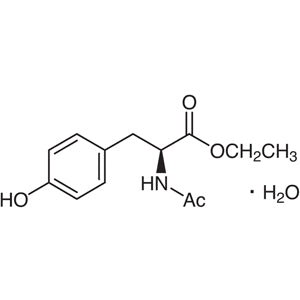
- TCI A0118 36546-50-6 N-Acetyl-L-tyrosine Ethyl Ester Monohydrate
- TCI T2736 1080-06-4 L-Tyrosine Methyl Ester
- TCI T2446 16874-12-7 L-Tyrosine tert-Butyl Ester
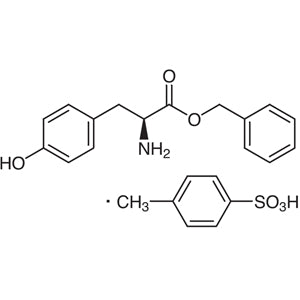
- TCI T2443 53587-11-4 L-Tyrosine Benzyl Ester p-Toluenesulfonate
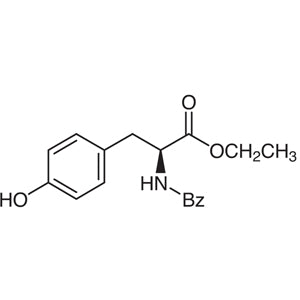
- TCI B1140 3483-82-7 N-Benzoyl-L-tyrosine Ethyl Ester
- TCI T1108 3417-91-2 L-Tyrosine Methyl Ester Hydrochloride
- Organic synthesis experiments benefit from its reactivity and solubility, enabling efficient compound formation.
- Molecular modification studies rely on its ability to undergo targeted chemical transformations with precision.
- Biochemical research utilizes it as a substrate in reactions that require specific activation conditions.
- Pharmaceutical development incorporates it in the creation of bioactive compounds for drug research.
- Biocompatibility testing uses it to assess the effects of compounds on biological systems and cellular responses.
| Brand | TCI |
|---|---|
| CAS number | 4089-07-0 |
| Molecular formula | — |
| Purity | — |
| Category | Chemistry > Chemical Biology > Peptide Chemistry |
| Pack sizes | Available in various quantities as per standard laboratory requirements |
| Physical form | Solid powder |
| Storage | Store in a cool, dry place away from moisture and light |
L-Tyrosine Ethyl Ester Hydrochloride should be stored in a cool, dry environment to maintain its chemical stability. It is recommended to keep it in a sealed container to prevent exposure to moisture and air. Suitable storage conditions include a controlled temperature range of 15–25°C. Avoid direct sunlight and ensure the container is tightly closed to minimize degradation. General laboratory precautions include handling with care to prevent contamination and using appropriate personal protective equipment when working with the compound. Proper storage ensures the compound remains effective for use in experiments requiring high precision and reliability.
—
Product Categories
Produk Terkait
-
N-Acetyl-L-tyrosineEthylEsterMonohydrate TCI A0118
Regular price From Rp 662.550,00Regular priceRp 478.800,00Sale price From Rp 662.550,00 -
L-TyrosineMethylEster TCI T2736
Regular price From Rp 1.167.600,00Regular priceRp 831.600,00Sale price From Rp 1.167.600,00 -
L-Tyrosinetert-ButylEster TCI T2446
Regular price From Rp 1.801.800,00Regular priceRp 1.275.750,00Sale price From Rp 1.801.800,00 -
L-TyrosineBenzylEsterp-Toluenesulfonate TCI T2443
Regular price From Rp 1.670.550,00Regular priceRp 1.183.350,00Sale price From Rp 1.670.550,00 -
N-Benzoyl-L-tyrosineEthylEster TCI B1140
Regular price Rp 557.550,00Regular priceRp 405.300,00Sale price Rp 557.550,00 -
L-TyrosineMethylEsterHydrochloride TCI T1108
Regular price From Rp 717.150,00Regular priceRp 516.600,00Sale price From Rp 717.150,00 -
L-TyrosineEthylEster TCI T0551
Regular price From Rp 769.650,00Regular priceRp 553.350,00Sale price From Rp 769.650,00 -
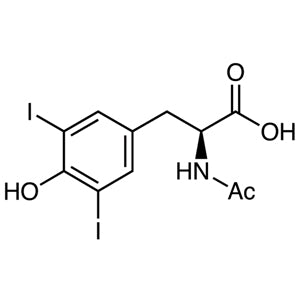
N-Acetyl-3,5-diiodo-L-tyrosine TCI A0087
Regular price Rp 1.060.500,00Regular priceRp 757.050,00Sale price Rp 1.060.500,00