TCI T1108 is L-Tyrosine Methyl Ester Hydrochloride, CAS number 3417-91-2, a derivative of the amino acid L-tyrosine in which the carboxyl group has been esterified with methanol and the compound is supplied as the hydrochloride salt. In the TCI catalog it is listed under Peptide Chemistry within the Chemical Biology category. In the laboratory it is used mainly as a building block in peptide synthesis, particularly when the carboxyl terminus must be temporarily protected while the amino group reacts to form a peptide bond with another amino acid.
The hydrochloride salt form offers a practical advantage: the amine group is held in its protonated state, which makes the material more stable during storage than the corresponding free amine. The free amine can be liberated when needed, for example by adding an organic base at the start of a coupling reaction. The phenolic group on the tyrosine side chain remains available for modification, such as alkylation, acylation, or reactions involving the aromatic ring. Because the chirality of L-tyrosine is retained, the material suits syntheses that require a defined stereochemical configuration, and it can also serve as a model substrate in enzyme studies.
For laboratories in Indonesia, this reagent is relevant to university research groups, teaching laboratories, and research and development teams that work on peptide chemistry and chemical biology. It is typically ordered as a reference-grade building block for small-scale synthesis, where a traceable brand and a clearly identified CAS number make it easier to document and reproduce procedures. Local laboratories can source it through AMI Scientific as an authorized distribution channel for TCI products, and it fits easily into existing workflows for amino acid derivatives and peptide coupling work.
TCI brochures (PDF)
- Amino Acids and Peptide Synthesis Reagents 2025-08-14 · p. 26
- Reagents for Biological Research 2025-03-11 · p. 58
Related TCI products
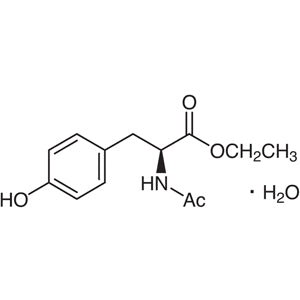
- TCI A0118 36546-50-6 N-Acetyl-L-tyrosine Ethyl Ester Monohydrate
- TCI T2736 1080-06-4 L-Tyrosine Methyl Ester
- TCI T2446 16874-12-7 L-Tyrosine tert-Butyl Ester
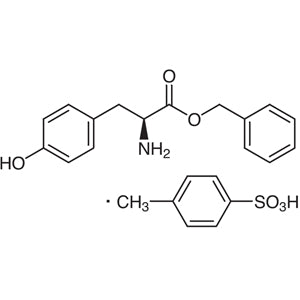
- TCI T2443 53587-11-4 L-Tyrosine Benzyl Ester p-Toluenesulfonate
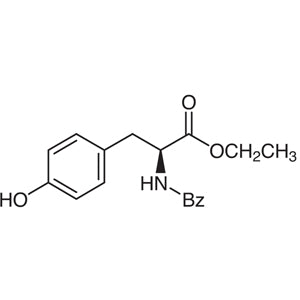
- TCI B1140 3483-82-7 N-Benzoyl-L-tyrosine Ethyl Ester
- TCI T0982 4089-07-0 L-Tyrosine Ethyl Ester Hydrochloride
- Peptide synthesis: the protected carboxyl terminus and reactive amino group allow controlled bond formation with other amino acids, so this compound suits stepwise peptide assembly in solution.
- Amino acid derivative preparation: the ester and the phenolic side chain give two distinct reactive sites, which makes the material a convenient starting point for building modified tyrosine compounds.
- Side-chain modification studies: the free phenol group can undergo alkylation or acylation, so researchers can examine how changes to the tyrosine side chain affect reactivity and downstream product properties.
- Enzyme substrate studies: as an ester of a natural amino acid, it can serve as a model substrate for investigating enzymes that act on amino acid esters, supporting basic biochemical research.
- Teaching and training: the compound illustrates amine protonation, ester protection, and amide bond formation clearly, so it works well in advanced organic chemistry and biochemistry teaching laboratories.
| Brand | TCI |
|---|---|
| CAS number | 3417-91-2 |
| Molecular formula | — |
| Purity | — |
| Category | Chemistry > Chemical Biology > Peptide Chemistry |
| Pack sizes | please refer to the product listing and the supplier label for available pack sizes and the recommended storage conditions |
| Physical form | — |
| Storage | — |
- Product code: T1108
- Form: hydrochloride salt of the L-tyrosine methyl ester
Store the material according to the conditions printed on the manufacturer's label and safety data sheet, and keep it in its original tightly closed container to limit exposure to moisture, since hydrochloride salts can absorb water from the air. Keep it in a cool, dry place away from direct sunlight and incompatible substances such as strong oxidizers and strong bases. Reseal the container promptly after each use. During handling, wear standard laboratory protective equipment including gloves, safety glasses, and a lab coat, and work in a well-ventilated area or fume hood to avoid inhaling dust. Avoid contact with skin and eyes, label any transferred portions clearly, and dispose of waste in line with your institution's chemical waste procedures.
—
Product Categories
Produk Terkait
-
N-Acetyl-L-tyrosineEthylEsterMonohydrate TCI A0118
Regular price From Rp 662.550,00Regular priceRp 478.800,00Sale price From Rp 662.550,00 -
L-TyrosineMethylEster TCI T2736
Regular price From Rp 1.167.600,00Regular priceRp 831.600,00Sale price From Rp 1.167.600,00 -
L-Tyrosinetert-ButylEster TCI T2446
Regular price From Rp 1.801.800,00Regular priceRp 1.275.750,00Sale price From Rp 1.801.800,00 -
L-TyrosineBenzylEsterp-Toluenesulfonate TCI T2443
Regular price From Rp 1.670.550,00Regular priceRp 1.183.350,00Sale price From Rp 1.670.550,00 -
N-Benzoyl-L-tyrosineEthylEster TCI B1140
Regular price Rp 557.550,00Regular priceRp 405.300,00Sale price Rp 557.550,00 -
L-TyrosineEthylEsterHydrochloride TCI T0982
Regular price Rp 2.306.850,00Regular priceRp 1.628.550,00Sale price Rp 2.306.850,00 -
L-TyrosineEthylEster TCI T0551
Regular price From Rp 769.650,00Regular priceRp 553.350,00Sale price From Rp 769.650,00 -
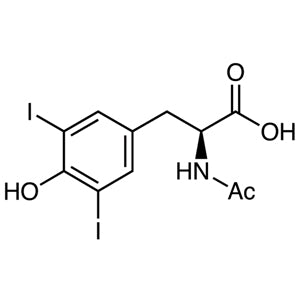
N-Acetyl-3,5-diiodo-L-tyrosine TCI A0087
Regular price Rp 1.060.500,00Regular priceRp 757.050,00Sale price Rp 1.060.500,00