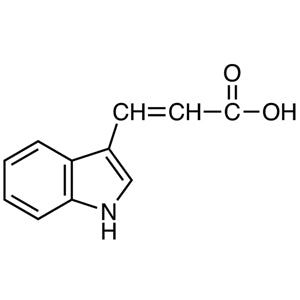
TCI T1138 2-Thiopheneacrylic Acid (CAS 15690-25-2) is an unsaturated carboxylic acid that combines a thiophene ring with an acrylic acid group. In the laboratory it serves as a heterocyclic building block for organic synthesis and materials chemistry. Supplied by AMI Scientific under the TCI brand, it gives chemists a ready-made starting point that already carries both an aromatic sulfur heterocycle and a reactive conjugated side chain, so fewer preparative steps are needed before the real work of a project begins.
The compound is valued for its dual reactivity. The carboxylic acid group can be converted into esters or amides, while the carbon–carbon double bond can undergo addition reactions. Because the double bond is conjugated with the electron-rich thiophene ring, the molecule forms a π-system that can be extended further. This framework appears often in research on bioactive compounds and in thiophene-based materials for organic electronics. The combination of a coupling handle and a reactive alkene makes it a flexible starting material.
In Indonesian laboratories, the 5 g and 25 g pack sizes suit synthetic work ranging from exploratory trials to repeated experiments. The material is useful to organic chemistry, medicinal chemistry, and polymer and materials research groups at universities and research institutes. Smaller packs let teams test a route economically, while the larger pack supports scale-up of a route that has already proven workable.
TCI brochures (PDF)
- Thiophenes 2026-06-29 · p. 8
Related TCI products
- Amide coupling: the carboxylic acid group reacts with amines under standard coupling conditions, so the thiophene-acrylic framework can be attached to other molecules during compound library synthesis.
- Esterification: converting the acid into esters is straightforward, which helps researchers prepare derivatives, adjust solubility, or protect the acid function during multi-step synthetic sequences.
- Michael addition and cyclization studies: the conjugated double bond opens the way to addition, ring-forming, and hydrogenation reactions that build more elaborate heterocyclic structures from one compact starting material.
- Medicinal chemistry research: the thiophene–acrylate scaffold is commonly explored in work on bioactive compounds, making this acid a practical intermediate for analogue preparation and structure–activity investigations.
- Organic electronics and polymer materials: the extended π-system formed by the thiophene ring and the acrylate group makes it a useful building block for researchers developing thiophene-based functional materials.
| Brand | TCI |
|---|---|
| CAS number | 15690-25-2 |
| Molecular formula | — |
| Purity | — |
| Category | Chemistry > Building Blocks > Heterocyclic Building Blocks |
| Pack sizes | 5 g and 25 g |
| Physical form | — |
| Storage | keep tightly closed in a cool, dry place, following the supplier's label |
- Product code: T1138
Store 2-Thiopheneacrylic Acid in its original tightly sealed container, in a cool, dry, well-ventilated place away from direct sunlight, heat, and incompatible materials such as strong oxidizers. Always follow the storage instruction printed on the product label and in the safety data sheet. Handle the powder in a fume hood or well-ventilated area, and wear safety glasses, a lab coat, and chemical-resistant gloves to avoid skin and eye contact and inhalation of dust. Close the container promptly after use to limit moisture uptake, label any transfer vessels clearly, and dispose of waste according to institutional and local regulations.
—
Produk Terkait
-
3-IndoleacrylicAcid TCI I0025
Regular price From Rp 1.431.150,00Regular priceRp 1.016.400,00Sale price From Rp 1.431.150,00