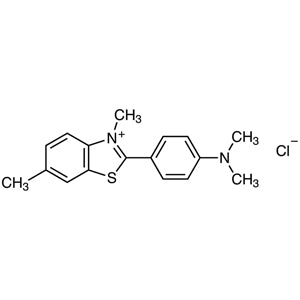
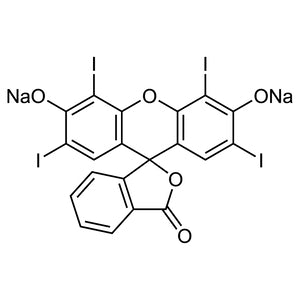
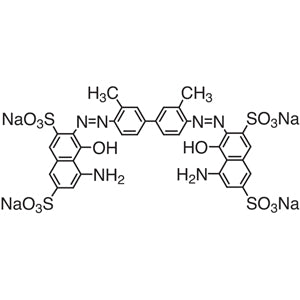
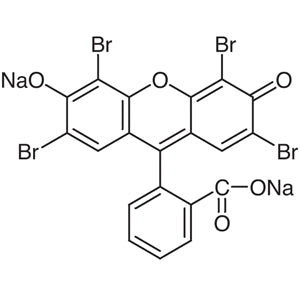
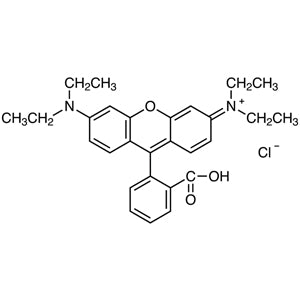
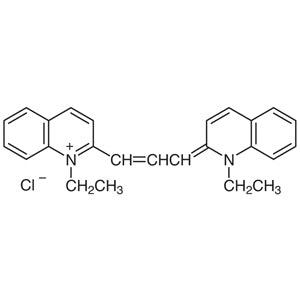
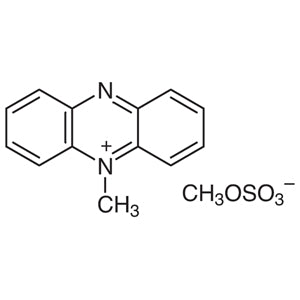
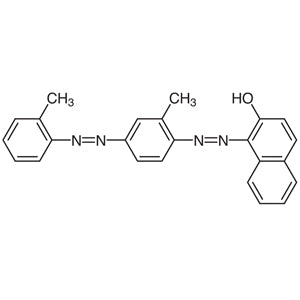
Staining for Microbiology — includes synthetic and natural dyes and stains such as thiazine, triphenylmethane, cyanine, and anthraquinone derivatives used to provide visual contrast to microbial cells, tissues, or certain cellular components under a microscope. This group also includes fluorescent probes for labeling nucleic acid molecules.
Staining for Microbiology is used by microbiology and cell biology researchers for differential staining of bacterial cell walls, observation of microorganism morphology, and detection of cellular components such as nucleic acids and proteins through classical staining techniques such as crystal violet or fluorescent probes such as T-Fluor 480 for RNA. Dyes such as carmine and azure II are also used in histological and cytological preparation in research and educational laboratories.
Example products in this collection: TCI A0574 37247-10-2 Azure II, TCI C0428 548-62-9 Crystal Violet, TCI T4436 T-Fluor 480 Solution [for RNA staining], TCI C0436 523-42-2 Cyanine, TCI T4072 T-Fluor 480 [for RNA staining], TCI C0524 6757-06-8 Cytidine 5'-Monophosphate Disodium Salt, TCI B4731 8004-94-2 Basic Violet 8, TCI C0543 1390-65-4 Carmine.
Selection of dyes should consider solubility in working solvents, stability of stock solutions, specificity toward cellular targets, and suitability with detection wavelength when using fluorescent probes. All products are genuine Tokyo Chemical Industry (TCI) Japan products, with purity, packaging, and storage conditions listed on each item's page.
Other parallel categories under Microbiology, often used together in one laboratory workflow:
Back to Microbiology. For large-volume procurement, special packaging, or specific grades, contact the AMI Scientific team — official TCI Japan distributor in Indonesia — for availability checks and lead time directly from Japan.