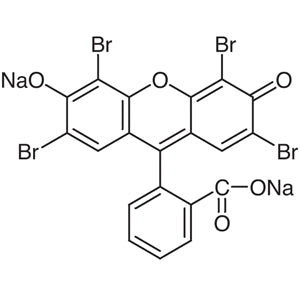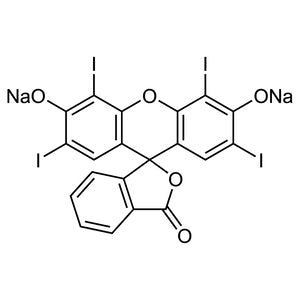
Erythrosine B is a chemical compound widely used in laboratory settings, particularly within the fields of catalysis and inorganic chemistry. It plays a crucial role in photocatalytic reactions, where it acts as a catalyst that accelerates chemical processes by utilizing light energy. This compound is commonly employed as a dye or indicator in various chemical reactions, making it an essential tool for researchers working with light-activated systems. Its ability to absorb specific wavelengths of light enables it to facilitate chemical transformations without undergoing significant structural changes itself.
One of the key properties that make Erythrosine B a preferred choice is its chemical stability. It maintains its integrity under a range of chemical conditions, which is vital for consistent performance in laboratory experiments. Additionally, its photoreactive nature allows it to be used in applications where light activation is necessary. The compound’s ability to remain stable while still being responsive to light makes it a reliable and versatile material for scientific research.
In Indonesian laboratories, Erythrosine B is frequently used in studies related to photocatalytic reactions and chemical processes that require light activation. Its presence in research projects helps scientists explore new methods of chemical synthesis and reaction optimization. The compound’s reliability and effectiveness in these contexts make it a valuable resource for both academic and industrial research in Indonesia.
TCI brochures (PDF)
- Iodinated Fluorescein for Various Applications 2024-11-22 · p. 2
- Visible Light Photoredox Catalysts 2026-04-28 · p. 4
- Organic Photoreaction Reagents 2025-02-13 · p. 8
- Photocatalytic Reaction Studies: Erythrosine B is ideal for experiments that require light-activated chemical processes due to its ability to absorb specific wavelengths of light.
- Chemical Indication in Reactions: It serves as a reliable indicator in reactions where color change is a key parameter for monitoring progress or completion.
- Dye-Based Spectroscopy Applications: Its photoreactive properties make it suitable for spectroscopic studies that involve light absorption and emission analysis.
- Environmental Chemistry Research: It is used in studies aimed at developing methods for pollutant degradation through light-induced reactions.
- Material Science Investigations: Erythrosine B is employed in research focused on the development of new materials with light-responsive properties.
| Brand | TCI |
|---|---|
| CAS number | 16423-68-0 |
| Molecular formula | — |
| Purity | — |
| Category | Chemistry > Catalysis and Inorganic Chemistry > Photocatalysts [Catalysis] |
| Pack sizes | Available in various quantities as per standard laboratory supply |
| Physical form | Solid powder |
| Storage | Store in a cool, dry place away from direct light |
Erythrosine B should be stored in a cool, dry environment, away from direct sunlight to maintain its chemical stability. It is recommended to keep the compound in airtight containers to prevent moisture absorption and contamination. Due to its photoreactive nature, exposure to light should be minimized during storage and handling. Laboratory personnel should wear appropriate personal protective equipment, such as gloves and safety goggles, when working with this compound. It is important to ensure that the storage area is well-ventilated to avoid any potential accumulation of airborne particles. Proper labeling of containers is essential to ensure safe handling and prevent accidental misuse.
—
Product Categories
Produk Terkait
-
AcidRed87 TCI T0037
Regular price Rp 903.000,00Regular priceRp 631.050,00Sale price Rp 903.000,00 -
RhodamineB TCI R0040
Regular price From Rp 1.167.600,00Regular priceRp 815.850,00Sale price From Rp 1.167.600,00 -
5-TAMRA TCI C2686
Regular price Rp 4.957.050,00Regular priceRp 3.466.050,00Sale price Rp 4.957.050,00 -
PinacyanolIodide TCI P0436
Regular price From Rp 2.173.500,00Regular priceRp 1.535.100,00Sale price From Rp 2.173.500,00 -
PinacyanolChloride TCI P0156
Regular price From Rp 955.500,00Regular priceRp 683.550,00Sale price From Rp 955.500,00 -
Fluorescein6-Isothiocyanate(isomerII) TCI F0783
Regular price Rp 8.613.150,00Regular priceRp 6.022.800,00Sale price Rp 8.613.150,00 -
FluoresceinDiacetate TCI F0240
Regular price Rp 1.538.250,00Regular priceRp 1.090.950,00Sale price Rp 1.538.250,00 -
EthidiumBromide TCI E0370
Regular price From Rp 1.483.650,00Regular priceRp 1.053.150,00Sale price From Rp 1.483.650,00