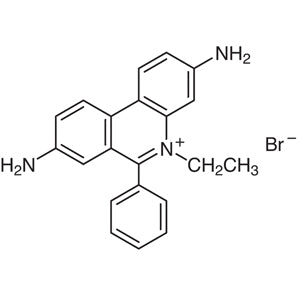
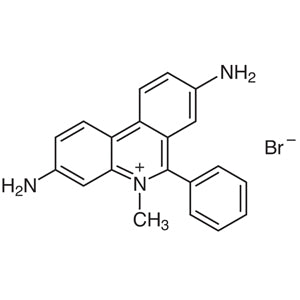
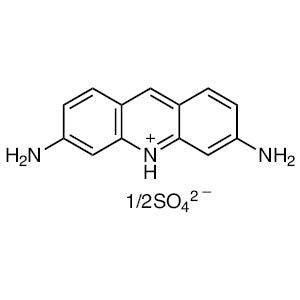
Acid Red 87 (TCI T0037), with CAS number 17372-87-1, is an organic compound widely used in chemical reactions, particularly in the fields of catalysis and inorganic chemistry. As a photocatalyst, it plays a crucial role in accelerating chemical reactions by utilizing light energy. Its ability to enhance reaction rates under photonic conditions makes it a valuable tool in laboratory settings. This compound is especially useful in processes that require external energy input, such as the degradation of organic compounds. Its application extends to various research areas where controlled chemical transformations are necessary.
The stability and reactivity of Acid Red 87 make it a preferred choice for researchers. Its molecular structure allows for high reactivity and compatibility with a variety of chemical substrates. The compound exhibits resistance to specific temperature and pH conditions, ensuring consistent performance in diverse laboratory environments. These properties contribute to its reliability and effectiveness in both synthetic and analytical applications. Its high purity and consistent quality further enhance its appeal in scientific research.
In Indonesian laboratories, Acid Red 87 is commonly used in environmental, chemical, and technological research. It is particularly relevant in efforts to reduce pollution and accelerate the degradation of chemical waste. Researchers in Indonesia frequently utilize this compound to develop sustainable solutions and improve chemical processes. Its versatility and effectiveness make it a key component in many scientific investigations.
TCI brochures (PDF)
- Iodinated Fluorescein for Various Applications 2024-11-22 · p. 2
- Visible Light Photoredox Catalysts 2026-04-28 · p. 2
- Regenerative Medicine Research Reagents 2016-03-18 · p. 1
- Organic Photoreaction Reagents 2025-02-13 · p. 8
- Titration Reagents and TLC Stains 2026-05-07 · p. 11
- Reagents for Biological Research 2025-03-11 · p. 39
- Environmental degradation studies benefit from Acid Red 87's ability to catalyze the breakdown of organic pollutants under light exposure.
- Photocatalytic oxidation experiments rely on its capacity to enhance reaction rates when exposed to UV or visible light.
- Organic synthesis processes utilize its reactivity to facilitate selective chemical transformations under controlled conditions.
- Analytical chemistry applications leverage its stability and reactivity for accurate and reproducible results.
- Industrial waste treatment research employs Acid Red 87 to develop efficient methods for degrading harmful substances.
From the TCI brochure
- Carbonylation
| Brand | TCI |
|---|---|
| CAS number | 17372-87-1 |
| Molecular formula | — |
| Purity | — |
| Category | Chemistry > Catalysis and Inorganic Chemistry > Photocatalysts |
| Pack sizes | Available in standard laboratory quantities |
| Physical form | Solid powder |
| Storage | Store in a cool, dry place away from direct sunlight |
Data from the TCI brochure
| Loading katalis | 4 mol% (Carbonylation, CO (50 bar), 18 deg-C, 425 nm) |
|---|
Source: TCI brochure F2034 (2026-04-28)
Acid Red 87 should be stored in a cool, dry environment to maintain its chemical integrity and prevent degradation. It is recommended to keep the compound in airtight containers to minimize exposure to moisture and air. Due to its photocatalytic nature, it should be stored away from direct sunlight to avoid premature activation. In laboratory settings, it is important to handle the compound with appropriate personal protective equipment to ensure safety. Proper labeling and secure storage are essential to prevent accidental exposure or contamination. Regular monitoring of storage conditions ensures the material remains effective for its intended applications.
—
Product Categories
Produk Terkait
-
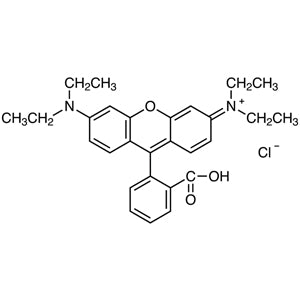
RhodamineB TCI R0040
Regular price From Rp 1.167.600,00Regular priceRp 815.850,00Sale price From Rp 1.167.600,00 -
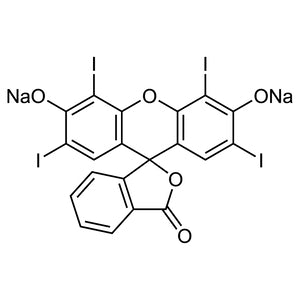
ErythrosineB TCI T0557
Regular price Rp 1.008.000,00Regular priceRp 704.550,00Sale price Rp 1.008.000,00 -
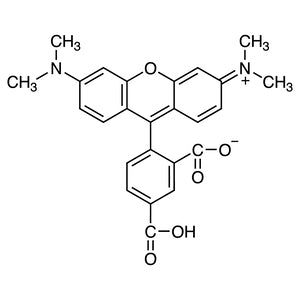
5-TAMRA TCI C2686
Regular price Rp 4.957.050,00Regular priceRp 3.466.050,00Sale price Rp 4.957.050,00 -
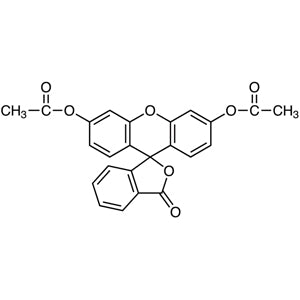
FluoresceinDiacetate TCI F0240
Regular price Rp 1.538.250,00Regular priceRp 1.090.950,00Sale price Rp 1.538.250,00 -
EthidiumBromide TCI E0370
Regular price From Rp 1.483.650,00Regular priceRp 1.053.150,00Sale price From Rp 1.483.650,00 -
DimidiumBromide TCI D1815
Regular price From Rp 5.724.600,00Regular priceRp 4.018.350,00Sale price From Rp 5.724.600,00 -
ProflavineHemisulfate TCI D0073
Regular price From Rp 1.298.850,00Regular priceRp 924.000,00Sale price From Rp 1.298.850,00 -
Fluorescein6-Isothiocyanate(isomerII) TCI F0783
Regular price Rp 8.613.150,00Regular priceRp 6.022.800,00Sale price Rp 8.613.150,00