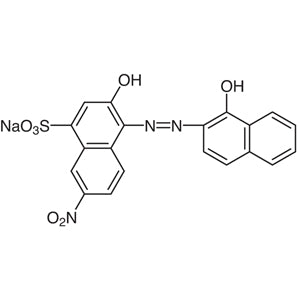
Mordant Orange 1 Monosodium Salt is a chemical dye widely used in laboratory settings, particularly in chemistry and biology research. It functions as a mordant dye, which is essential for binding pigments to specific substrates, enhancing color intensity and visibility during microscopic analysis. This compound is commonly employed in staining procedures to highlight cellular structures, proteins, and other biological components. Its role in laboratory applications is crucial for accurate and reliable results in various scientific investigations.
The chemical properties of Mordant Orange 1 Monosodium Salt make it a preferred choice for researchers. It is chemically stable and highly soluble in organic solvents such as ethanol and acetone, which simplifies its use in diverse laboratory conditions. These characteristics ensure consistent performance and ease of handling, making it suitable for a wide range of experimental setups. Additionally, its stability in certain environments minimizes the risk of degradation during storage and use, ensuring long-term reliability in laboratory applications.
In Indonesian laboratories, Mordant Orange 1 Monosodium Salt is frequently used in biochemical, microbiological, and chemical analysis research. Its effectiveness in staining and its availability make it a go-to choice for scientists and technicians. The compound is essential for experiments requiring mordant dye, supporting both educational and industrial research efforts. Its consistent performance and ease of use contribute to its popularity among laboratory professionals in Indonesia.
TCI brochures (PDF)
- Titration Reagents and TLC Stains 2026-05-07 · p. 3
- Biochemical research utilizes Mordant Orange 1 Monosodium Salt for staining proteins and cellular structures, enhancing microscopic visibility and analysis.
- Microbiological studies benefit from this dye as it helps in identifying and characterizing microbial cells through color binding and contrast.
- Chemical analysis applications leverage its solubility and stability to ensure accurate and consistent staining results in laboratory experiments.
- Histological studies use the dye to stain tissue samples, aiding in the visualization of cellular components and structural details.
- Educational laboratories incorporate it for teaching purposes, demonstrating staining techniques and the role of mordant dyes in scientific research.
| Brand | TCI |
|---|---|
| CAS number | 1718-34-9 |
| Molecular formula | — |
| Purity | — |
| Category | Chemistry > Stains and Dyes (for Research and Experimental Use) > Mordant Dyes (for Research and Experimental Use) |
| Pack sizes | As per supplier availability |
| Physical form | Powder or crystalline solid |
| Storage | Store in a cool, dry place away from direct sunlight |
Mordant Orange 1 Monosodium Salt should be stored in a cool, dry place, away from direct sunlight and moisture. It is recommended to use airtight containers to prevent contamination and maintain chemical stability. Due to its solubility in organic solvents, it should be kept in a secure location to avoid accidental exposure. Laboratory personnel should handle the compound with care, using appropriate personal protective equipment when necessary. Proper storage ensures the longevity and effectiveness of the product, supporting consistent results in research and experimental applications.
—
Product Categories
Produk Terkait
-
alpha-NaphtholOrange TCI N0308
Regular price Rp 1.378.650,00Regular priceRp 963.900,00Sale price Rp 1.378.650,00 -
AcidOrange7 TCI G0158
Regular price From Rp 875.700,00Regular priceRp 612.150,00Sale price From Rp 875.700,00 -
EriochromeBlackT TCI E0214
Regular price Rp 1.326.150,00Regular priceRp 927.150,00Sale price Rp 1.326.150,00 -
AcidRed87 TCI T0037
Regular price Rp 903.000,00Regular priceRp 631.050,00Sale price Rp 903.000,00 -
CongoRed TCI C0550
Regular price Rp 2.094.750,00Regular priceRp 1.464.750,00Sale price Rp 2.094.750,00 -
BlueTetrazolium[forBiochemicalResearch] TCI B3581
Regular price From Rp 1.298.850,00Regular priceRp 924.000,00Sale price From Rp 1.298.850,00 -
MethyleneBlue[Ionassociationreagentforspectrophotometricanalysis] TCI A5105
Regular price Rp 1.008.000,00Regular priceRp 720.300,00Sale price Rp 1.008.000,00 -
MalachiteGreen,Oxalate[SensitivespectrophotometricreagentforPO4] TCI A5100
Regular price Rp 2.384.550,00Regular priceRp 1.683.150,00Sale price Rp 2.384.550,00