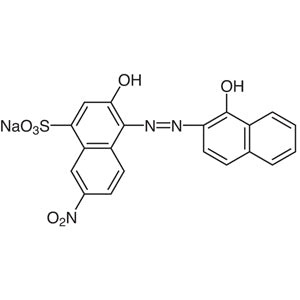
TCI E0214 with CAS number 1787-61-7 is Eriochrome Black T, an azo-class mordant dye best known as a metal indicator in complexometric titration. In analytical chemistry laboratories, this compound is an almost permanent fixture on the reagent shelf because of the role it plays in determining water hardness with a standard EDTA solution. The indicator forms a wine-red complex with certain metal ions and then releases them when EDTA takes over the bond, producing the colour change that marks the end point of the titration.
The characteristics that make Eriochrome Black T so dependable are its selectivity towards divalent metal ions such as magnesium and calcium under ammonia buffer conditions, together with the sharp colour contrast between its complexed form and its free form. The stability of the indicator–metal complex is deliberately made weaker than that of the metal–EDTA complex, so that the exchange occurs precisely at the equivalence point. The sulfonate and hydroxyl groups in its structure make the compound soluble in water and in alcohol.
Because its aqueous solutions are less stable over long periods of storage, this indicator is often prepared as a solid mixture with sodium chloride for practical use. In Indonesian laboratories this preparation is routine wherever complexometric work is carried out, from analytical chemistry teaching laboratories and water quality testing units to quality control benches that rely on EDTA titration as a standard method.
Advantages (TCI brochure)
- Turns red when it forms a complex with metal ions.
- Gradually changes to blue when chelating agents are added dropwise.
TCI brochures (PDF)
- Titration Reagents and TLC Stains 2026-05-07 · p. 4
- Water hardness determination — the indicator responds to calcium and magnesium ions in an ammonia buffer, giving the wine-red to blue transition that defines the EDTA titration end point.
- Complexometric titration of divalent metal ions — its indicator–metal complex is weaker than the metal–EDTA complex, so the colour change coincides with the equivalence point rather than lagging behind it.
- Analytical chemistry teaching practicals — the sharp contrast between complexed and free forms makes the end point easy for students to read without instrumentation, supporting classroom titration exercises.
- Water quality testing and monitoring — hardness measurement by EDTA titration remains a standard routine, and this indicator is the reagent that method is built around.
- Quality control laboratories using EDTA methods — the reliable and reproducible colour transition allows operators to confirm metal ion content in routine batch checks on the bench.
From the TCI brochure
- Metal indicator for endpoint detection in chelation titration
| Brand | TCI |
|---|---|
| CAS number | 1787-61-7 |
| Molecular formula | — |
| Purity | — |
| Category | Chemistry > Stains and Dyes (for Research and Experimental Use) > Mordant Dyes (for Research and Experimental Use) |
| Pack sizes | available in standard TCI catalogue packaging — please confirm the available pack size when ordering |
| Physical form | — |
| Storage | aqueous solutions are less stable in long-term storage; the indicator is often prepared as a solid mixture with sodium chloride for practical use |
- Chemical name: Eriochrome Black T, an azo-class mordant dye used as a metal indicator
- Solubility: soluble in water and in alcohol, due to its sulfonate and hydroxyl groups
Store the solid dye in its original tightly closed container, kept in a cool, dry place and protected from direct light and moisture. Because aqueous solutions of this indicator are less stable over extended storage, prepare working solutions in the quantity needed, or use the solid mixture with sodium chloride that is commonly made up for practical work. Handle the powder inside a fume hood or in a well-ventilated area to avoid inhaling airborne dust, and wear gloves, a laboratory coat, and eye protection when weighing and transferring the material. Use clean, dry spatulas and glassware to prevent contamination of the stock, close the container immediately after use, and label all prepared solutions with their preparation date so that older solutions are not carried over into analytical work.
—
Product Categories
Produk Terkait
-
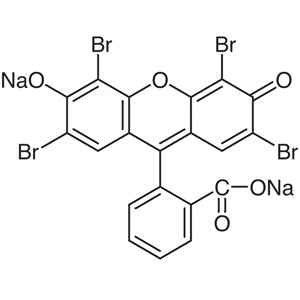
MordantOrange1MonosodiumSalt TCI A0579
Regular price Rp 1.829.100,00Regular price -
AcidRed87 TCI T0037
Regular price Rp 903.000,00Regular price -
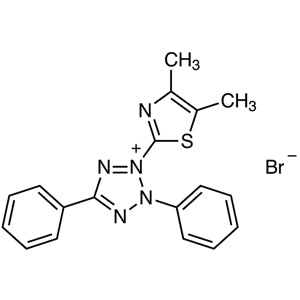
3-(4,5-Dimethyl-2-thiazolyl)-2,5-diphenyltetrazoliumBromide TCI D0801
Regular price From Rp 2.147.250,00Regular price -
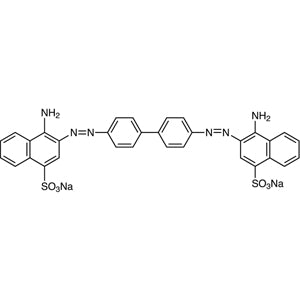
CongoRed TCI C0550
Regular price Rp 2.094.750,00Regular price -
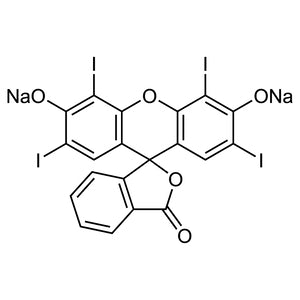
ErythrosineB TCI T0557
Regular price Rp 1.008.000,00Regular price -
RhodamineB TCI R0040
Regular price From Rp 1.167.600,00Regular price -
PotassiumIodide TCI P1721
Regular price From Rp 372.750,00Regular price -
PinacyanolIodide TCI P0436
Regular price From Rp 2.121.000,00Regular price