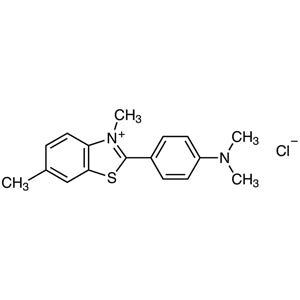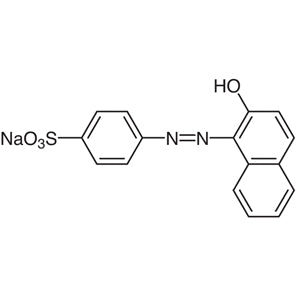
Acid Orange 7 is a synthetic pigment widely used in laboratory settings, particularly in chemistry and biology. It serves as a staining agent that helps visualize and analyze various biological samples, such as proteins, lipids, and other structural components. This dye is commonly employed in experimental research to enhance the contrast of microscopic specimens, making it easier for scientists to observe and study cellular structures and biochemical processes. Its versatility makes it an essential tool in both academic and industrial research environments.
One of the key reasons Acid Orange 7 is preferred is its solubility in water and its distinct red coloration. These properties ensure that it remains stable and effective under standard laboratory conditions, providing consistent results across multiple experiments. Additionally, its chemical stability means it does not easily degrade, maintaining its performance over time. This reliability is crucial for researchers who require accurate and repeatable outcomes in their experiments.
In Indonesian laboratories, Acid Orange 7 is frequently used in chemical and biological research, especially in higher education institutions and research centers. Its availability and effectiveness make it a popular choice for staining applications. The dye is particularly useful in protein staining and microscopic analysis, supporting a wide range of scientific investigations. Its consistent performance and ease of use contribute to its widespread adoption in the local scientific community.
Related TCI products
- TCI N0308 523-44-4 alpha-Naphthol Orange
- TCI A0579 1718-34-9 Mordant Orange 1 Monosodium Salt
- TCI T0037 17372-87-1 Acid Red 87
- TCI B3581 1871-22-3 Blue Tetrazolium [for Biochemical Research]
- TCI A5105 61-73-4 Methylene Blue [Ion association reagent for spectrophotometric analysis]
- TCI A5100 2437-29-8 Malachite Green, Oxalate [Sensitive spectrophotometric reagent for PO4]
- Protein staining in biological research to enhance visibility under a microscope for detailed analysis.
- Structural analysis of cellular components to distinguish between different types of biomolecules.
- Microscopic observation of lipid structures to study their distribution and behavior in various environments.
- Support for biochemical experiments requiring clear and stable coloration for accurate results.
- Educational use in teaching laboratories to demonstrate staining techniques and biological visualization methods.
| Brand | TCI |
|---|---|
| CAS number | 633-96-5 |
| Molecular formula | — |
| Purity | — |
| Category | Chemistry > Stains and Dyes (for Research and Experimental Use) > Acid Dyes (for Research and Experimental Use) |
| Pack sizes | Available in standard laboratory quantities as per supplier specifications |
| Physical form | Powder or liquid, depending on the formulation |
| Storage | Store in a cool, dry place away from direct sunlight |
Acid Orange 7 should be stored in a cool, dry place, away from direct sunlight and sources of heat. It is recommended to use airtight containers to prevent moisture absorption and maintain its chemical integrity. When handling, it is important to follow standard laboratory safety protocols, including the use of protective gloves and goggles to avoid skin or eye contact. Due to its water solubility, it is advisable to store it in a sealed container to prevent contamination or evaporation. Proper storage ensures the dye remains effective and safe for use in research applications.
—
Produk Terkait
-
alpha-NaphtholOrange TCI N0308
Regular price Rp 1.378.650,00Regular price -
MordantOrange1MonosodiumSalt TCI A0579
Regular price Rp 1.829.100,00Regular price -
AcidRed87 TCI T0037
Regular price Rp 903.000,00Regular price -
BlueTetrazolium[forBiochemicalResearch] TCI B3581
Regular price From Rp 1.246.350,00Regular price -
MethyleneBlue[Ionassociationreagentforspectrophotometricanalysis] TCI A5105
Regular price Rp 955.500,00Regular price -
MalachiteGreen,Oxalate[SensitivespectrophotometricreagentforPO4] TCI A5100
Regular price Rp 2.332.050,00Regular price -
DAPI2HCl[forBiochemicalResearch] TCI A2412
Regular price Rp 1.590.750,00Regular price -
BasicYellow1 TCI T0558
Regular price Rp 2.094.750,00Regular price


![1871-22-3 Blue Tetrazolium [for Biochemical Research] - AMI Scientific](http://amiscientific.com/cdn/shop/files/TCI2510B3581_25792e25-dbc5-4e62-a711-c5f5176b1b02.jpg?v=1767433226&width=533)
![61-73-4 Methylene Blue [Ion association reagent for spectrophotometric analysis] - AMI Scientific](http://amiscientific.com/cdn/shop/files/TCI2510A5105.jpg?v=1767084859&width=533)
![2437-29-8 Malachite Green, Oxalate [Sensitive spectrophotometric reagent for PO4] - AMI Scientific](http://amiscientific.com/cdn/shop/files/TCI2510A5100.jpg?v=1767084843&width=533)
![28718-90-3 DAPI 2HCl [for Biochemical Research] - AMI Scientific](http://amiscientific.com/cdn/shop/files/TCI2510A2412.jpg?v=1767082817&width=533)